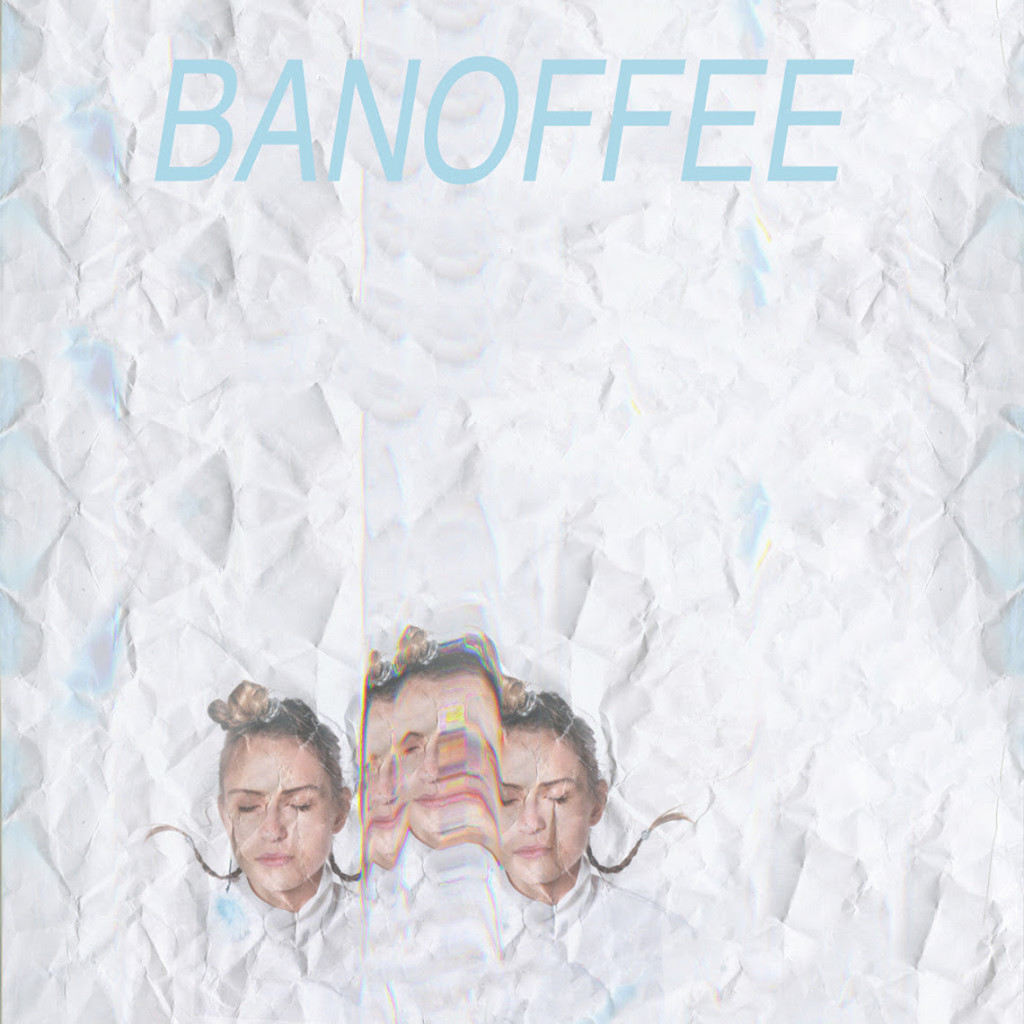
I’ve never tried Banoffee cake, but I’m pretty sure that digging your teeth into the creamy banana-and-toffee-flavored fluff must provoke a somewhat similar sensation as listening to the subtle R&B-infused synth pop of Martha Brown. But unlike her sugary namesake, the work of the Melbourne-born musician does not find its indulgence in extravagance — it would much rather celebrate carefully constructed simplicity.
Brown, who is also part of Australian pop band Utouto (alongside her sister Hazel), is releasing her first solo EP as Banoffee, a five-track record that is as sweet as pie — with a bitter aftertaste. By combining the frailty of her soft, airy vocals and whimsical melodies with the energy of heavy layers and strong beats, she explores the interdependent relationship between weakness and strength, vulnerability and power. This debate continues through in her lyrics, which often deal with heartbreak, hurt feelings, and the empowerment of getting through such experiences. Her minimalistic sound hereby becomes the perfect platform for her inspiring conclusion: “Weakness is the new strength.”
I talked to Banoffee about her inspiration, what empowerment means to her, and why she always picks the spotty apples.
Banoffee is actually a pie made of bananas and toffee. Why did you choose this awesome name?
I love the way the word looks — the double f and the double e just appeal to me. It’s also an extremely indulgent dessert, the pie itself is all for being tasty and nothing more. Banoffee for me is about being satisfying to play and write. I’m unconcerned about whether it comes across as cool or in trend. I just want it to be satisfying to play.
We heard you are a big fan of Joni Mitchell. Who else do you admire? How do they inspire your own work?
I’m inspired by a lot of people. Some of the people who inspired me early on were folk and country artists like Gillian Welch and smaller Melbourne acts like Nick Huggins. I’m all about honesty in music — not to say that fictional music doesn’t have its place and can’t be honest in it’s own way, but artists like Welch and Huggins use lyrics that aren’t made up just to sound poetic, but really words that resonate with who they are or the story they’re trying to tell.
What’s your favorite Joni Mitchell song/lyric?
As simple as it is, the line “give me spots on my apples” is still my favorite. It means more to me than its environment intent — people who show they’re imperfections are the people I surround myself with, the people that inspire me to continue to be real with everyone around me. I want spotty apples — always.
How did you get into making music?
I started playing viola in third grade and guitar in seventh, both my teachers encouraged me to improvise and write my own songs as I became frustrated with memorizing other composition quite quickly. My music lessons turned into discussions about different ways of writing songs and sessions of improvisation — both of my music teachers really shaped the way I view song-writing and how I approach it. Thank goodness for my Steiner education!
What is your creative process; how do you begin?
It changes for me every time, but a lot of the songs on the EP started with a feeling.
“Ninja” for example is a song I wrote to explore emotions I was dealing with at the time. I wanted something to help me combat feelings I wasn’t comfortable with, the more I wrote the more I understood things that were going on for me at the time.
Another thing which I think a lot musicians feel sheepish about admitting is getting inspiration from other artists. Sometimes my easiest song-writing is right after a show, or after listening to a certain album. I wrote “Got It” after listening to Drake on repeat for weeks on end. I wanted to make song focused on lyrical rhythm, something I think he rules at.
Your new EP is all about strength. Why did you choose this topic for your first release?
I guess it’s something I’ve been working on on a personal level, so naturally it came out in my song-writing. I think there are a lot of different ways to feel strong, and you can be as buff as you want but if you don’t feel comfortable with who you are then really you don’t have much going on.
The last couple of years I’ve faced some things that have made me question my values and how I live by them — this EP is a reflection of that exploration. I’m not there yet, I’m not sure if I ever will be. Self-doubt is inevitable, but these tracks have helped me combat that doubt. Admitting vulnerability used to be a big thing for me, now its something I talk about a lot. This EP helped me do that.
What was the last time you felt really strong?
This year I’ve culled a lot of people from my life. I wrote an email to a friend a while ago telling them that they had treated me badly — I never ever do this. I often feel that if I’ve been treated badly that I deserve it in some way. When I pressed send I realized that I’d done something new and something that I was scared to do. I felt like a schmuck and a warrior at the same time. It’s the little wins that make the big ones possible.
What has been the most empowering experience in your career?
That’s a really hard question, I don’t think I can name one and be comfortable with it.
I played a show a while ago in Melbourne when I was feeling particularly shit, and when I got to the outro of “Ninja” I burst into tears and had to stop for a moment. Everyone cheered me on, and I started playing again and sang along with the crowd that I was a ninja and wouldn’t be brought down.
I was actually really embarrassed, but after when I was backstage I thought that about it and realized that I’d done what I’ve always dreaded — I’d been sad and human in-front of a crowd who expected me to perform as the product I’d created. It was the first time I’d been Martha and Banoffee at the same time and it felt really good.
How do you intend to empower your listeners with your work?
I hope that people take what’s relevant to them from my work. I don’t want to push anything on anyone. Mainly I want people to be able to see that shy people like myself can still get up and give it a go.
I feel like the biggest loser most of the time, but I’m doing my thing as the dag that I am, and hopefully other people will feel like they can come out of the woods and do the same.
Weakness is the new strength — I hope that people can be inspired to be honest and to deal with the consequences of it.
How have you evolved from your first track to now?
I feel more comfortable showing people songs that I’m unsure about. I used to wait until things were finished and ready before I shared them with my friends. These days I feel more confident to ask for opinions and work collaboratively.
I also love playing live, which used to freak me out big time. Playing live gives me a rush. it used to give me palpitations!
You work with Oscar Key Sung a lot. Why do you complement each other so well?
We’ve worked together for so long that I think musically we just get each other and can critique each others work without beating around the bush.
The fact that we’re best buds also adds to it I think. We’re writing some duets at the moment and I really think you can hear the companionship through the music. If we were a game we’d be domino’s — we trigger things in each other that can make whole songs happen, or make whole songs fall apart.
What can we expect from you in the future?
I’m trying hard to improve my production techniques, and experimenting a lot with more boogie appropriate tracks. Hopefully you’ll be able to have a little shake down to my next song.
I’m also trying to be as non-committal to genres as I can, so there may be a couple of more folk or hip-hop influenced tracks in the mix. Whatever makes me happy is what I’ll play. Hopefully someone likes it!
Banoffee’s self-titled debut EP will be released on Two Bright Lakes/Remote Control Records on August 22, 2014.
Soundcloud
Facebook
Twitter
Tumblr
Interview by Kim Proschka.