
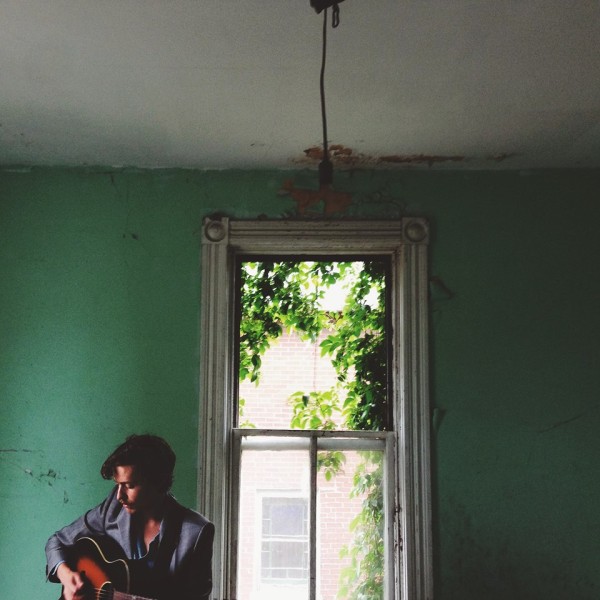
I headed three hours east towards the Illinois border. Small Houses, a folk project and alias for singer-songwriter Jeremy Quentin, was playing a show on the muddy banks of the Mississippi. I’d missed him in Iowa City back in February or so and have been kicking myself for it ever since. I was determined not to make the same mistake again, and threw my fucks out the car window as I roared down I-80 with the radio blaring. The traffic was good and I was setting the road afire zooming past cars and semis to get there early enough to have a few moments with Jeremy before the show.
On the Mississippi river bed, in downtown Rock Island, sat a small, cozy venue with a narrow bar and warm faces called Rozz-Tox. It was there I found Jeremy sitting at the bar enjoying some micro-brew beer, intently talking to the bartender about some shit venue that treated their artists like dirt. We met, became aquatinted, and, to top off my drive, I ordered myself a beer (PBR to be specific and show my poverty).
Jeremy is the true kind of troubadour with sad, blue eyes that hold a million and a half road-worn stories that become apparent in the songs he sings. A natural midwesterner with an honest sense of brotherly love and a bad case of wanderlust. He’s the kind of guy who’ll give a bum a cigarette if he asks for it (which is what happened) and have a conversation with him, too. The road he’s been on for eight years now shows in the lines of his face, like little maps to the places where he’s been and gone. While we chatted before his set, he told me about his experience on the road—everything from the multitude of Wal-Mart parking lots he’s slept at in his trusty car, which he told me only has “about two years or so left on it,” to dealing with the Atlanta heat in the summer and being unable to sleep past 6am because of it. He talked about the various “homes” he’s had over the years (his favorite being Philadelphia) and other aspects of being the American nomad that we all secretly want to be. When I asked him if he enjoys the struggle or if it ever gets him “down” that he still has a pretty small following, he told me that he “couldn’t imagine or stand doing anything else—there’s no other option.” It’s easy to romanticize this folk singer’s life, sure, but the most entertaining conversations we had all night revolved mostly around football and his favorite team, the Detroit Lions. An avid fan, we rejoiced over the win the Lions had against the Packers last Sunday (as I’m a Bears fan). We even got talking about fantasy football for a while. All those little personal details about him (that you, too, could learn if you attend one of his shows and talk to him afterward) all the more cemented the honesty I sensed in his songs—and his performance drove that point home.
When it was time for him to play, only a handful of people were there to enjoy what, in my opinion, was the greatest, unheard of folk performance in the country. His songs spoke of those stories he told me with beautiful guitar licks and clever metaphors that struck a chord in me (and anyone who would take the time to listen). He played a few tacks of his last album, Exactly Where You Wanted To Be, and a number of songs off a new, upcoming record (his fourth effort, which, from the songs I heard, will be as flawless as his first three). Jeremy’s stage presence is the only example of what I can call, “contained passion.” You look into his face and see everything he’s feeling while plucking away at little hammer-ons—telling stories of his life in such a melodic way that I, personally, was wrapped up in the whole moment of it all, hanging on to every word (to use a tired, old phrase). But never does he fall out of tune, never overwhelmed by the emotion he’s conveying to commit the slightest mistake in any of the songs he plays. I could tell he was lost somewhere else, though, while he played. A scrunched face dealing with memories that have been put to song and now played before a number of strangers in effort to connect and share—there’s no one of our generation who can do it better.
The set only lasted a good thirty minutes, and afterward it was time for more conversation, beer, and our own form of soul searching. Not playing any songs from his second record, North, I asked Jeremy if I could play him a song or two, to which he replied with cigarette-stained eagerness. We went out the back door of the venue and, using his Michigan-made guitar, I played him his song, “Late July.” And let me tell ya, there’s no feeling like playing a song like that for the guy who wrote it under the Illinois stars after the last night of summer. It was pure bliss, and if anything I hoped it showed him that his songs do have an astounding impact on the people that listen. For if Small Houses never gets anywhere, if the people that stumble upon Jeremy and his stories aren’t touched in some astounding way, then everything is meaningless and Nietzsche holds validation for asserting nihilism. I’ll live and die by that statement.
Review by Trevor L. Sensor.