
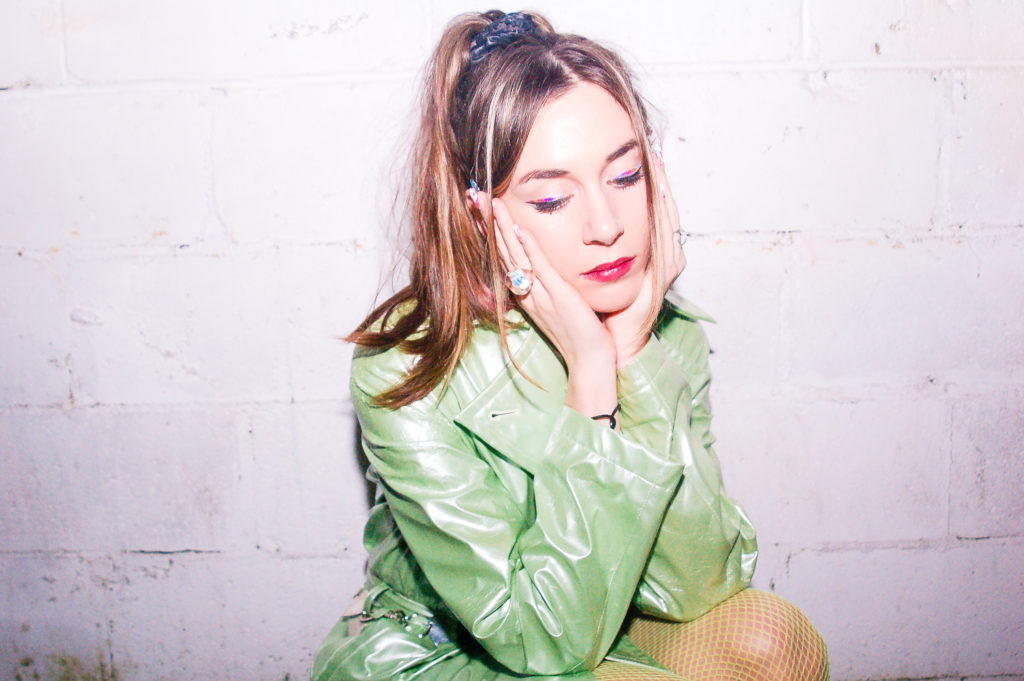
Photos and feature by Lola Pistola
The first time I saw Cowgirl Clue live, it was sort of a happy accident. Her song “Utopia” was already part of my Spotify summer repertoire, and after hearing we’d be playing the same venue for SXSW in Austin, Texas, I had to make sure I was able to see her set. But, of course, after 10:00 p.m. any unofficial act is a drunken blob of emotions and getting your equipment to the cheap Hotel 6 you copped via your Expedia rewards whatever program is the least of your worries — and when I say ‘you’ I mean me. I had to see Cowgirl Clue. All I remember was finishing my set at the outdoor patio located inside the Austin bar and venue, Spider House, grabbing a drink, and heading towards the indoor stage lured by drum and bass beats that welcomed anyone and everyone who dared not be outside for another rock band. There, Ashley Calhoun (better known as Cowgirl Clue) commanded the stage with an attitude like no other — bold and contained, yet messy and elegant. Cowgirl Clue, as a live act, is a mixture of sounds that goes from tribalistic to bubblegum pop paranoia, a combination that’s anything but futile. Its an escapade and melodic experience that’s fun and personal. Her debut full-length Icebreaker encompasses world rhythm sounds with dance elements in a cohesive manner that makes it undoubtably the “Cowgirl Clue” sound.
Let’s set up a little bit of background. I was curious — What made you get into music? Did you play any instruments as a kid or a teenager? Was there anything that caught your attention and that’s why you started making music?
Cowgirl Clue: When I was super young, I played keyboard — I got a keyboard for Christmas and I did it for fun, covering songs and shit. But then when I got a little older, I took guitar lessons. It was kinda weird because the first thing [my guitar teacher] said to me was “So, you want to be a rockstar.” Pretty much after that, I didn’t want to go anymore because that wasn’t my motivation. I just wanted to play an instrument, like, properly. Then, as I got older, I started to play the bass — probably when I was fifteen or eighteen. I started a few random bands, like we’d play one show then we’d stop. I don’t know, I don’t really play that much anymore.
Around that time when I was seventeen, I started DJ-ing, making mixtapes and stuff like that because I’ve always liked dance music and I hated what DJs would play when I’d go out to a party. Eventually [I] got tired of that. I mean, I still love DJ-ing now, but I think I needed a break. At the time, I would just take any gig and I started creating dance nights and stuff like that. I kind of needed a break and started making my own music and stopped playing other people’s music so much… that’s how I got into music.
Did you curate dance nights deejaying?
Yeah! Yeah, I started some raves in Olympia, Washington and dance nights and played pretty much anything I could play just to DJ and it turned out to be something I really liked to do. When I was younger, I really liked dance music and pop music and I got more into techno as I became a DJ — the more experimental stuff like that.
You can tell you blend a lot of genres. Even though it’s dance oriented, there’s a lot going on. For example, I feel I’ve always felt like with your singles “Utopia” and “TAXI TAXI,” they are very fast paced and thumping bass — like if you were like jumping in a rave. Do you build them up in states and atmospheres within your music on purpose?
Yeah, yeah! I think I make a little bit of a theme and I really like creating atmospheres with sound. I like to have visual content and things people can kind of relate to or find fun. For me, it’s really easy to sit at a piano or a synth or even a bass and make that music. The first thing I’m probably gonna play you is some sad tones and stuff, because I don’t know, maybe it’s because I’m a Scorpio or something, but it’s more difficult for me to make upbeat pop music. I like the challenge of doing that.

Yeah, that’s like a little complicated too because when you sit down, it’s just you and the instrument. Whatever you pick to start writing first, but then you end up making these very complicated songs. There’s fast breaks, drum and bass, [Guinea] Bissau out there. It’s so rhythmic. Like I listened to it like 20 times, probably more, because I totally loved the calypso vibe. I thought it was tropical in the beginning, but then it turns to be this older part of it. How do you blend those together because there’s a lot of world rhythms — you know, like drum and bass, you have some trap, R&B, hip hop — like there’s a little bit of everything…
My goal is to not make every song sound the same because I want to keep evolving. That’s kind of what Vada Vada [Collective] is to me, which is a collective or genre I am a part of — whatever you want to think of it as — and a lot of times, they’ll just start with the drums and then I’ll see if I can put a cool sound over it, then eventually move onto the bass. I always liked the loud bass, even if it’s kind of quirky. I’ve always listened to a lot of various types of music in my life, so I think I’ve always just taken inspiration from having an open mind or listening to music, and “Buzzz Out” is a really good example of that — trap beats mixed with steel drums, and a quirky break down. You know, I just like to have a lot of personality with it.
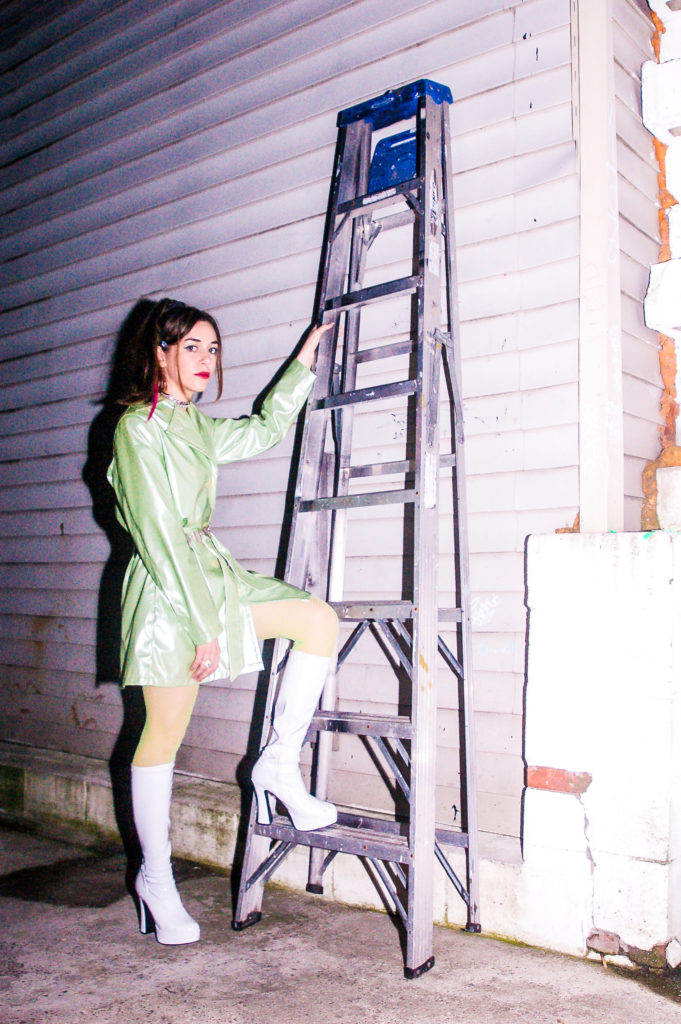
I think it’s fun just to fully reflect who you are as a person at the end of the day.
I’m still developing a lot, so since this was my first album, I think it feels good to get it out there and I have a new direction. I’m kind of like that person that will draw something and never look at it again, or make a song and obviously, I would keep playing the song but like, I think that reflects who I am, or at least where I was at one [point]. [In my old tape], I was trying to discover my sound, what I wanted in music, and it was kind of more like an experimental EP, I guess. Things I was going through at the time sound more sad. There’s not as many upbeat songs on that EP, but more interesting notes or rhythm, I guess. And now I feel like I’m in a little bit of a better place. I kind of know what I want to do now, at least for the next few months. I think my music definitely represents my personality.
To show us some perspective, it’s very different now. Like you’re saying “I see a song and I don’t touch it again,” you feel you do the same with performance and you try to challenge yourself to do something different when you’re in front of a crowd. I remember when I saw you in Austin and it felt like more of a party vibe and you were like the dance host and you got your moves and it seemed a little bit choreographed. But now, I feel like I was entrapped on how you were letting yourself go, yet still so in control of these purposeful tunes and throwing yourself into the crowd.
I mean, I’ve been trying to do something different every show. There are some times where it’s definitely more soft and dance-y, but sometimes I could be more aggressive, just kind of depending on my mood. I was a little sick of that show, so like I don’t know, I’m just gonna let it all go. I’m still in control of the situation and the vibe of the show; I was just trying to build off of that and come out with a different, kind of more rock and roll attitude.
Yeah, it really came forward that way. You were in the moment, and still, you were performing your song.
Yeah, I think that some of my songs can be interpreted in different ways. Sometimes I really want to embrace that bubbly side, and sometimes my core is like a guy [who] grew up pretty in a punk attitude. That’s kind of how my background with music is so I think sometimes, I’ll demonstrate that side a little more, you know? If someone pisses me off, I’ll probably kick them or whatever, but I’ll also like dance and hold their hand at the same time. I guess it just depends on the atmosphere. I think there’s also just room for that in music — there’s no rules. I think people get caught up in the rules that they make for themselves. That’s kind of how I see it.
How did you decide to have your first full length [album’s] theme called Icebreaker and having a song [called Icebreaker] as well? The song is very poppy, it has the synth, and your voice is reverbed out. The breakdown part, the bass and the guitars… I feel like it’s like a little bit of everything from the album. Do you think it’s more aggressive than most of your songs, like when the drums, bass, beats, and fast breaks come in?
It was an older song, but it’s gone through tons of transformation, especially the most recent version of it sounds so different from the first version. I added the guitar as a last-minute decision, but for “Icebreaker,” I wanted to have more of a K-pop inspired guitar, or like baby metal, Japanese pop, just like weird distortion sounding songs. I think it’s kind of like breaking the ice and I think that would be a good title for my first album. I think it demonstrates a nice variety of sounds and is also just playful. I thought it would be a cute addition to maybe an album as well.
Like you said, you’re like “I get to have it out there. Now, onto the next.” What’s your process like when you’re writing songs? Are you constantly doing so? What’s your year like? What’s your life like?
Well, it’s picked up a lot in the last couple of years and I’ve worked several jobs throughout my life. I’ve moved to California a couple years ago, and that’s when this project sort of started and I stopped deejaying. Every day is pretty dang different. Like, I love playing shows, so if I can play a show, I’m usually pretty stoked. As far as writing goes, usually, I’ll sit there and try and push the song, and if nothing’s coming out, then I try to not force it. It’s just frustrating. Like, sitting there. Sometimes I think I have this idea of what I want to do and then I sit at the keyboard or at a computer and it’s not coming out. I don’t know what it is. I’ll write down the idea and come back to it another day, or maybe never come back to that idea at all. On other days, I’ll just make like five songs in like three days or something — if you get in the groove of things and practice a lot, that’s when the best comes out of what I do.

Yeah, it’s definitely finding your own pace while writing — finding the right sound.
I think it took me a long time to really know what kind of music I even wanted to play because I’ve bounced back and forth between making experimental music, punk music, dance pop, and electronic, so I guess that’s why I finally feel like I’m kind of stepping more into what I want to share with people now, [in comparison to] what I did a couple years ago.
It’s a good, happy medium. It’s important to take your time and look everywhere when you’re making music. Regardless of what your putting up, just continue writing.
Totally. Oh yeah, you’re a musician. You get it.
I’ve experienced this as well. I don’t even know how to explain it. From my personal experience, if I cannot go out and perform at a show, I would be entirely lost. There’s no way and I don’t see there being another way, which is so crazy! Like what am I going to do?
I start to feel like I have so much balled up and I’m like “I need to play a show soon.” Or even with writing musically: “I really need to write!” It depends on if I start slacking off and obviously [that’s sometimes] the case. At the same time, as far as creative processes go, I was just thinking about this, but sometimes, if someone’s like “if someone’s moved to LA, I’ve got a lot of people who really want to come and hang out in the studio or something.” If I did that, I feel like I could never write music. It’s just so personal to me with my process and how I go about it and stuff. If I’m on the spot, then it’s a load of pressure. I like to do things solo.
Do you make all your music on a computer digitally? Do you use a keyboard? What’s your hardware like? What do you use?
Well, for most of it, I use GarageBand, then I switched over to Logic pretty close to the end of this album and I was so excited to switch over because I feel like it opened up a lot of doors. I used Ableton and honestly, my brain wasn’t ready for it. I don’t know I’m just not an Ableton person. When I got Logic, I was able to buff everything up and fine tune it — there was more room to grow, so now I do a lot. Recording, I just do a little in a tape recorder, and then I just usually record everything one track at a time. I usually start with drums or drum loops and then kind of go from there. “Icebreaker,” for instance, is a good example; the song sounds super different from when I first [made it]. I’ve been playing that song for maybe like a year or two and that song first started out as the intro and I’d throw it in my set as an interlude, and then I started to build a song off of it. Then from there, I listened to it, and towards the end of the album, I realized it doesn’t even really fit and I had already decided that I was going to name my album Icebreaker. I felt like it was a little witty name for a first album. So, I went back and I took out a bunch of the drop parts, so on the chorus there are little bubbly synth sounds that are after every measure. Then I added guitar and was like “now this is fitting the album and I really like the song.” Each song just goes through transformations and some don’t make it, but some do.
I was just curious because even at the show you played at Trans-Pecos, there were so many genres under the same roof — do you feel like your identity and your role as a female musician and producer makes it easier to get away with playing dance music at rock shows? I think it’s a nice thing because kids come from such different backgrounds and enjoy so many types of music.
Yeah, definitely. The internet, for those who use it, is a really good tool to find new music and now we have all these apps like Spotify and stuff that introduces new music on their algorithms and stuff like that. I definitely do fall more into that just because I started with living down the street from Burger Records when I was in California. They became my friends and I went to shows, and I put on my cape with them, so I feel like I definitely played more shows with bands — like more rock bands and whatnot. I would like to play with more artists that align more [with me], but I think it’s like a challenge to get like a rock crowd to start dancing, especially being a female with different themes. I think a lot of people for a long time just kind of laughed at me when I brought DJs to an indie show, or whatever. I would play for free or no money because I didn’t even know — I just wanted to play. So I think, as I’ve established myself as a female [musician] and when I play shows at Trans-Pecos, I think those kind of like frustrations might come through more. I think that everyone has rage and especially women can have rage and it’s good to not just always be so… you know, we’re living in a time where anything is perfect and anything can happen because of the internet, and you can delete anything you can. I think it’s important to show your full side as a performer because it shows that you’re a real person, you know, that kind of thing.
I felt like that was such an interesting way of putting things — it’s like everything was a different soundscape, between electronic music [and more], but it felt like the same energy as when you go to see any rock band, people are still doing the same thing. I haven’t seen that in so long, which was great.
I think right now too, there’s just like way more of an interest in DJ culture and electronic music, and there hasn’t really been a time for that kind of music in a long time, so there’s just a lot of room to grow. It’s interesting to see a lineup at like Trans-Pecos, to see what people are doing in that kind of like minimal gear, digital sounds, and having all these different varieties of aesthetics for a night and it’s fun.
Come to think about it, human interaction is so limited to our phones now and having that reaction to meet digital music and electronic music nowadays is just so normal and so in contact with what we do every day.
[Electronic music] hasn’t been popular since the 90’s, more on like a tangible side of things. There hasn’t been a lot of Diplo, like a lot of dubstep and stuff like that, but I guess it’s really like in a more DIY way, so it’s interesting to see how people are doing that. And yeah, it is like a punk kind of attitude similar to when you go to a punk show or a hardcore show — it can feel the same.
Yeah, well thank god there’s not that many people anymore and that wave rides in the next 10 years because there’s still a very vibrant and live, powerful, underground, electronic scene [and you can see] the mixture of both. The way you do it, for example, you’re associated with The Garden and there’s also Viagra Boys. Have you listened to Viagra Boys? At first, you see them and you think they’re gonna scream in your face and they’re a dance group. They’re a dance group. They’re dance-y. They’re like very rudimentary — it’s great. It’s like… I feel like it’s important.
I’ve always kind of seen rock and roll and punk with more of an attitude. I mean, I’ve seen a million bands that I don’t even like, but if they can bring a certain attitude, it shows interest. Some people will go out with their looks, and then you’re like “wow, this is kind of disappointing.” It can be used well, or it could be used in a weird way.
Follow Cowgirl Clue on Spotify, Soundcloud, Instagram, and Twitter. ‘Icebreaker’ is out now.