
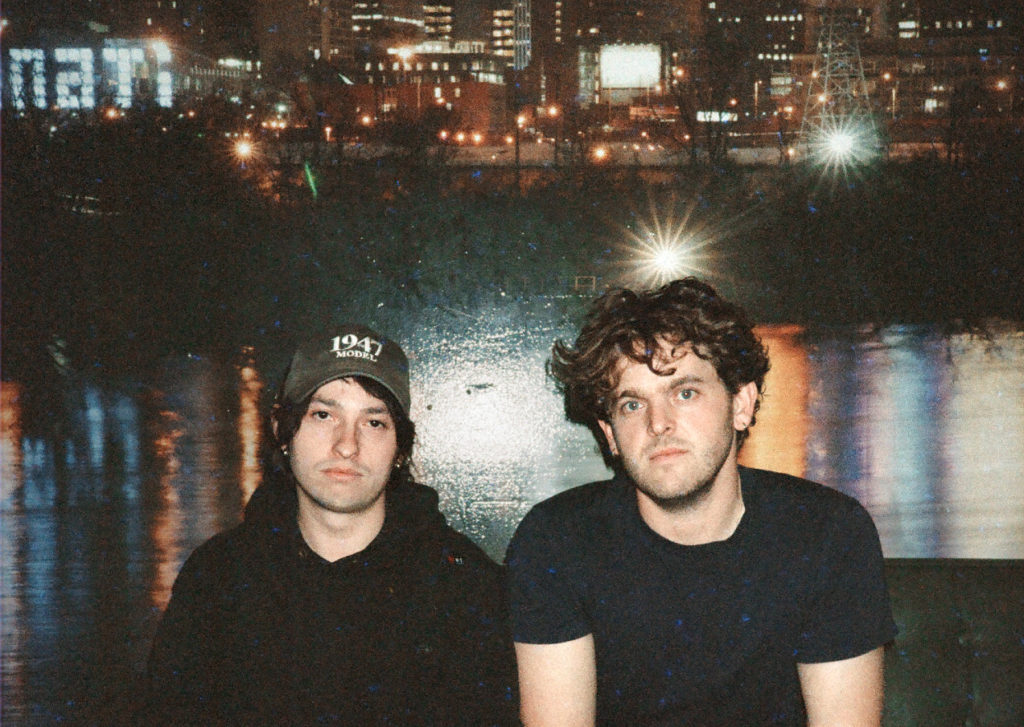
With just one listen, Ray Bull’s music sparks an immediate conversation of movement — foot tapping, finger snapping, head bobbing, side-to-side swaying.
I got my first glimpse of the band at a local gig in December 2023 and walked away wanting to know more. The performance, not the music, was unplugged, marked by deadpan delivery and a touch of physical comedy: In a bold move, one half of the duo dropped his pants mid-song and sang the remainder of the track with them puddled around his ankles.
Intrigued? Oh boy, there’s footage.
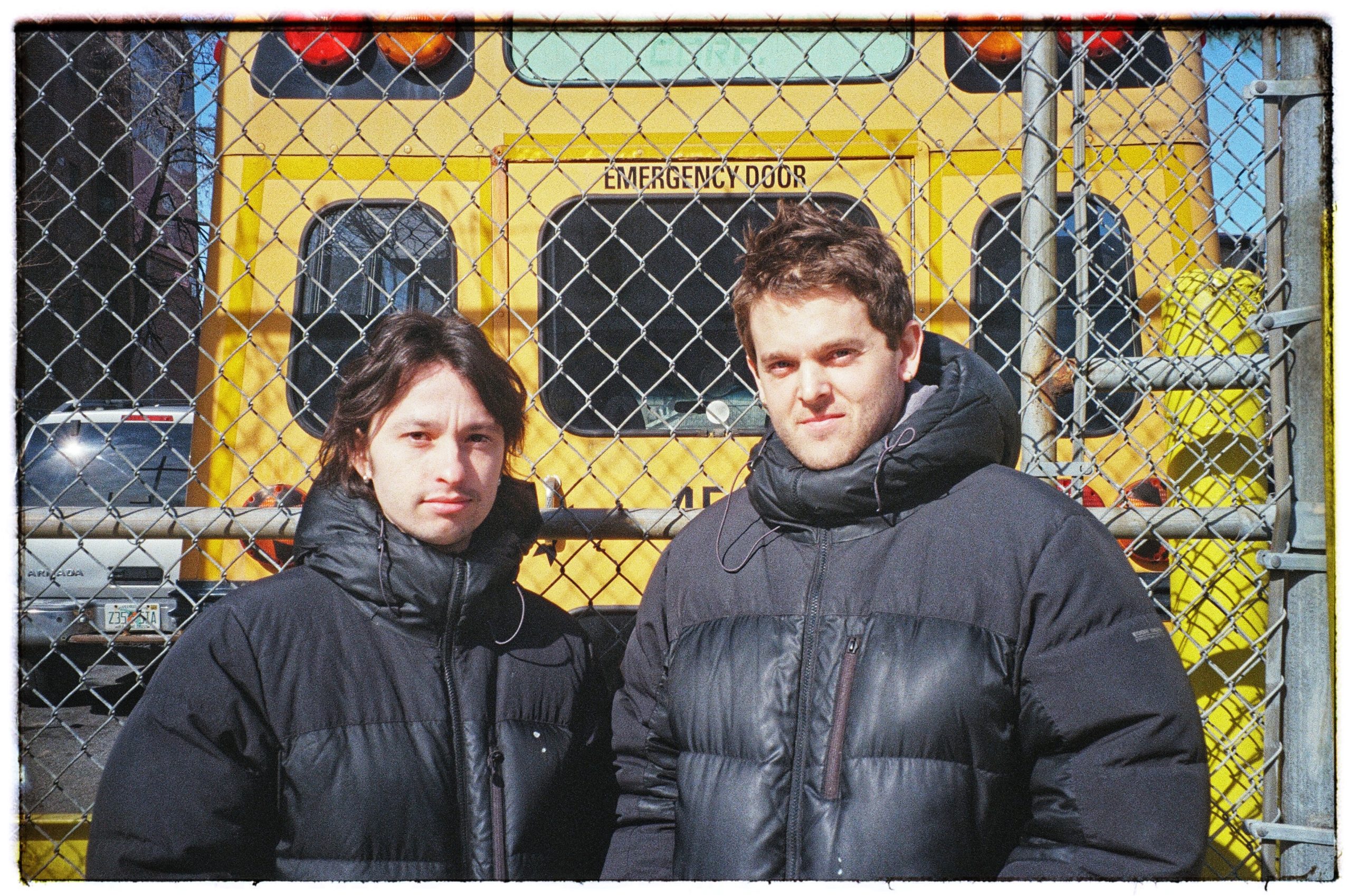
You don’t need to be a superfan to hum along as cascading indie pop melodies become instant memory. The Brooklyn-based band — consisting of Tucker Elkins and Aaron Graham — will release its upcoming EP “Little Acts Of Violence” this Friday, February 21. A diverse collection of seven tracks that are identifiably Ray Bull, the EP features production work by Patrick Wimberly and Laiko. Four songs have already dropped, including “Better Than Nothing,” which is approaching 1.2 million streams on Spotify. It explores themes of rebellion and power dynamics amid alienation, while the EP’s title track delves into the depths of emotional emphasis.
Tucker and Aaron didn’t play in bands in high school or college. They met while studying visual art at Cooper Union, and as acquaintances throughout their studies, it wasn’t until after graduation that they began collaborating, encouraging each other’s budding musical wares. Now, their collaborative songwriting process seems endless, uninhibited. So much so that narrowing down which songs would make it onto the EP wasn’t easy.
“The process of picking the songs, since we’re always writing, was [choosing the] songs that were rising to the top of our awareness as we were approaching deadlines,” Tucker said. “With a longer project, which is something we want to do next, it’s going to be a different process. But for this one, since we knew it was going to be short, we were following our senses of what’s going to be a good one for us to work on without a feeling of ‘What is the overall statement?’ But there always is and you don’t always know until later.”

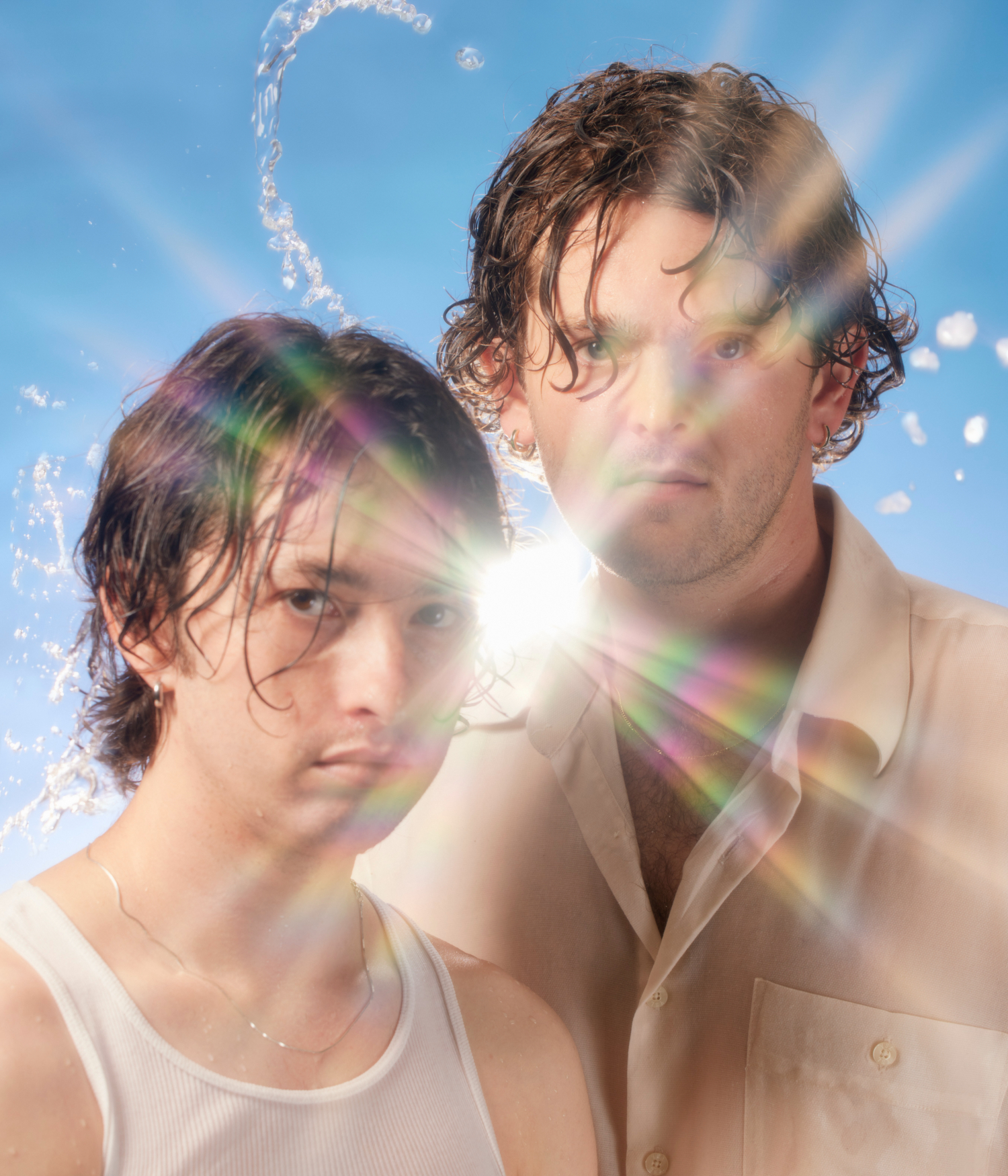
Their 2021 debut album “Baby Mode” — a blend of “eclectic yet classic” influences, from Alice Coltrane to Harry Nilsson — marked their first full collaboration. As Aaron put it, in this one, they let their “weirdness rise to the surface” while staying true to their diverse inspirations. Following this, their 2023 EP, “Easy Way to Lose,” introduced a breakthrough sound. The EP’s hit earworm, “The New Thing Dies,” has surpassed 10 million streams across platforms; it’s one that inspires toe-tapping.
Tucker, wry and equable, pulls off Tom Chaplin-esque projectile, wailing vocals, while melodies of plinking and ploinking pizzicato recall a sound that reaches even further back, that of another two-man band, China Crisis. Aaron, a natural harmonizer, reflects that talent in his personality as well.
And their visual gears still grind. “What we’re trying to get at is something that’s hard to articulate or explain to another designer, and we’re always feeling through our ideas, and the music and visuals sometimes feel combined,” Tucker said. “So it’s a natural extension. Once we finish a song, the cover feels like an interesting next step, a slight shift into a different language but you’re still trying to get at the same thing… And it still feels like just as much of an expression.”
That expression extends to their significant social media presence, to their 623k followers and with over 13 million total likes on TikTok alone. They’ve cultivated a loyal fanbase through both music and fun videos comparing ‘songs that are the same’ — like College & Electric Youth’s “A Real Hero” and Britney Spears’s “Lucky” — calling attention to shared beats, basslines, vocal textures, and other musical traits.
“Little Acts Of Violence” drops February 21 via AWAL. But that’s not all: The band will kick off a two-part national headlining tour on March 7 at The Atlantis in Washington, DC, wrapping up at The Troubadour in Los Angeles on April 25. They’ve previously headlined venues like the Music Hall of Williamsburg and Elsewhere, and have toured with artists like Stephen Sanchez and Ricky Montgomery, gracing festival stages such as Osheaga and Shaky Knees.
Catch them on tour — who knows what surprises await…
TUESDAY, 12:30 PM, FEBRUARY 18, 2025, BROOKLYN
Charlotte: Coming from backgrounds in visual art, how do those methods and experiences continue to influence your music-making process?
Aaron: We didn’t grow up in bands and I just played music for myself, I didn’t dare do it in front of anybody else… So, we never had this drive to be in front of an audience or on the road. That was never a dream of mine.
Tucker: Or be rockstars. (Laughter.) Not that we are, but you know what I mean?
Aaron: To be international superstars…
Tucker: …Be super known for being hot and famous… We never wanted that, it was just plopped onto our laps.
Aaron: But we took that art-making mentality and brought it to music. Making a song is the same thing as making a collage or a product, something that has an audience you’re thinking about. So, it wasn’t a major leap for me.
Tucker: There’s a slippage there that we enjoy. I started making paintings at school, then sculptures, then videos and films. I’ve made videos and songs that feel like one project. It feels like another side of the same coin, just a different way to make art from a place of exploring ideas.
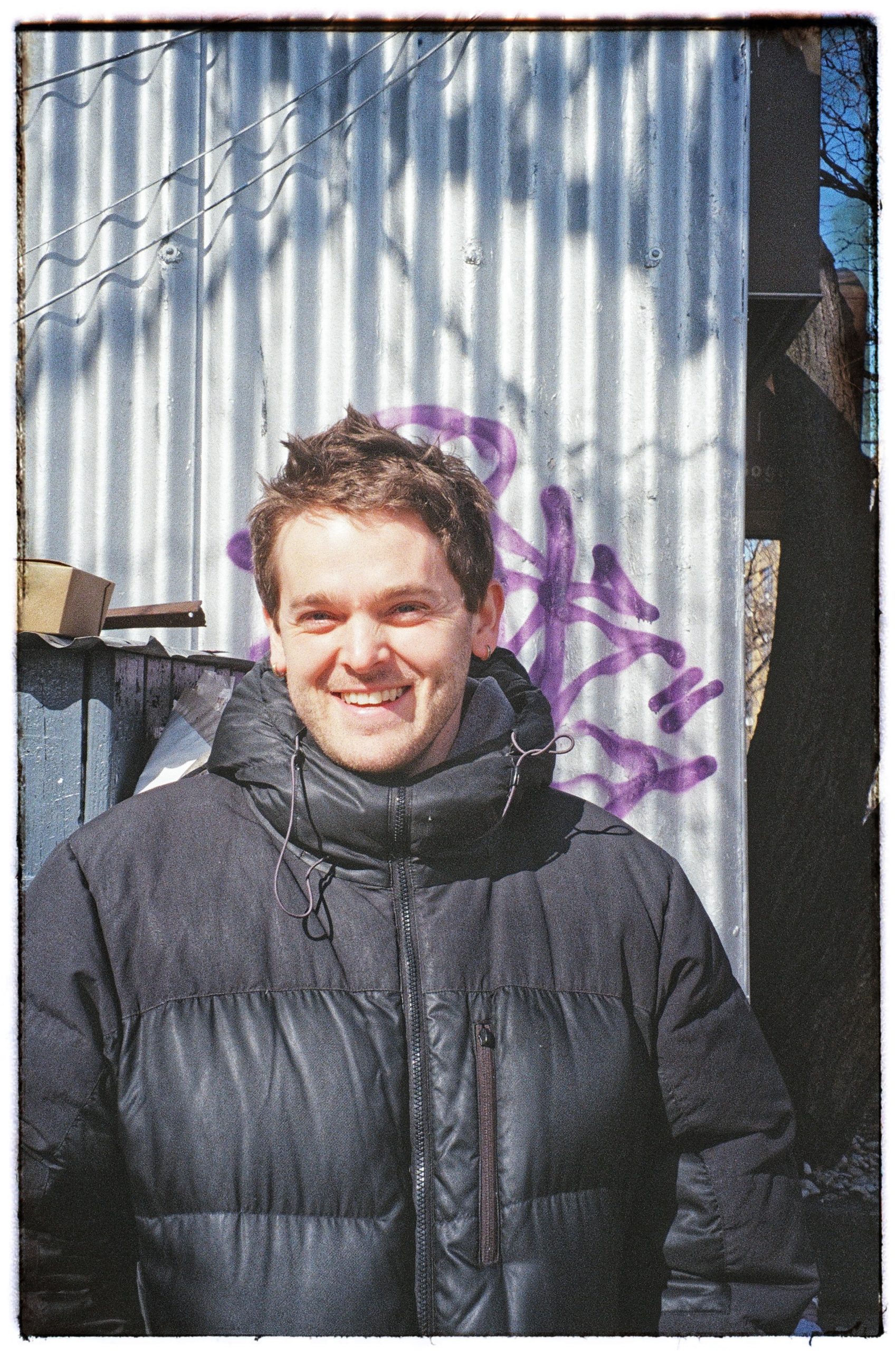 Charlotte: How do you feel that visuals complement your songs? Would you say they’re just as important as the music?
Aaron: I wouldn’t say that, but I think we treat it that way. Because we love doing it, once there’s an opportunity to make a visual thing to accompany the music, we become obsessed and put a lot of time into it. We usually try to make something weird and that doesn’t make any sense but still strikes a chord that feels familiar or sad or sweet. That’s what we’re after with lyrics and imagery, too.
Charlotte: What did life look like after the release of “A New Thing Dies”?
Aaron: It kind of took us down this weird path.
Tucker: We put out the EP, and that wasn’t even the leading single. Our lives for the next couple months were just [about] so many meetings, so many people from the industry coming out of the woodwork to talk to us… It almost felt like a bomb went off, and the dust is just now settling. It helped us find a team and an audience.
Charlotte: Did the success of that track help you discover your voice as a band, or did you feel like you had it on lock before then?
Tucker: I almost feel like we’re still discovering and messing around with that.
Aaron: At that moment, there were a lot of people telling us [who we sounded like]. We have so many songs that aren’t out yet that are all over the place, and that’s kind of how we identify. There was a moment of ‘Oh, should we double down on this sound that seems to be how people perceive us?’ but I don’t think we’re even capable of that. We can’t focus on doing something like that, which I think will ultimately be to our benefit.
Tucker: There was no thought of ‘Oh, god, we have to do that again.’
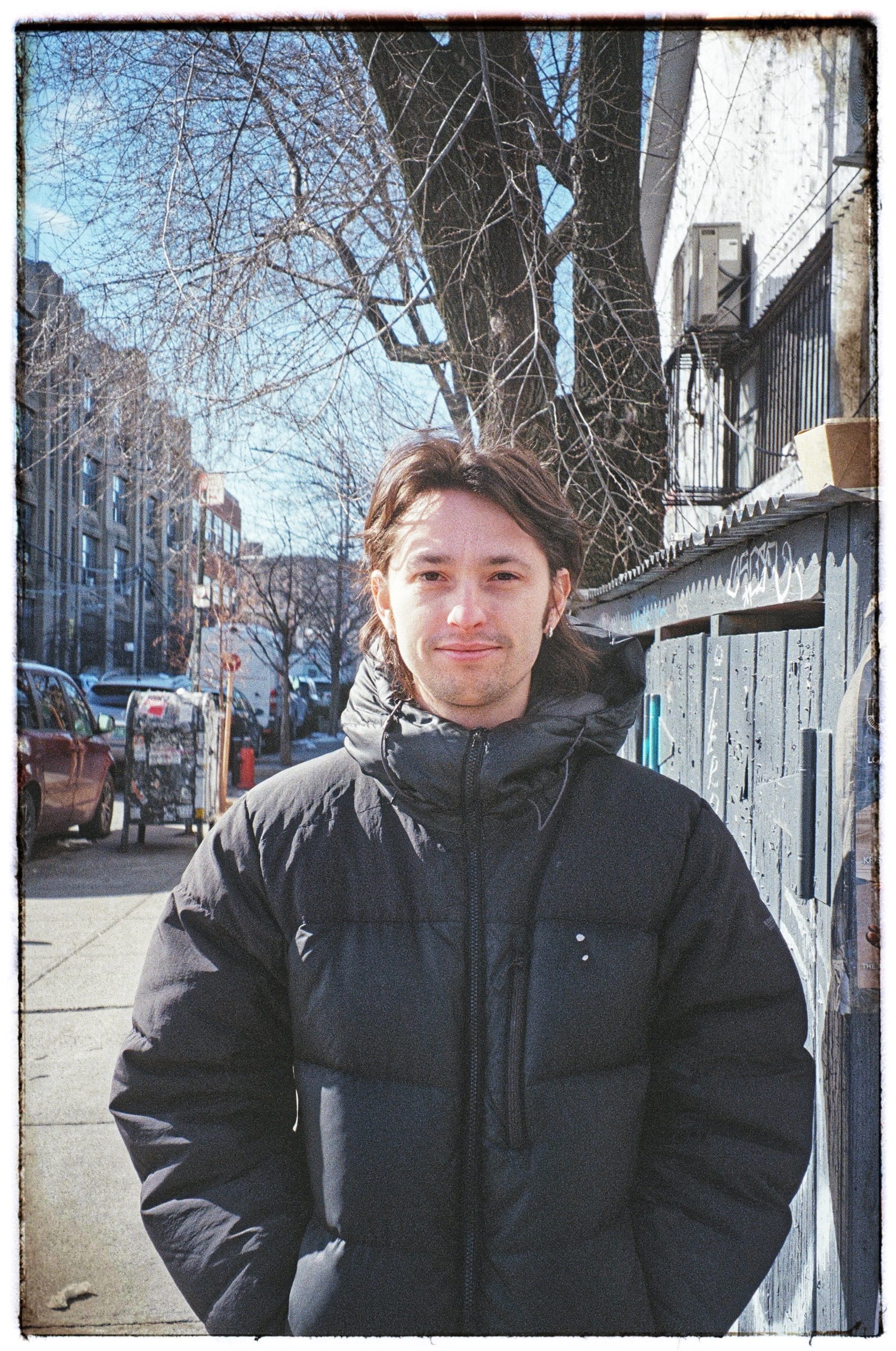 Charlotte: Let’s talk TikTok — how did that begin for you guys?
Tucker: So, we took out our phones and downloaded the app… (Laughter.) And then from there, it was just craziness.
Charlotte: Great, next… (Laughter.)
Aaron: We have a friend who goes by Sweet Joey Vermouth, and he attacked TikTok first and had a bunch of success making stuff called Bug Art. And we were like, ‘Damn, that really worked.’ He had a song that went along with Bug Art, and that did really well. So we thought, ‘That’s the way to go in terms of getting noticed…’
Charlotte: Rockstars and influencers!
Tucker: Rockfluencers.
Charlotte: That’s the headline.
Aaron: Oh, no, do not…
Tucker: Please don’t.
Aaron: We were like, ‘Let’s go for it,’ just trying anything and everything. We started off by making these misinformation videos that we thought were funny and fun, but people, I guess, were believing [them]… They were taking off, and we were like, ‘This is it!’
Tucker: But it wasn’t just purely misinformation.
Aaron: No, it was funny and weird.
Tucker: It was surreal video art, in my opinion.
Aaron: Yeah, but they were lies.
Tucker: They were lies.
Charlotte: Can you tell me one?
Tucker: Like Robert Pattinson is playing Elon Musk in the Musk biopic, and it’s being written by an AI screenwriter, released on Elon Musk’s rip-off of Netflix… Teslix.
Aaron: They were doing pretty well, and we were like, ‘This is it. These videos are going to go viral and people are obviously going to be like I wonder if they make music. Let’s listen to it…’ But we got shadowbanned-
Charlotte: Like, why? (Laughter.)
Aaron: I can’t imagine why. (Laughter.) So, that didn’t work, and we were really bummed. (Laughter.) We gave up on TikTok for a while but decided to try again with music. One of the first ideas we had was a mashup, playing two songs that we thought clicked, which went crazy after the first day.
Charlotte: Has that always been a talent of yours? It’s so frustrating when you can’t place a tune.
Aaron: No, that was the first time we did it. But it kind of changed our musical DNA, and now we can’t listen to music without thinking, ‘What is this song?’ It’s fun, but it felt like it destroyed our brains.
Charlotte: Have you always had that vocal versatility, the way you can bend your voices?
Tucker: I never liked singing. My dad was always wanting me to sing, but I never wanted to do it.
Charlotte: How has social media shaped your approach to making music and performing, or reaching an audience?
Aaron: It’s a weird relationship because it’s incredible and gives us the power to reach people [directly], and that’s so exciting, but it also has a least common denominator feeling of chasing something instead of expressing how you feel and hoping that an audience finds you. As much as possible, we try to engage with it as a tool to reach people but not get too sucked in…
Tucker: …Not let it change your point of view as an artist. Which, I feel like, can happen.
Charlotte: When you’re writing, do you picture a specific person or audience, or is it more so about conveying a universal message?
Aaron: I picture Shakira. (To Tucker:) Who do you picture? No, I don’t really think about an audience. I mean, sometimes you can’t help yourself when you see what other artists are doing and you’re like, ‘That’s cool, and they have a cool audience, too,’ but you just have to go with what you have and see what happens.
March 7 — The Atlantis, Washington DC
March 8 — The Foundry, Philadelphia, PA
March 9 — The Sinclair, Boston, MA
March 11 — The Garrison, Toronto, ON (SOLD OUT)
March 12 — The Loving Touch, Detroit, MI
March 14 — Ace of Cups, Columbus, OH
March 15 — Lincoln Hall, Chicago, IL
March 16 — 7th St. Entry, Minneapolis, MN
March 18 — Blueberry Hill Duck Room, St. Louis, MO
March 20 — The Masquerade Altar, Atlanta, GA
March 21 — Local 506, Chapel Hill, NC
April 12 — The Independent, San Francisco, CA
April 14 — Polaris Hall, Portland, OR
April 15 — Madame Lou’s, Seattle, WA
April 17 — Kilby Court, Salt Lake City, UT
April 19 — Globe Hall, Denver, CO
April 23 — The Rebel Lounge, Phoenix, AZ
April 24 — Voodoo Room, San Diego, CA
April 25 — Troubadour, Los Angeles, CA
May 14-17 — The Great Escape, Brighton, UK