
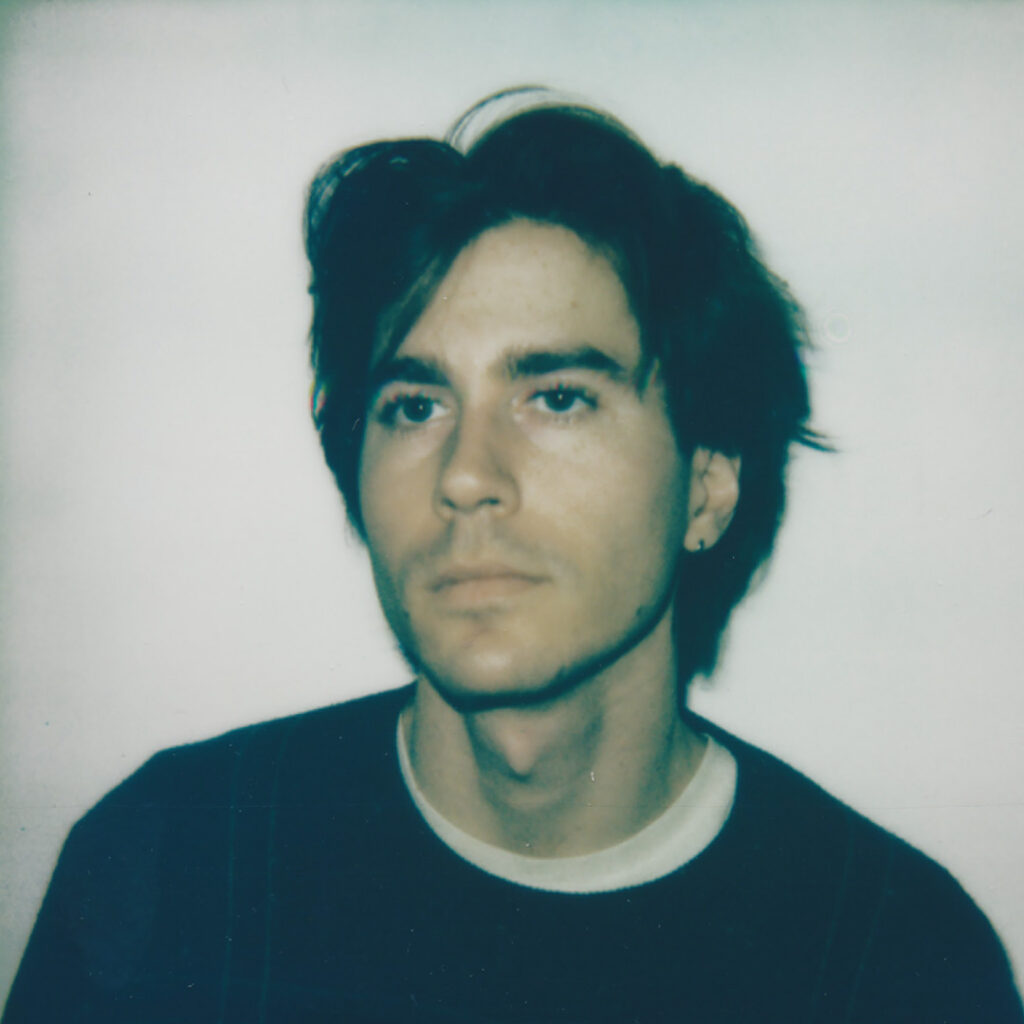
Photos by Roeg Cohen
You may know Jeremy Mock as the guitarist of the NYC rock band bloodsports or Wesley Wolffe. But, Mock’s innate state exists outside of distortion and effects. His solo project, face of ancient gallery, released its second album Like Kites two weeks ago. Sparse and unfiltered, Like Kites captures guitar and vocals live, and leaves them largely untouched. The album is a testament to songwriting’s most primitive state— a process both unguarded and imperfect.
I met with Mock to discuss Like Kites on a bench in Maria Hernandez Park. The birds twittered as the sunlight dappled through leafy branches. The environment reflected the defining characteristics of Mock’s work: organic and full of natural harmony. A classical guitarist by training, Mock answered my questions with sincerity, each response warranting a thoughtful pause. Both his music, and this interview feel deeply true to who he is. Like Kites is an act of honesty, and because of that, very special.
It’s been a little over a week since you released “Like Kites.” How does it feel to have the album out in the world?
Jeremy: I feel like it’s not too different. I finished Like Kites last August, and at this point, I’ve been writing the next album pretty intensely for a while. It’s not that I don’t think about it, but I feel like I’m onto the next one.
When did you begin playing the classical guitar?
Jeremy: I started playing when I was around eight. I remember my dad told me that if I kept playing for a year, he would get me an iPod Touch. So I kept playing, and I hated it. I thought the guitar smelled weird, and my teacher was weird, and I didn’t like it. But I was supposed to get an iPod Touch, and so I kept playing. Then I got the iPod Touch, and I quit. I picked up classical guitar again in high school, maybe when I was fifteen or sixteen. It resonated with me more when I was a little older.
When I was growing up, my guitar teacher taught me Bach.
Jeremy: The music I learned that stuck with me from that time is the 20th century stuff. I really like Leo Brouwer. He’s a Cuban composer and writes cool stuff. It’s very modern and takes nods from jazz and Cuban music.
“Like Kites” is an experiment in avoiding “sounding big,” how did this intention shape the album’s recording process and general feel?
Jeremy: All my favorite albums are from the 60s and 70s. In that era, recorded music was so new that a lot of the audio engineers that would record rock bands were classical engineers. Many early rock recordings are just, they set up the band in the room, they played, and that’s the record, no double tracking. There’s not really much of anything, it’s just the band playing and it’s how they sound. I mean you think of old Nick Drake recordings and it’s just him playing the guitar and singing. All my favorite albums were done that way and I wanted to do an album where I just played the songs and they were what they were.
Was it difficult to not let yourself re-record? As someone who plays guitar, I feel like I always want a perfect take.
Jeremy: Well, I would punch in here and there. It’s not totally live, but the bulk of it is, and I think in a lot of ways it was easier because I just kind of accepted that it wasn’t going to be perfect. I think too, more and more my goal isn’t to be perfect, it’s to create an emotional experience or some sort of reaction from the listener.
Was there a particular emotion that you were trying to convey?
Jeremy: I think it varies from song to song. The first album that I did was a sad songwriter album in a very traditional way. I was trying to steer away from that a little bit more on this one; it’s still sad, but I think it’s sad in a more everyday sort of way.
Throughout the album, your lyrics create such visceral imagery, is there a moment you can recount as serving as lyrical inspiration for a track on “Like Kites”?
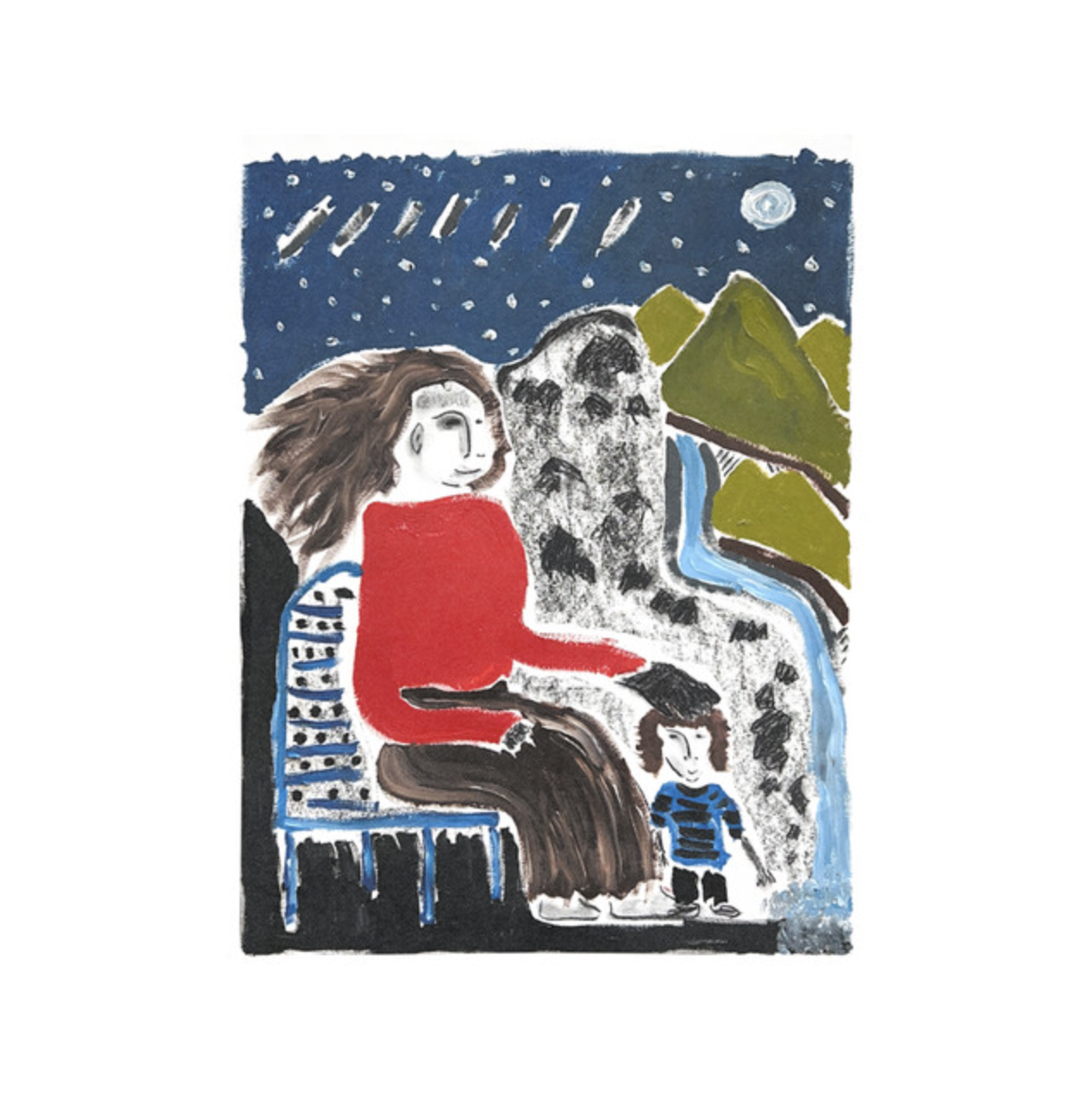
Jeremy: I’d say Yellow Hats. That one, I remember I wrote it after I was walking around Ridgewood on Halloween and there were all these little kids in their costumes and it was chaos. It was in the square where Putnam meets Myrtle. That moment struck me. So I guess that was something I was trying to capture there. I mean, I think a lot of the album, lyrically, I was trying to capture being a little kid. Not in a direct way, but just kind of the feeling of it, of being confused. At least that’s how I felt growing up.
Of being willingly oblivious to the world?
Jeremy: Yeah, and being like, “oh, I guess I’m going to do this right now.” I don’t know how to describe it necessarily, but I feel like when I was a little kid, I was confused all the time.
On “Like Kites,” you collaborated with your sister, Sofia Mock. What was it like to work with her on vocals?
Jeremy: It was awesome. Our voices fall into a similar place, and so I thought it worked really well. My sister is an incredible musician and songwriter on her own. She’s recording an album right now under her name, Sofia Mock. I initially started writing music because of her and listening to her songs, and my Dad as well, he’s a great songwriter.
Does your family share a similar sound to your songwriting?
Jeremy: I think that my songwriting is probably the most out there. My dad grew up on the border, in a town called Alpine, and my grandparents would go into Mexico a lot. My grandparents ran a music school and would teach Mexican songs they learned and they were taken by Mexican folk music. A lot of that got passed down, and my dad’s music is definitely inspired by Mexican music, as well as classic folk. But when I think of my dad’s music, I think of that influence. And my sister as well.
In bloodsports, your guitar parts are distorted and loud, starkly different from your work in “Like Kites,” do the two projects fulfill separate creative needs?
Jeremy: It’s definitely separate. bloodsports is collaborative, and this record was pretty much just me with some key collaborators, though it’s getting more collaborative. In my work, I had the final say, whereas bloodsports, it’s a band. It’s nice for me to have that outlet where I can do exactly what I want. But, I do love rock music and making loud and abrasive sounds. So, bloodsports fills that void.
You mentioned that your solo project is getting more collaborative. So for the next album, are you working with more people on it?
Jeremy: Yeah, my friend Jonathan Bailey is playing in the project now. He’s an incredible musician and has his own project called Lava Gulls. He’s been playing electric guitar and some electronics. I’m also looking for some string players. I’m hoping to make my project more collaborative because I’ve realized that I can’t do it all myself. I have a lot of blind spots, and in order to capture what I’m trying to do, I need more people to help.
Do you think Like Kites is distinct from your debut album or a continuation?
Jeremy: I think Like Kites definitely has more of a classical guitar influence. I’m always hesitant to talk about classical music because I feel like it’s got this air to it, which I don’t necessarily identify with. I think the album is a lot more me, too. I think it’s more vulnerable of an album.
How did you channel greater vulnerability in this album?
Jeremy: When I was making this, I wasn’t thinking about anything else other than wanting to make it. With the last album, I was almost trying to fit it into a context. I’m not sure what the context was, but I was trying to fit it into something. But on this album, I made exactly what I wanted to make.
When you make music, you always want people to engage with it. But, while I was making Like Kites, it was purely just for me. It was an outlet to experiment. I think the vulnerability comes naturally with that headspace of doing something for yourself. Whenever you make art, it reflects your life. The songs that I wrote on this, I was recording them as I was writing. That’s a big difference from the last album, where I had been writing those songs since I was eighteen. Like Kites reflects everything I wrote from the last year and a half.
You always think about artists that spend so much time perfecting an album. They’re like, “oh, this is the greatest thing I’ve ever done.” You know what I’m talking about? Maybe this is a bad example, but Siamese Dream, when Billy Corgan was going crazy over it. I don’t even really like that album that much. But I guess that’s an example of…
Perfect doesn’t exist.
Jeremy: Yeah, perfect doesn’t exist. I think I err on the side of having the music be for me more than anything else and that lends itself to making things and letting other people decide if they like it or not. Just making it and putting it out there. That’s what I lean into.
If you had to describe “Like Kites” in three words, what would they be?
Jeremy: Can it be four?
Sure.
Jeremy: Pretty good, I think.
Listen to Like Kites, out now via Good English Records