
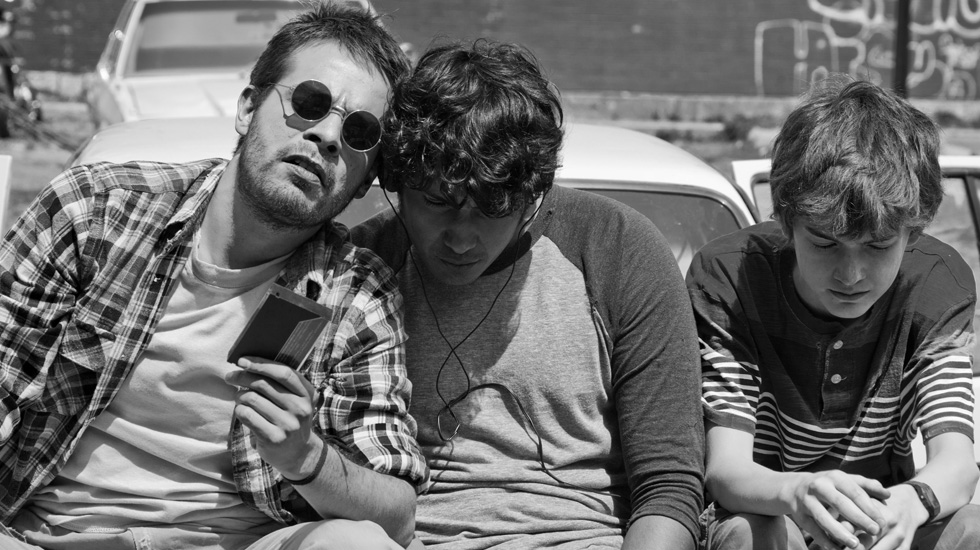
April is gone, which also means so long, Tribeca Film Festival! Concluding last month, one of the fest’s standout films was Güeros, a debut from Mexican director Alonso Ruizpalacios, who received a Special Jury Mention for Best Narrative Director. Filled with lost boys straying off the beaten path, but without any real path in mind — the film thrives on idiosyncrasies exploring that commonly felt thread of what happens when you’re stuck not knowing your place or state of mind.
Winner of the Best Cinematography in a Narrative Feature, Güeros, according to the jury comments (including one Jeff Goldblum), is a film perfectly capturing “the energy and hope of the youth in its nation’s capital.” What could have boiled down to a coming of age film shot in showy black and white actually makes for a very non black and white storyline with an awful lot of grey area. Set during a massive university strike in Mexico City in 1999, a fed-up mother unable to deal with her troubled teenage son packs him off to live with her other slacker son, who’s on a leave from university due to a massive student strike. Tomás and Sombra, slackers #1 and #2 respectively, gradually shift their way from an unkempt, man cave of an apartment onto random road adventures.
“Why go, if we’re gonna end up here again?” initially wonders Sombra from the couch, about leaving an apartment with no electricity or food. The director makes sure this cyclical theme shines through repeatedly in the film with many of the characters’ inane decisions and improvised conversations deriving from that logic (e.g. drinking with and then running from a gang member). The road trip with no real destination eventually turns into a heavily unorganized search for Tomás’ idol, an ailing folk legend (who apparently once made Bob Dylan cry).
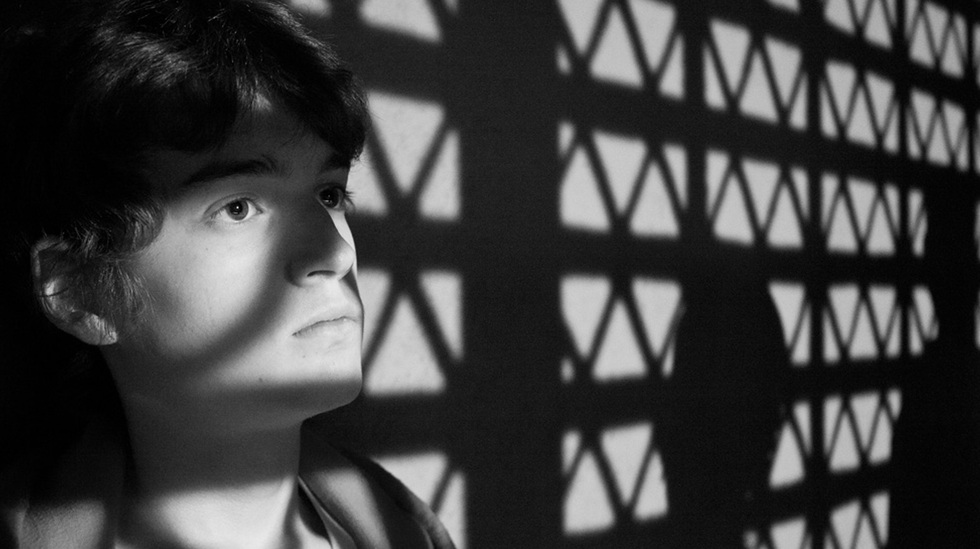
On the subject of notable music, Güeros makes no reservations about being an homage to French New Wave, all the way down to it’s xylophone peppered soundtrack. Just imagine going through your day-to-day life with the sound of glockenspiels trailing behind you. Godard’s Breathless has its influence smattered across the film, making it that much more fun to watch. On the quest to track down Tomás’ beloved folk rock idol, we see the various characters silently listening to him on the cassette player and expressions of their muted joy. Leaving out the music that’s so central to the characters is another stylistic quirk that might turn off some viewers, but arguably speaks to the film’s distinct style.
Another running theme in the film is delayed love and delayed everything pretty much — whether it’s between siblings or between friends with mutual crushes. Throughout, one thing Sombra does consistently is listen to a woman on the pirate radio station, Ana, one of the leaders of the student demonstration. Eventually joining them on the road, despite being the only one with a clear purpose of who she is, Ana is possibly someone to show Sombra that everyone belongs somewhere. Oh, that young love.
Finally, there are the carrots. If nothing else, making a point to see the film is getting to observe how Ruizpalacios takes eating your vegetables to another level. As in having his charismatic slackers steal some wild carrots and consequently turning the crunching sounds into an odd symphony of sorts while they continue driving onwards to wherever. Goes to show that meditative adventures on the road are only half as much fun as the company. Or the snacks.
Who Should Watch It: If you ever wonder about finding your own space and time, this film is for you.
Who Shouldn’t Watch It: If you think B+W films are for those who are colorblind, this film is not for you.
Article by Sandy Chung. Follow her on Twitter @sndychng.