

Julia Pierce, known in the local underground scene as the frontwoman of punk project TDA (titsdickass) and guitarist for Fine Mess, just released her debut solo record, Product of Society.
Pierce brought on a new, very NYC-bred team to help her hone her most personal work yet. The 10-track project was produced by city legend Gordon Raphael, who notably worked with some of the city’s best: The Strokes and Regina Spektor. While she handled all music, lyrics, guitar, and vocals, Pierce tapped her buds Carmen Esperanza of PMFD (bass) and Sick Nick (drums) to record with her, all for the first time in the studio together – in a single 8-hour session in October 2024.
Product of Society is as much Pierce’s refusal to conform to the music industry’s commercial norms as it is that of the underground music community that has always uplifted and saved her. As a body of music, it’s gritty, chaotic, hard-hitting, and swaggy. JP’s aura is front and center like never before, creating a raw, real, scrumptious time capsule of 2020s NYC underground that will ring true for decades.
Alt Citizen is stoked to premiere the brand-new LP, officially out today, October 22, and host Q&As with Julia and Gordon. Read about the making of Product of Society from the mouths that made it below.
Julia Pierce Q&A
This was supposed to be a TDA record. How did it become your solo debut LP? Was it just meant to be?
Julia: I was making these demos on my own. Insecurity Hits was down to back a follow-up to the TDA Fuck LP, so while Seth was focusing on Suburban Speed, I brought in a studio band to cut the material. It took sitting with the recordings afterward to realize what it actually was. Out of respect for our history, it just made sense to own my namesake. It was a story I needed to tell myself.
Why did you want to work with Gordon Raphael on this music? And how did his contributions influence and shape the work?
Julia: Gordon is a wizard who knows exactly how to run a session — we tracked and mixed the whole album in eight hours one October day. I found him on Instagram, and I just had a feeling he’d be receptive to my music. He really listened to us, and he didn’t try to polish the tracks; he just amplified the attitude and kept the dirt right where it belonged. And of course, The Strokes’ Is This It has spoken to me since I was a teen, and I have always had a soft spot for Regina Spektor.
What about you is on this record that you can’t find on any of your band’s work?
Julia: A lot of slacker rock apathy and glam disaffection. TDA was pure feminine rage, front to back. This record is different. It lets me play with irony, sarcasm, and a completely detached stroll through the noise. It’s loud, but it’s completely unbothered.
I read you’re spending time in LA. This album feels very New York City. What is your relationship to each city at this time in your life?
Julia: New York is the inhale. LA is the exhale.
What’s the significance behind the album artwork? Album title? Song sequencing?
Julia: Look at the cover. It looks like a bright, idyllic suburban afternoon, but it’s completely subverted. I’m sitting in a plastic kiddie pool with sunglasses on, totally detached from the scenery. It’s deliberate theater — using a cheerful, mundane backdrop to package some very dark, cynical music. That Parental Advisory sticker isn’t a warning — it locks in the contrast. It brings me straight back to flipping through CD bins at Tower Records in the 2000s. I know for a fact this is the kind of record that would have completely blown my mind as a kid. Adults are a lost cause. Kids are still forming their ideas about the world. It’s for them. Product of Society is the punchline. The music industry wants artists to be predictable byproducts of a proven formula. They want external pressures inside your head, dictating how you look and sound. This record is the refusal to become a passive byproduct of that machine. The sequencing is meant to be listened to front to back. On repeat. From dusk until dawn. For extra credit, play it after TDA’s Fuck.
How was it working with your friends and collaborators, Carmen from PMFD and the rest of the studio crew?
Julia: They’re all GOATs. We only had one day to rehearse before the session. Everyone came ready, knowing the demos. The next day in the studio, Gordon thought we’d been a band for years. The chemistry was undeniable, even though the five of us had never played a show together. This record is the only artifact of that aura.
How did the songs come to be? How long have you been working on this?
Julia: “Product,” “Dyin’ to Feel Alive,” “Supernatural Girl,” and “For You” predate my time in TDA. Those belong to my early days in New York. The rest came during the band years. It’s a ten-year span of writing, all tied together in a single, eight-hour session with Gordon’s sonic touch.
What is the most Julia Pierce thing about this album?
Julia: The fact that it exists at all. It’s loud, it’s stubborn, and it doesn’t apologize for changing its mind halfway through. Take it or leave it.
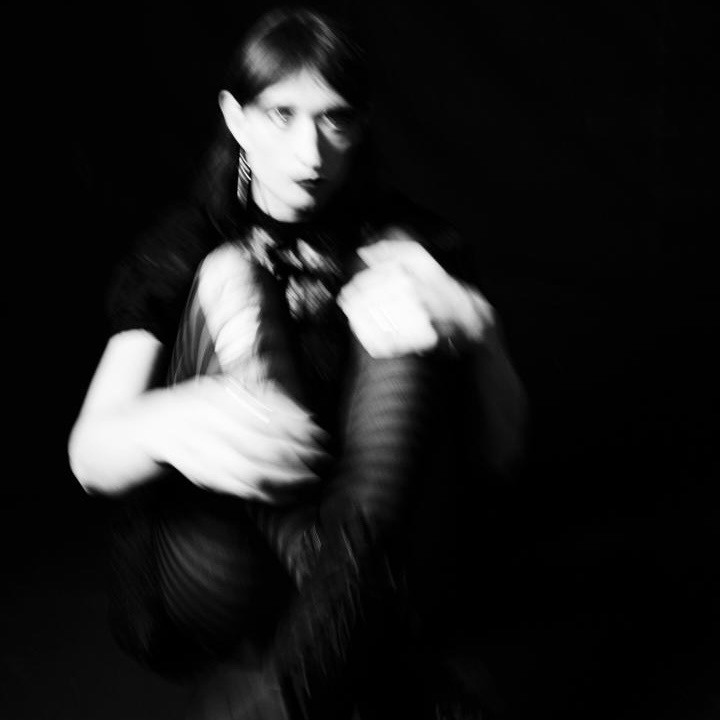
Gordon Raphael Q&A
How long have you known Julia and her work?
Gordon: I met Julia and her amazing drummer/producer Nick at a bar on Avenue A on October 8th, 2024. Since I live in the North of England, I had spoken to her and sent messages back and forth during the previous month to prepare for our all-out sonic attack inside Mercy Sound Studio. Somewhere in late August 2024, I had put up an IG post looking for cool bands and projects in NYC that I could get involved with. Julia was one of the last to write me, but as soon as I heard her vibrant, aggressive rock songs, I knew it was exactly the kind of thing I could go crazy with. (That means: accomplish a good, solid, professional, responsible recording and production ha ha!)
Why did you agree to produce these songs?
Gordon: Well, my criteria for deciding to spend my time in the studio with any artist are:
1. I have to like the music (first and foremost)
2. The songs have to be INTERESTING and unique, please
3. The main person from the band should be fun to communicate with — and demonstrate a sharp knowledge of what they wanna achieve. A person who has powerful visions for themselves and their songs is a real blessing to me as a producer.
Yeah, Julia flew through the hoops easily!
You’ve produced NYC-based bands over the years. Past and present. What are some of the similarities and differences in the sounds being made?
Gordon: Well, truth be told, I hadn’t been called to New York almost AT ALL since working with The Strokes and Regina Spektor in the early 2000s. In Europe, USA, yep, even in NYC rock bands, the live music scene dwindled down to a small size, small status for much of the late 2000s and 2010s FOR SURE! Thankfully, Argentina was still flying the flag for electric guitar music during that time, so I was very often there living out my rock ‘n’ roll dreams (starting bands, touring, recording, doing my own art shows, photo exhibits, etc.!). Even the taxi drivers in Buenos Aires were blasting AC/DC live albums in the cabs after midnight — perfect!
Fast forward to 2023, and suddenly I’m in NYC recording 20 bands, then back 6 months later recording 20 more — and in Rocktober of 2024, I broke my record and produced 27 different artists in a 5-week period — including the great album we did with Julia Pierce! I see that there are more young rock bands, by FAR, in NYC right now than in the 1980s or the Indie days of 2001-2004. I credit the pandemic for kicking the young generations’ ass, causing them to get together with their friends and make hella-noize!
Were there any challenges making this album? Good or bad?
Gordon: There was only one philosophical challenge, which emerged from my pre-production discussions with Julia — “We wanna make a 9-song album with our whole band, IN ONE DAY!” As I said, it was only a philosophical challenge, cuz on the “day of” (Oct. 10, 2024), we set up 13 microphones, the band plugged in, and the album took off like a bat outta hell. Very few takes, excellent communication between the musicians, and great camaraderie all around.
Even with an impressive resume, do you keep learning new things with each record you work on? What did you learn working with Julia?
Gordon: The learning is ongoing and continuous, but it’s not necessarily “technical knowledge,” such as, “wow that new mic sounds good on the snare drum,” or “ooh that 5k boost of EQ on the ride cymbal really makes it”… ha ha! It’s more the inspiration and energy that came from Julia and her musicians, most of whom I had never met or seen before, playing super innovative parts with great power and rhythm. Or the magic that happened when Julia and her second vocalist just let loose over the instrumental tracks. New knowledge and new experience.