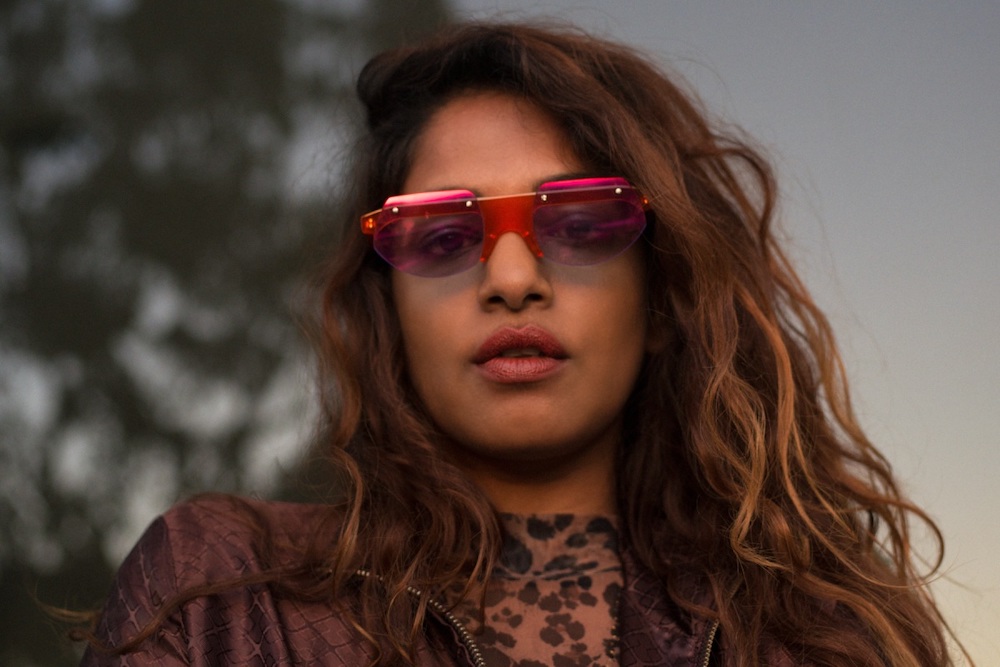
Photo by Dan Marker-Moore
In the age of the internet, we’ve become accustomed to instant gratification. We need click through links (can’t be bothered to go to a link in bio). Our collective, dwindling attentions spans have been conditioned to absorb “content” in 15 second chunks making a 6 minute song equivalent to a three-act play. In the competition for attention, accessibility has become king in guaranteeing your work has the best chance of garnering the attention it deserves.
Which makes M.I.A.’s latest release “Babylon” all the more interesting.
“Babylon” is not on any traditional streaming or viewing service. It is available in video format only at a link — and not one that is set up to be embedded. It is set to be auctioned off as an NFT, not in an effort to be sexy or modern, but to raise money for the Courage Foundation. In an industry which has made the stream (even 1 million streams of a song) almost worthless to artists, rejecting the traditional platforms in an effort to enact change and put resources towards a worthy cause is admiral and pretty badass.
M.I.A. took to instagram live a few weeks back to chat about NFT’s, how society only wants to play ball with you if you let them fuck you over, and her rejection of that norm.
“Babylon” stands on its own as a song, but the statement that M.I.A. is making with her approach to releasing music and redefining the terms of the industry in which she is a part of will have an even more profound and widespread impact. While paywalls have often been criticized as gatekeeping, in an instance of where they are not prohibiting the sharing of educational information or requiring a certain level of wealth to access art or entertainment (the NFT is different from the video shared at the link, but the song is still available in some format), the lack of accessibility in the traditional sense gives power back to the artist and away from the corporations profiting off of them. It also requires a different attention from the viewer or listener to have to seek out this track/video when it’s not immediately available when they search on their phone. It will be interesting to see how we continue to develop and change our methods of consuming art and sharing art as the landscape of NFTs becomes more and more intertwined with music. If M.I.A. is our pioneer in the revolution, though, it seems like we’re off to a good start.