

Photos and feature by E.R. Pulgar
Press Play.
Reporting live from the M Train and the back of Ubers and Lyfts and cabs and the backrooms of bars and bedrooms and bathtubs and bodegas that in those brief moments belonged to me. I am not a writer who sits still yet. Young summer in New York City isn’t about being still. If you’re reading this and have felt that rush, some call it FOMO, I know you understand. I wrote this on my phone and in notebooks, with good headphones on when I could, wherever and whenever I had a moment alone, which is never.
It was near the end of last year when my old roommates turned me on to ROSALÍA. They were both Americans. They did not speak a word of Spanish. The first thing that caught my ear were her lyrics: fire falling from the sky, rivers of tears, melodrama from the heart of flamenco lore made new. Before the discourse between me and other Latinx folks about the problems and complexities she encompasses for not acknowledging that she is, in fact, not Latina, I revelled in the fact that my roommates turned me on to music in my native language without understanding a word—and the words were so beautiful! They turned to the sound created, to the haute couture music videos and long nails, to the emotion locked in the handclaps and flamenco-trap matrix she embodies.
While we’re talking languages, let me tell you a secret: I can’t speak French to save my life (although Duolingo says otherwise). I don’t know where the obsession with French started. Maybe I watched “The Dreamers” too young, or listened to Édith Piaf’s “La vie en rose” and imagined something outside the suburb of Miami where I dreamed of New York and Paris. I can tell you now, even if there’s a language barrier, there are songs that stick with you. If you listen close like the streaming age tells you not to, an album sticks harder.
The beginning of Muddy Monk’s “En Lea” sounds and feels like the most romantic boat ride on the saddest lake you’ve ever been. You can conjure that image as soon as the first note hits your ear. I was overwhelmed by an ocean of synths, cowbell, and sparsely warbled horns. The water overwhelmed me, the dates I imagined on rowboats in the Central Park Reservoir named after Jackie O. There are two more songs on the record more explicitly about water, “Ocean” and “Splash”, but he doesn’t need to be direct to conjure that unexplored territory that’s inside us all. It’s all in his flow, in that strained falsetto that conjures so much hurt in a sea of electric keys.
The first time I ran “En Lea” through Google Translate and got a rough inkling of what it was about I learned quickly my hunch about the sadness in the track was spot on:
Car si je ride encore les rues de ma ville
Comprends qu’on n’oublie pas ses rêves indélébilesz
Et si je traîne encore le soir dans les bars
C’est que chaque verre efface un peu son image
Because if I still ride the streets of my city
Understand that we do not forget his indelible dreams
And if I still hang out at night in bars
It is that each glass erases a little its image
It turned out the sad lake was a sad avenue at night and the water I sensed was tears and liquor. That didn’t take away from the fact that the summer was full of these things for me, for better and worse, for joy and for grief. The song remained a haunting anthem for the season’s longer, sweatier evenings.
His real name is Guillaume Dietrich, and his debut album is appropriately entitled “long ride.” It’s easy to feel that way when late May gives way to June, July, and August’s car and train rides to the beach, arms heavy with boxes of cherries and bottles of cheap liquor. The long commutes to longer nights feel so distant as soon as the first winds of September blow through the dirty New York air. I can only imagine the long rides Dietrich went on as this album came together. I like to imagine a motorcycle, a European city at dusk. Muddy Monk sings of the specific solitude of cities, the long commutes to too-small apartments and crammed music venues where we can feel an inkling of escape, the long car rides away from the concrete jungles we inhabit.
Maybe it’s not the first choice for summer listening, but for me I saw no other option. Coming from a place of eternal summer—after five years I still can’t take Miami out of my veins and I don’t want to—you get to know the melancholy aspects. When I moved to New York City and first experienced the change of seasons, I felt a very real sense of time, a lack of eternity. Summer took on a new meaning outside reading on the sand with a summer crush next to you. I said goodbye to warm afternoons, to sunshine, to friends and lovers leaving back to Rio de Janeiro, Bogotá, Buenos Aires, Miami, Temecula, Flagstaff, McAllen, Cambridge, London and Paris. It was in this and other capacities that all summers, especially this one, are also tinged with fear.
Fear of forgetting the nights when we uncorked every single bottle of cheap sparkling wine at once. Fear of the hard-jawed leather jacket hunks and the indie girls at the show. Fear of getting hurt in the mosh pit or in your arms. Fear of listening to those records again after you. Fear of ICE disappearing me even though I’m a naturalized citizen. Fear of speaking Spanish in public despite Spanish-speakers about to encompass most of the U.S. population. Fear of my inability to feel comfort in the country I was raised in. Fear of loving you. Fear of possibly spending all summer fucking you. Fear of how I’d feel if I didn’t at least try. Fear, always, of saying goodbye.
There’s a line in Frank O’Hara’s beautiful poem “A True Account of Talking To The Sun on Fire Island”, one of the many destinations I didn’t get to this summer. In the poem, O’Hara takes sweltering pieces of advice from The Sun:
And
always embrace things, people earth
sky stars, as I do, freely and with
the appropriate sense of space.
Because in the end that’s all we can do. We can grasp onto the memories and embrace our own space and the space between us and the people we love and the planes and trains and cars that take them somewhere else. We can only hope it’s better, wander the streets, shuffle ourselves into place, and not be so damn sad about it. The melancholy French music might not help, but it’s okay to give in to nostalgia every now and then. If you’ve ever felt the change of seasons, I know you understand that too.
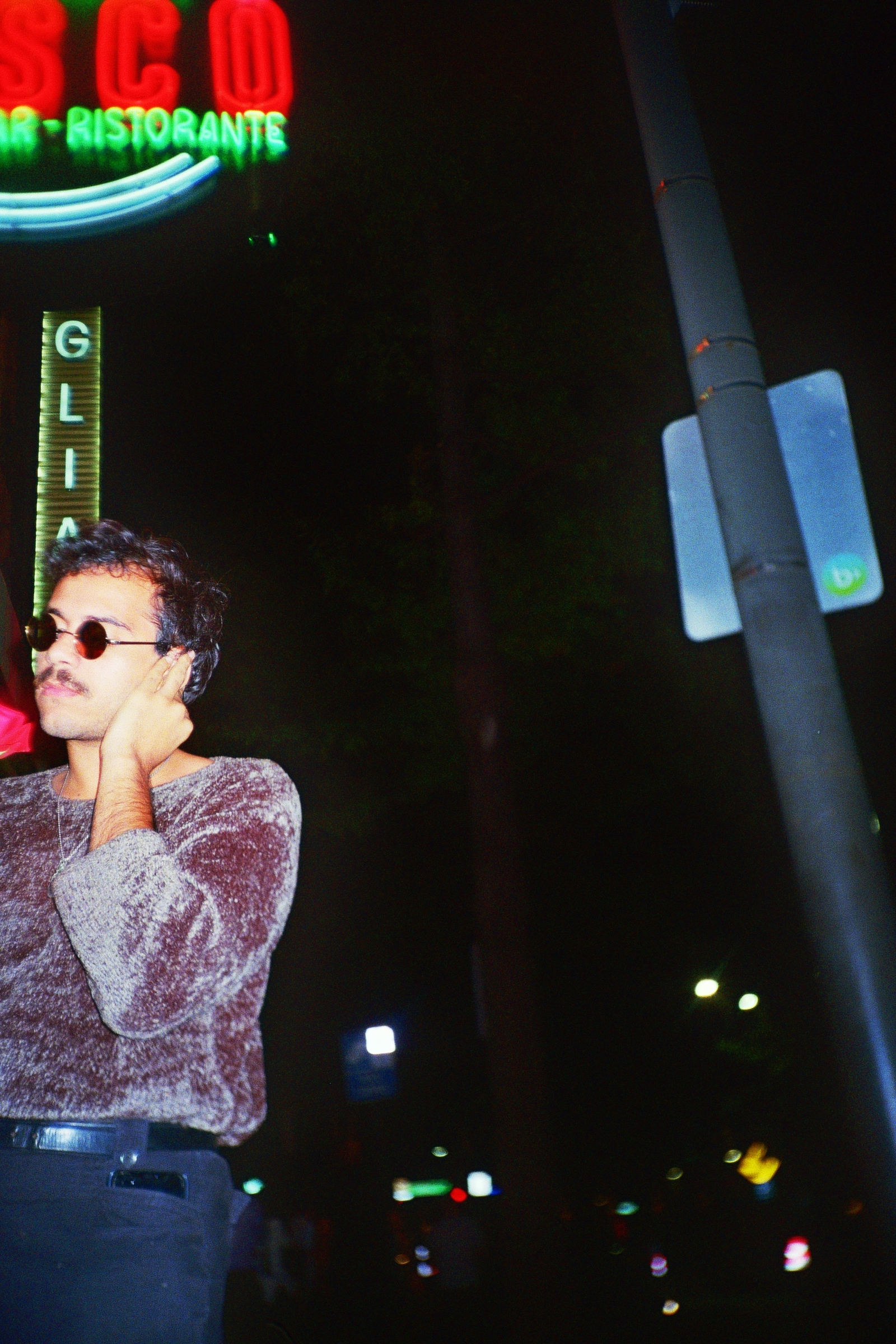
I’m still scared of saying goodbye, even to seasons I know will return. I’m working on settling, even enjoying, the “see you laters.”
E.R. Pulgar is Alt-Citizen’s “Of Poets + Punks” columnist. In this monthly column, he will explore the relationship between music, emotion, and language. His music and culture writing has been featured in i-D, Remezcla, Billboard, and elsewhere. He is working on his debut collection, a long poem about water.