
Every film buff will tell you, whether solicited or not, that French cinema is some of the best cinema of all time. It is grand in scope, ethereal in structure, mesmerizing in beauty and all in all inspirational for budding filmmakers for as long as there have been filmmakers. That said, it’s impossible, je repéte, impossible, to create a list of films that somehow sums up French film. For most of us though, we need a starting point, a way into understanding the nature of French film. After all, we’re not all trying to revive the cahiers du cinema — we’d just like enough understanding to present some well thought ideas and critiques at dinner parties and pseudo chic art galleries. So here’s our list of 11 French films that warrant watching for any creative.
1 — “The 400 Blows” (Les quatre cents coups) 1959. Directed by Francois Truffaut.

Truffaut’s film is quintessential French New Wave, and it very well may be its crowning achievement. Although semi autobiographical in narrative, the film follows a troubled and misunderstood adolescent Antoine Doinel (Jean-Pierre Léaud) around the city of lights as he struggles with coming of age, parents, teachers and life’s never ending current of internal obstacles. The film garnered a Best Director win for Truffaut at Cannes, Palme d’Or nominations and even an Oscar nomination for Best Writing.
Best reason to watch: The beautiful final sequence of Doinel running towards the sea and the vastness of an unknown future.
2 — “Breathless” (A bout de soufflé) 1960. Directed by Jean-Luc Godard.
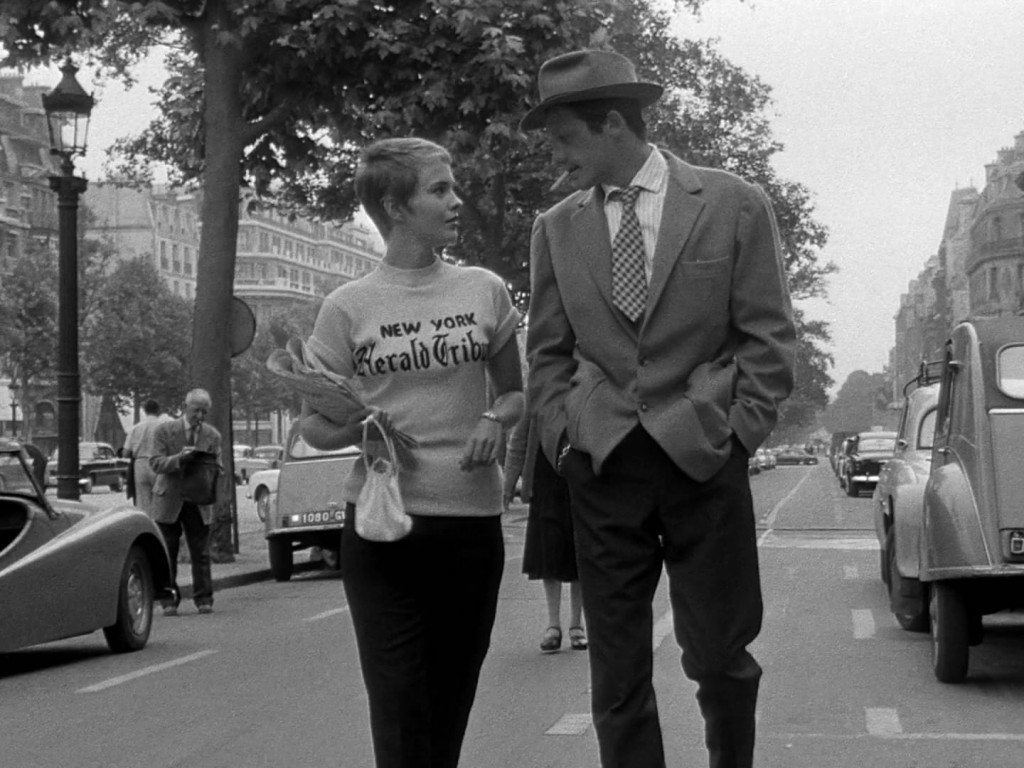
There should be a blog post solely dedicated to the filmmakers that owe Jean-Luc Godard a huge debt of gratitude (and perhaps credit) for their films. Breaking new ground immediately in the French New Wave was Godard, who, with the cosign of Truffaut and Jean-Pierre Melville, managed to make one of the most influential films ever. It’s the tale of Michel (Jean Paul Belmondo), a man sought by the authorities for murder who tries to escape with the apple of his eye, an American newspaper girl named Patricia (Jean Seberg), who ambles the Champs Elysees with all the cool a pixie cut can muster. Betrayal, however, trumps Michel’s dreams of escape, forever encapsulated in the films final climactic sequence.
Best reason to watch: Belmondo and Seberg traversing the Champs Elysees during their first on-camera interaction — one of the most quintessential French new wave scenes in its simplicity.
3 — “Le Samourai” 1967. Directed by Jean-Pierre Melville.
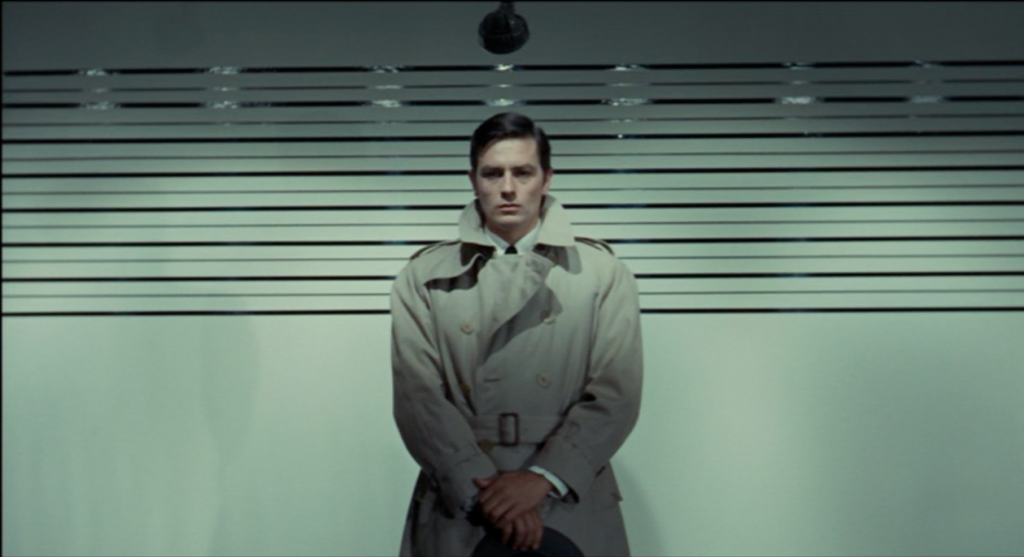
Although technically a French-Italian film, “Le Samourai” is perhaps one of the more beautifully shot noir films. The subtle undertones of blues and greens, the composition of each frame amidst a Parisian backdrop that exposes a gritty city underbelly and classic beautified Paris, this neo-noir classic easily makes any list of must see films. Also, Alain Delon is especially stoic and strong as hitman Jef Costelo, in classic noir style. He could give Sam Spade a run for his money.
Best reason to watch: Cinematography and editing so rich it can hold its own even with the sound turned off.
4 — “La Haine” 1995. Directed by Mathieu Kassovitz.

When most people think of French film, they expect baguettes, berets and beautiful love affairs. La Haine does not comply with any of these, instead weaving a narrative strewn from the real life drama of French police brutality in the Banlieue (a ghetto) of Paris during the early ’90’s. Kassovitz’s devises a film about three friends over the course of 19 hours, dealing with the aftermath of the previous evening’s riot, where a policeman’s gun was lost and a mutual friend’s life hangs in the balance. The monochromatic “La Haine” champions the seething frustrations, self medicating and frail rift between police and hoods in such a way it feels almost documentary in its portrayal, despite the purely magnificent cinematography.
Best reason to watch: A young Vincent Cassel’s portrayal of Robert DeNiro’s “you talkin’ to me?” scene from Taxi Driver in his bathroom mirror. Not only a cleverly devised camera trick but also, perhaps, foreshadowing cloaked in comedy.
5 — “Hiroshima Mon Amour” 1959. Directed by Alain Resnais.
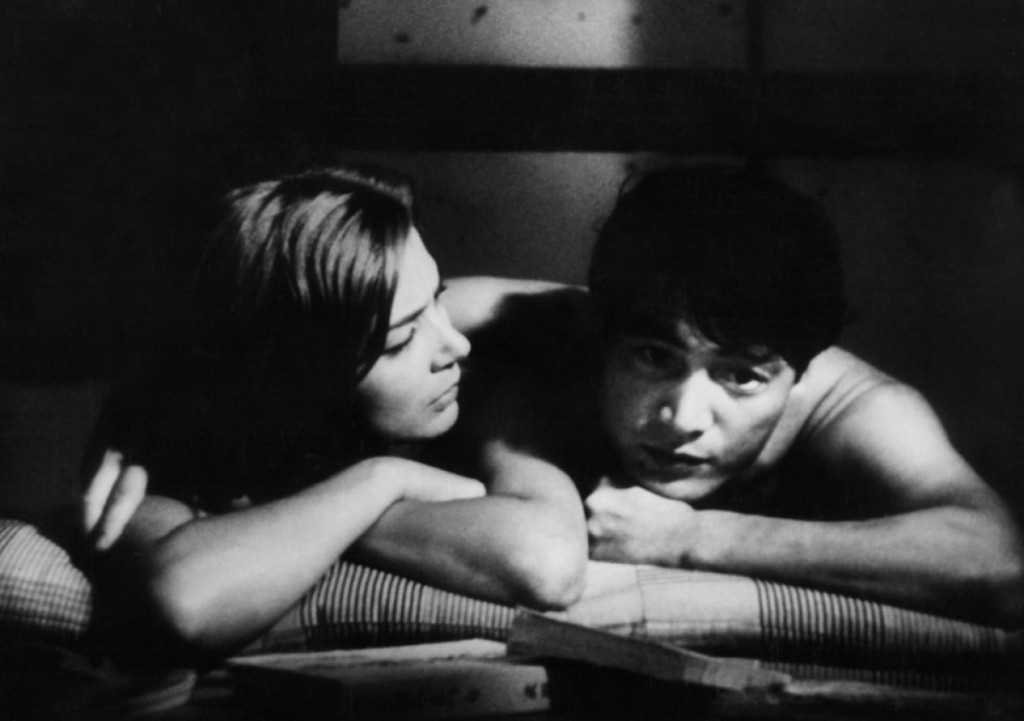
Nouvelle vague has many invocations but few more serenely beautiful than “Hiroshima Mon Amour.” Resnais illustrates the dynamic relationship between two lovers (Japanese and French, named He and She, respectively) and their fleeting moments as the film explores longing, separation and memory. Coupled with stirring black and white images of both Paris and Hiroshima after the bomb, the film illustrates the savageness of love with the ethereal imagery of war.
Best reason to watch: The film’s opening sequence of extreme close ups of body parts during an embrace intercut with imagery of post-bombing Hiroshima survivors and the subtle juxtaposition of sweat and ash presiding over skin.
6 — “La Jetee” 1962. Directed by Chris Marker.
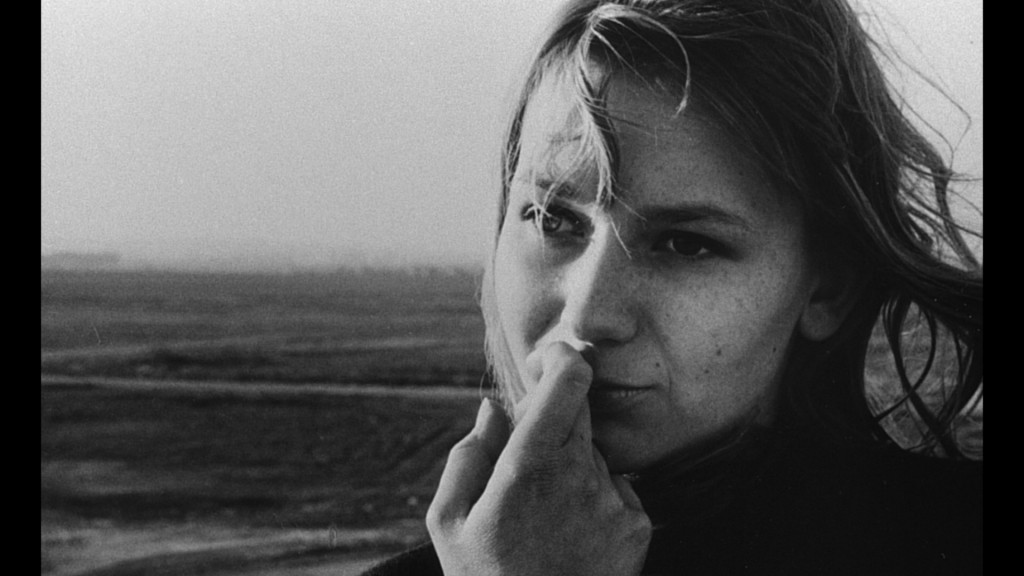
“La Jetee” tells the story of a man in a post apocalyptic France who, as a prisoner, is being used as the subject of time travel experiments amidst his obsession with a recurring dream. Sound familiar? Well, in 1995 Terry Gilliam took this idea and made a little film called “12 Monkeys.” “La Jetee” is the original. There are differences however, as the entire featurette is a collection of still images, a photomontage, playing at various tempos underlining the voice over narrative. It’s distinctive, it’s dark, it’s mesmerizing and it does all of this in 28 minutes with the most minimal effort of storytelling components, image, sound and expressive editing. “La Jetee” is a perfect example of French filmmaking that does not live under the constraints of “filmmaking”; instead, this is storytelling at it’s finest.
Best reason to watch: If you’re feeling particularly “art house” but don’t want to forgo a good story, this is the film to see. Also, the fantastic climax and pay off of the final sequence will make you forget you’re watching still images and not a full fledged film.
7 — “Amelie” 2001. Directed by Jean-Pierre Jeunet.
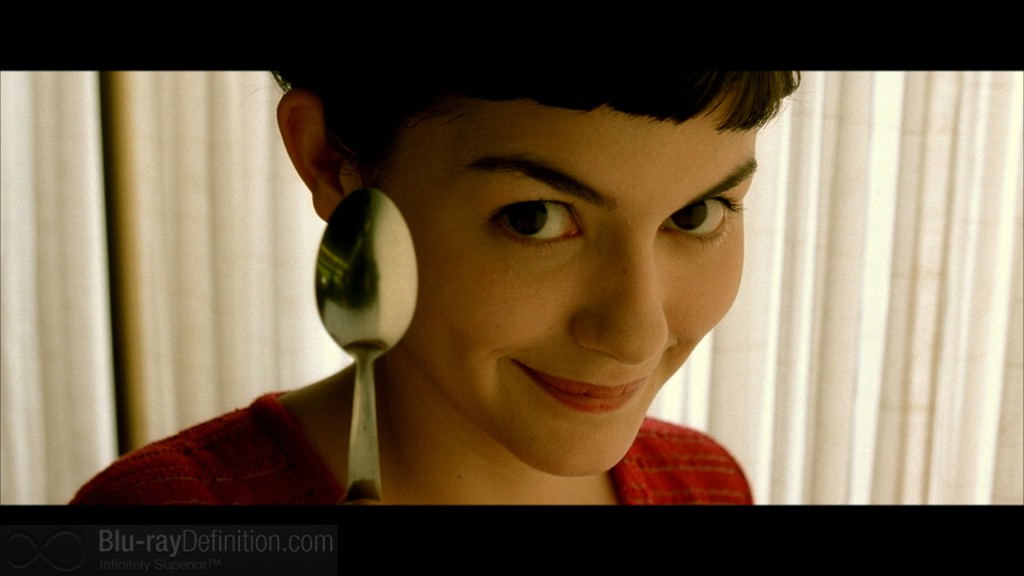
Le Fabuleux Destin d’Amelie Poulain or the Fabulous Destiny of Amelie Poulain is so full of bittersweet charisma that it ceases to exhaust. For a whimsical romantic comedy, Jeunet engages an audience to get in touch with their inner child through clever pranks, witty dialogue and the uber rich color palette that’s became a staple of his work. Amelie herself isn’t one to fall prey to the ideas of a soul mate, but then again, that’s the nature and beauty of this life; things have a way of finding you as they do serendipitously to the fabulous Amelie.
Best reason to watch: Audrey Tatou is much too charming to look away, and the film’s score, provided by Yann Tiersen, is so incredibly cinematic that it’s impossible not to be immersed in the film from end to end.
8 — “Un Chien Andalou” (The Andalusian Dog) 1929. Directed by Luis Buñuel.
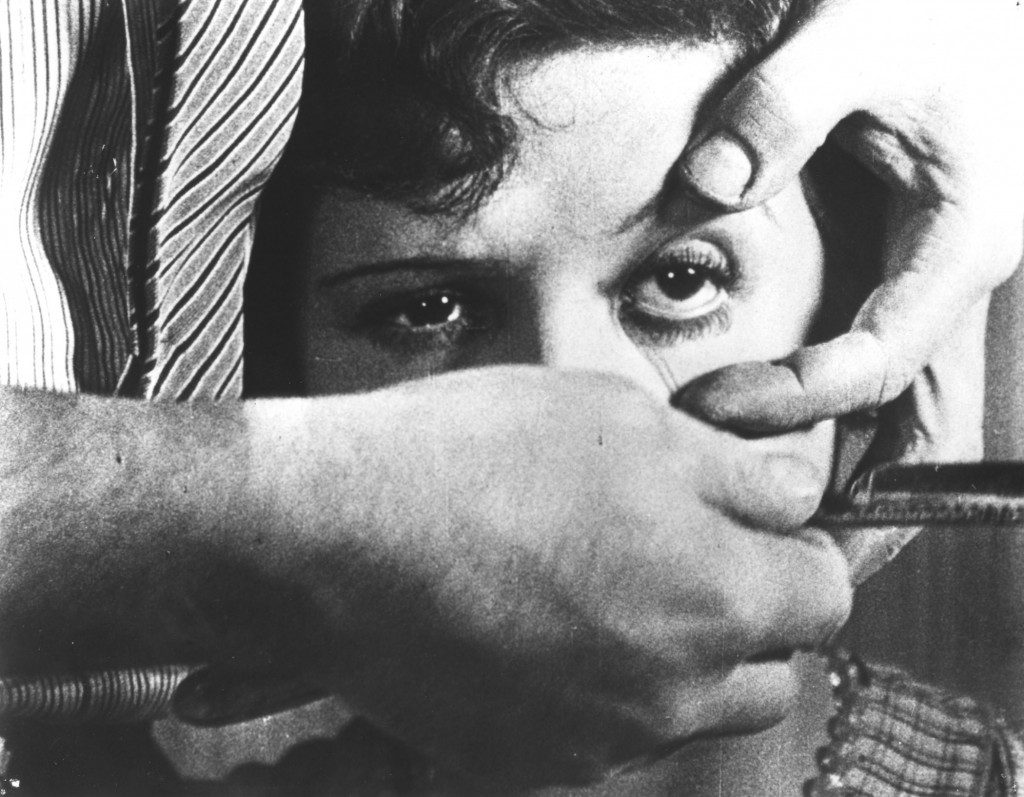
As French films go, “Un Chien Andalou” stands out from anything else on this list, and rightly so. It’s one of the quintessential surrealist films of our time. And at a run time of only 17 minutes, the film depicts, albeit in a plot-less summation of visual imagery, some of the most influential imagery that artists the world over have experienced. Although directed by Buñuel, it was co-written by Salvador Dali. The film’s narrative is based mostly on the suppression of emotions and free association (as coined by Freud). Buñuel and Dali allow us, the audience, to work out each meaning for ourselves and this could be why the film is so influential. Perhaps one of the most underrated films due to its surrealist nature, it also sets the bounds for the left-of-center processes and progressive ideas that French cinema has always harbored.
Best reason to watch: The iconic scene of Buñuel slicing open a woman’s eye ball as a razor thin cloud mimics the action across a full moon in the night sky.
9 — “Rififi” 1955. Directed by Jules Dassin.
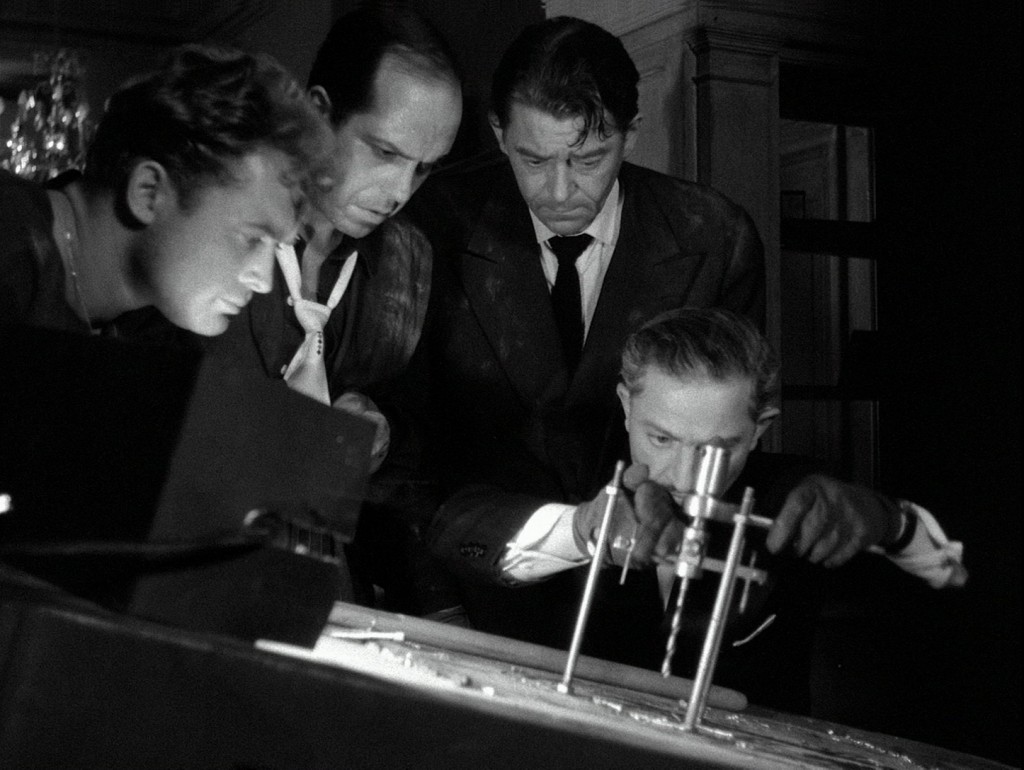
There are noir films and then there’s “Rififi.” Despite a multitude of obstacles laid out in front of Dassin (particularly being blacklisted in America after being named a Communist in 1951) — the film has no huge A-list actors of its time and it delineates from the novel of the same name — he still manages to craft one of the best heist films ever made. The story of four men who decide to rob a jewelry store, “Rififi” is masterfully crafted in every aspect of noir filmmaking. Dramatic lighting, suspenseful scenes, secrecy, betrayal and, of course, a protagonist on a downward spiral. The film also garnered Dassin a Best Director award at the 1955 Cannes Film Festival.
Best reason to watch: The infamous break-in scene, literally one-third of the film’s run time, clocking in at approximately half an hour, is shot entirely devoid of dialogue or music, utilizing only natural sound during every nail biting second. It’s quite possibly the greatest break-n scene ever put on film.
10 — “Band of Outsiders” (bande a part) 1964. Directed by Jean-Luc Godard.
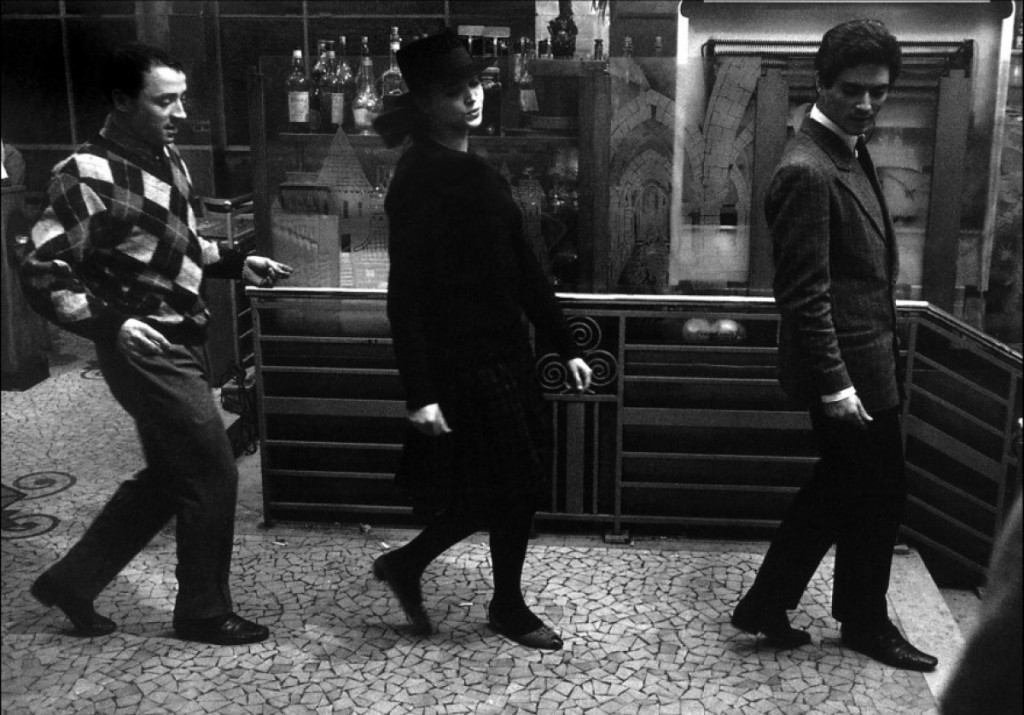
There’s reason enough to have a multitude of other films on this list, but what Godard does in seemingly unflinching cool is illustrate the ideas of hip criminals and vagabonds who are willing to run through the Louvre and dance the Madison. The story is of two men vying for one woman’s attention, all the while hatching a plan to steal money from a villa in a Parisian suburb. Godard’s finger, always on the pulse of cinema style, is evident here, especially in the iterations the film would be known for in the future (see the Dreamers as a prime example).
Best reason to watch: The dance sequence in the diner, where our three cohorts dance the Madison without so much as breaking a sweat or seeming out of place. Keep in mind the influence this scene has on Pulp Fiction’s famous dance number (As it were, Tarantino was so influenced by this film, he named his production company Bande a Part).
11 — “Enter the Void” 2009. Directed by Gaspar Noe.
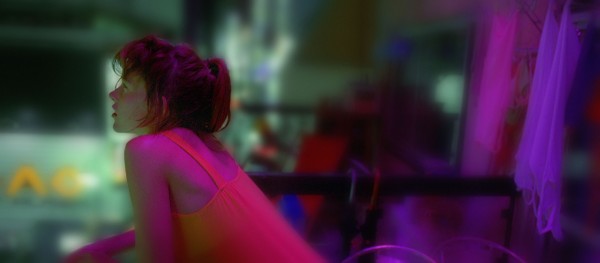
French film has come a long way in it’s history and perhaps no one has pushed it further in recent memory than Gaspar Noe. This “psychedelic melodrama,” according to Noe, has some of the most creative and innovative camera techniques used to weave a narrative about the underbelly of Tokyo, its drug culture, the frail relationship between brother and sister and the concepts of reincarnation. The film is by no means easy to watch, but as with all of Noe’s work, it peers into the ugliness of the world through a very observant eye. An eye so keen that his POV style draws the audience in visually and emotionally the way a roller coaster drags you along physically. Brutal. Avant garde. Unflinching.
Best reason to watch: The psychedelic induced visuals and CGI alone are worthy of a viewing, even if the content is perhaps a bit strong. Either way, expect to have your horizons expanded. Also, if you’ve ever been on an LSD or DMT trip, this will feel completely normal.
Article by Rob Dume. Follow him on Twitter @mr_dume.