
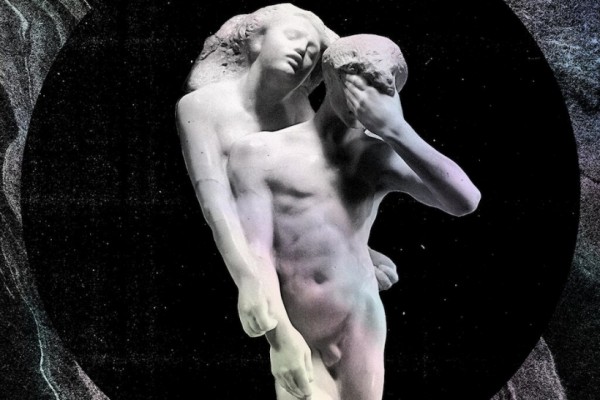
Riding atop an enormous and clever marketing campaign, including escapades into graffiti advertisements, interactive films as music videos, and surprise shows under the pseudonym The Reflektors, it’s hard to imagine that anyone with half an ear to the indie scene’s ground hasn’t been aware (see: overwhelmed) of all the buzz surrounding Arcade Fire’s latest album, Reflektor. To separate yourself from their forays with the hype machine – not to mention the glitz of an underdog Grammy snag – is a bit of a task, but it’s one that ultimately helps the listener gauge and appreciate the ambition behind this long dark dance. So stock up on some patience and detach yourself from the external chatter (and that goofy spectacle directed by Roman Coppola) because your small initial investment will yield an experience striking, nuanced, and bold.
Reflektor is by no means an endeavor to enjoy, but listening requires slightly more active participation this time around, at least insofar as having an open mind toward fusion and exploration. This album demands not only your curiosity and hunger but also the appetite for specific tastes – the listener should crave motion just as much as meditation in their music, as well as understand that transcendence through either takes time. Reflektor is as immersive as it is elaborate, with tracks that lead the mind toward introspection and the feet toward rhythmic truth. In this way, Arcade Fire’s new direction is anything but straightforward. Casual listeners may be perplexed, if not challenged, by their evolution from anthemic indie to an electric blend of art-rock, disco, reggae, and more. But while this tinkering may outwardly seem like a recipe for exhaustion, the culmination of Reflektor is a crescendo of masterful work and surprise.
The double-disc giant opens with the single and title track “Reflektor,” which received an immediate stamp of approval upon its debut. It’s essentially the album’s voodoo mission statement, with its sinister waves of synth, sax, disco beats, and ethnic percussion foreshadowing the sprawling ingenuity yet to come. And if there were ever proof of James Murphy’s (mighty successful) collaboration and influence, it’s in this tightly executed single, right beside fellow collaborator and influence David Bowie. Following that little triumph may seem like a feat, but Arcade Fire manages to barrel forth through all of Disc One, gaining momentum with each raw, unhindered groove.
“We Exist” follows with smooth ghostly pop, building up to a desperate and thunderous middle, while “Flashbulb Eyes” is more of a quick sting of multilayered reggae. One of the most compelling tracks is “Here Comes The Night Time,” which swoops in a frenzy of percussion before bringing all of the previously boiling urgency to a simmer. It’s bright and bouncy, like a dance on the beach at night after a few too many drinks, but, at the same time, it’s laced with subtle and looming dread, which makes for a wonderful juxtaposition. While the stark tempo shifts may be jarring at first, they’re just one example of the startling dynamics that keep Reflektor interesting.
The rest of disc one shows glimpses of the Arcade Fire everyone is used to, from the bluesy piano holding down “Normal Person” to the syrupy guitar work dripping through “You Already Know” to the arena-ready swell of the chorus in “Joan of Arc.” But just as familiarity seems imminent, Disc Two takes an ethereal detour.
“Here Comes The Night Time II” is a slow wispy echo that does little more than bridge the two discs. It’s the first observable lull but it’s easily forgiven – we had to get here somehow. Then comes “It’s Never Over (Oh Orpheus),” the undeniable star of the second half. The track starts with light shimmering synths before riffing guitar overtakes the show, backed by hi-hat heavy drum work and strategic low end warble. The vacillations between muscular groove and tranquil pining, coupled with the bristly chants of “Hey, Orpheus!” and the melodic warning to “Wait until it’s over. / Wait until it’s through,” provide immediate multidimensional satisfaction. Unfortunately, this makes it impossible for the almost-too-cute and serpentine “Porno” to keep pace.
There’s much, much more to dissect – the sonic differences in mood between each disc, how the Greek myth of Orpheus and Eurydice functions in the larger context of the album, the recurring themes of skepticism, life, love, and death – but it’s much more fun to approach these facets on your own terms, if only because there’s never going to be one single correct interpretation of any of them. Where one sees indulgence, another sees investigation. Where one sees juvenility, another sees youthful candor. The only thing for certain is that in the sheer enormity and complexity of Reflektor, Arcade Fire has written their best album to date, with a career of continued unpredictability on the horizon and not the slightest indication of slowing down.
Review by Justin Davis. Follow him on Twitter at @yeahjustindavis.