
It’s not embarrassing to admit that when I first heard James Blake’s version of Feist’s “Limit to Your Love,” I liked it, but I didn’t get it the way everybody else apparently did. I enjoyed the video filled with impressionistic shadows and floating fruit, listened to the song a couple more times, and still liked it just as much. Some time later, I listened to the record, listened again to the cover—and that’s when I got it.
Looking back, Blake’s self-titled debut served as a reminder for why albums remain so important in this age that seems to favor singles in place of the record itself. More often, stand-alone singles appear to be promoted as the musical grandstanding in a generation driven by a culture of instant gratification, with music at the forefront. Blake’s distinct style of gospel-inspired vocals distinguished only by his controlled chaos of dub-heavy beats confirmed why his singles stand on their own.
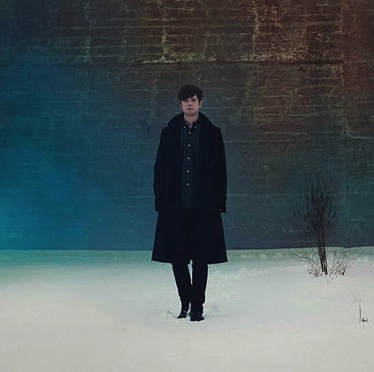
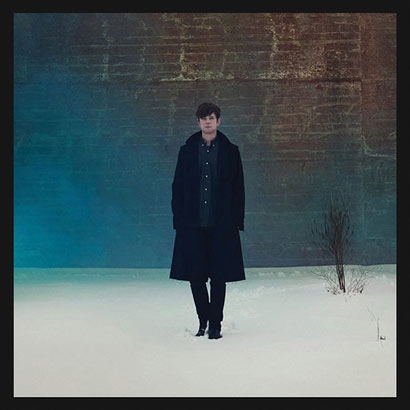
Blake’s sub-bass obsession continues in his long-awaited second album, Overgrown. His minimalist lyrics that often contain barely more than a repeated chorus are as evident as ever. Just listen to “Voyeur” to hear Blake repeatedly croon the same line, “I don’t mind, it was all me,” a hundred times in a hundred different ways. The imaginative repetition sums up his musical sensibilities that are so haunting in their ability to be atmospheric through simplistic vocal and rhythm style, but while packing in the emotional layers. With Blake’s trademark of synth-laden, structured beats and peppered falsetto through the album, the tracks bleed into one another in a sensory manner that just fill your head with sound.
At a certain point, it sounds as though a steam ship is blowing through on the track. For his flair at even eliciting imagery like that, albeit it might be the only one, Overgrown is certainly shut yourself in a room with headphones on kind of album. James Blake’s second synesthetic endeavor is bound to attract new listeners.
by Sandy Chung