
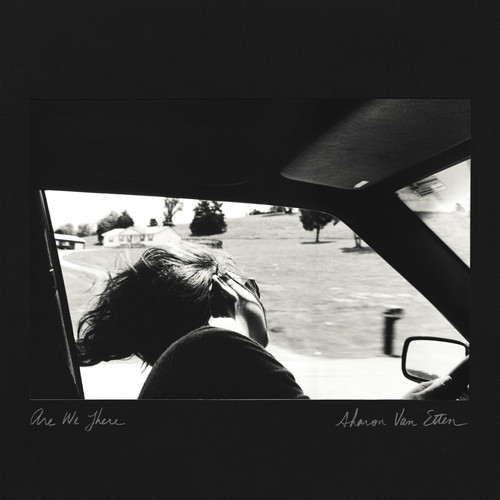
Sharon Van Etten is not new to writing about relationships. In fact, songs around that theme have made up the majority of her output as an artist to this point. She’s created a niche for herself in this sense. As an artist continues to grow and change with each consecutive album, so has Van Etten’s interaction with the ideas of love and romance. On Epic, love was something desperate and worth fighting for. On Tramp, it was a struggle but eventually a familiarity that created a happy medium. Are We There, Van Etten’s fourth album and second for JagJaguwar, takes us deeper down the rabbit hole of relationship drama. Its focus is on what reveals itself as an increasingly toxic relationship, which wraps the album in a dark tone. Van Etten’s abilities as a musician have also taken a new turn, as she focuses more on piano and takes an almost traditional songwriting style. It all comes together to breathe new life into her sound, where it could have tapered off into repetition.
If you’ve heard Van Etten’s previous album, Tramp, then you may remember a song called “Serpents.” It felt like a caustic takedown of a former lover, and despite her irrational love for the person, she was able to see that they weren’t good for her. “Everything changes in time” was a particularly telling lyric. While the overall album may lack the ferocity of “Serpents,” Are We There seems to continue the themes that were conveyed on the song. Further context tells us that Are We There was recorded post breakup after a significant other tried to get her to choose between them and going on tour with Nick Cave. There is certainly a very smothering feel to the album as well. The opening song, “Afraid of Nothing,” feels like the moment of the end of the relationship. It carries itself with a certain weightlessness and restrained happiness that a person only feels when they’ve done something difficult but needed. It’s a simple and elegant table setting for the rest of the album.
This smothering feeling is maybe best summed up on the album’s third track “Your Love Is Killing Me.” Van Etten makes no qualms about her feelings for how the relationship had become. “You like it / when I let you walk over me…” It doesn’t get much more cut and dry than that. The song’s depth is impressive as well. Much of it deals with her obvious realization of the situation she is in, but her timidity in being able to express it. This is a problem that many people face in their relationships. No relationship is perfect, and there is safety in the love of someone else. Some people aren’t afraid to take advantage of those they love, though, and Van Etten seems to be dealing with someone that can’t deal with their own petty jealousy. There is an aspect of control at play, not only on this song, but the whole album. In any relationship this is a difficult thing to balance, but throw in the rigors of being a touring artist and it must increase tenfold. It amplifies the hard emotions and realizations that are heard on Are We There.
This isn’t to say that the whole album is filled with hatred and pain. This is one aspect of Are We There that gives it a duality between the hope that things can work out and the reality of what they really are. It works in many moments in a “good day versus bad day” timeline, and a give and take that eventually ends up with Van Etten too far on the give side. While “Our Love” isn’t immediately recognizable lyrically as a relatively happy song, it is performed bubbly and free of care. This song, along with tracks like “Break Me” and “Nothing Will Change,” act as changeups. They distract from the dour feelings on the rest of the album, and give Van Etten an avenue to explore her vulnerabilities and uncertainties. It gives the album an extra push away from just being a completely one sided, blame-filled record, and gives the listener an important and relatable avenue to understand the trepidation people feel when ending a relationship. In an album filled with devastating stories, “Nothing Will Change” is in many ways the hardest to take. It relates back to lyrics in “Serpents” mentioned above, and shows how hard it is to learn when dealing with matters of the heart. There’s a broken and impossible hope in the song that eats at the listener more and more with consecutive listens.
While it’s always been apparent that Van Etten was a talented musician, some of the new wrinkles on Are We There play an important role in keeping it from feeling repetitive. This is best encapsulated in her larger use of piano, most prominently on two of the most heartbreaking songs on the album, ”I Love You But I’m Lost” and “I Know.” The latter of those two is one that takes on a completely different feeling with the use of piano. Where it may have earlier been a raw song isolated by acoustic guitar, Van Etten’s switch to piano elevates the song into a grandiose and dramatic piece that evokes a greater level of emotion than it could have if she had just stuck to her familiar formula. No matter how good an artist is, when they begin pushing into the middle digits of releases they can’t rest on their laurels or their sound becomes stagnant. Are We There does a good job of avoiding that, with the aforementioned piano and other new flares such as the almost calypso feel of “Taking Chances.”
Are We There ends perfectly with the typically self-deprecating “Every Time the Sun Comes Up.” It’s a place that Van Etten feels comfortable in writing from, and it’s nice to get a considerably lighter song to finish off an album filled with tension and pain. Even the final moments of the album, an outtake at the end of the final track where Van Etten drops her headphones, causing laughs to break out, feels like an attempt to break the tension that has been created throughout the album. That undeniable tension is what makes Are We There so engrossing. It revels in its honesty, even when it paints Van Etten in a desperate or confusing light. While much of the album focuses on the other, Van Etten also realizes that she isn’t perfect, and that admission allows the album to have some leeway in its explanation of the crumbling relationship it depicts. It’s a messy and painful album about a messy and painful break up. That it was conveyed so effortlessly is the strength of Are We There, and of Van Etten herself, and once again proves that she is one of the premier songwriters in our current landscape.
Review by Justin Owlett, who probably hasn’t been crying in a corner for the last few days after almost exclusively listening to this album for the past two weeks.