
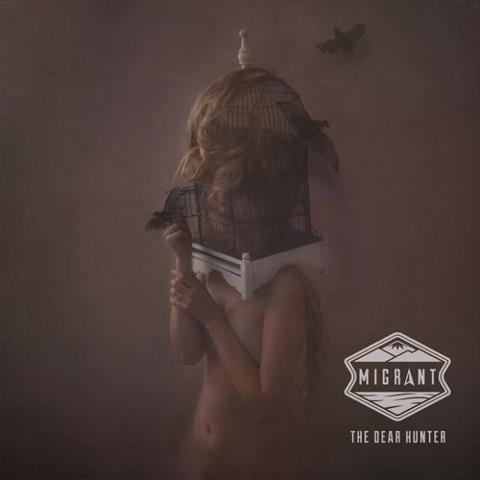
Like the title implies, Migrant is a move in a new direction for The Dear Hunter and frontman Casey Crescenzo. This transition, from conceptual to accessible, from experimental to controlled, may surprise those who are already well acquainted with TDH and how they operate, while new listeners will delight in the restrained yet well-crafted invitation before them. This album isn’t an elaborate story that necessitates multiple albums in order to be properly told, but it also isn’t a canvas void of character, depth, or heart. It isn’t an exercise in thematics and emotional associations, but it also isn’t a collection of arbitrary songs. It is the midpoint between innovation and convention, and it contains as much triumph and elegance and breadth as anyone could expect from a man of Crescenzo’s demonstrated musical caliber.
The album opens with “Bring You Down,” which swells with a foreboding string arrangement, tricking the listener into uncertainty before fading into a slow harmony of piano and bells. But even these quiet dynamics don’t last, as Crecenzo’s serene vocals are soon underscored by a crescendo of propulsive drums, driving the song to its fever pitch chorus of horns and guitar. In this way, Migrant flourishes, bouncing up and down the sonic and lyrical spectrum – not because there are emotions and modes of thought that can or should be explored, but because TDH’s songwriting expertise can’t help but yield atmospheres of sound so large they simply touch everything.
The first single on the album, “Whisper,” is evidence of this, opening with a swift yet reserved combination of percussion and strings, building and building until finally flooring the listener. TDH is known for these sort of techniques: complex instrumentation, smooth layering, nuances that give each song its own signature, its own breath. They’ve never been known to skimp, and the fact that TDH was able to successfully translate these methods onto a record that is supposed to be straightforward and personal is commendable.
Not every song is a giant, and there are definitely some duds in the bunch. “Shouting at the Rain” ticks along dully, colored by the twang and focus of nondescript country music, which is strange when tracks like the confident “An Escape,” or the bluesy and abrasive “Girl,” manage to be full of energy and invention. “This Vicious Place” falls short in a similar fashion, flowing a little too slowly, feeling a little too careful or calculated to ever achieve the same vibrancy that is peppered throughout the rest of the album. But maybe most unfortunate is the closer, “Don’t Look Back,” which is stark, plodding, and static – unsuitable to punctuate what is otherwise a very solid and varied release.
All things considered though, a few bland spots shouldn’t be enough to tarnish your opinion of TDH and their most recent endeavors. As a whole, Migrant might not be what you expect, but it’s still TDH composing on a level above and beyond peers in their genre. Give it a listen and see what the concept record junkies have been up to.
Review by Justin Davis