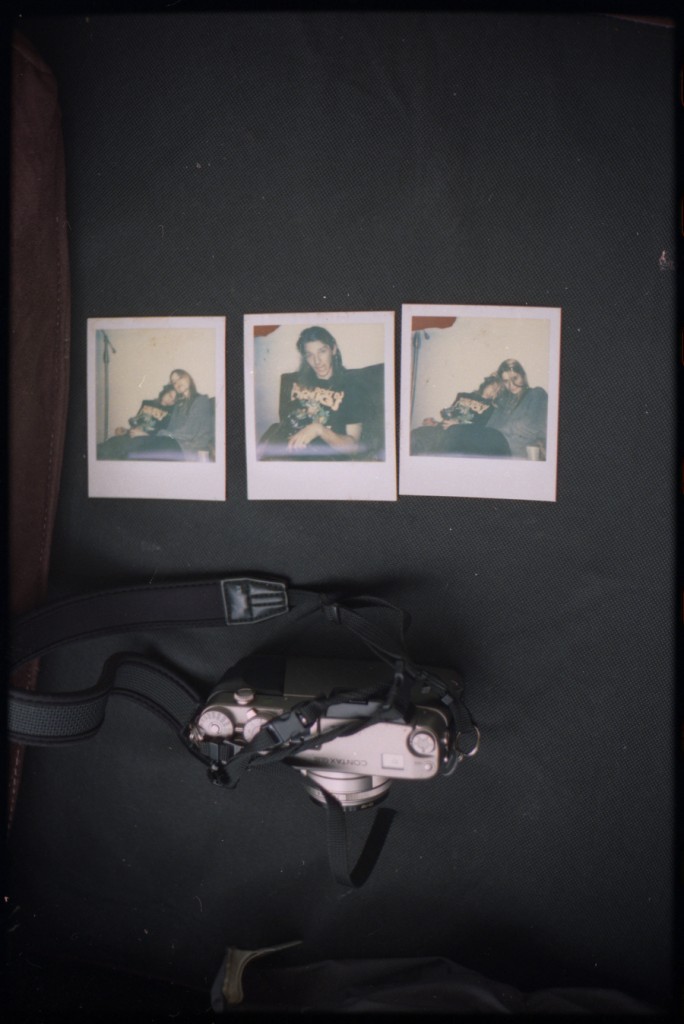
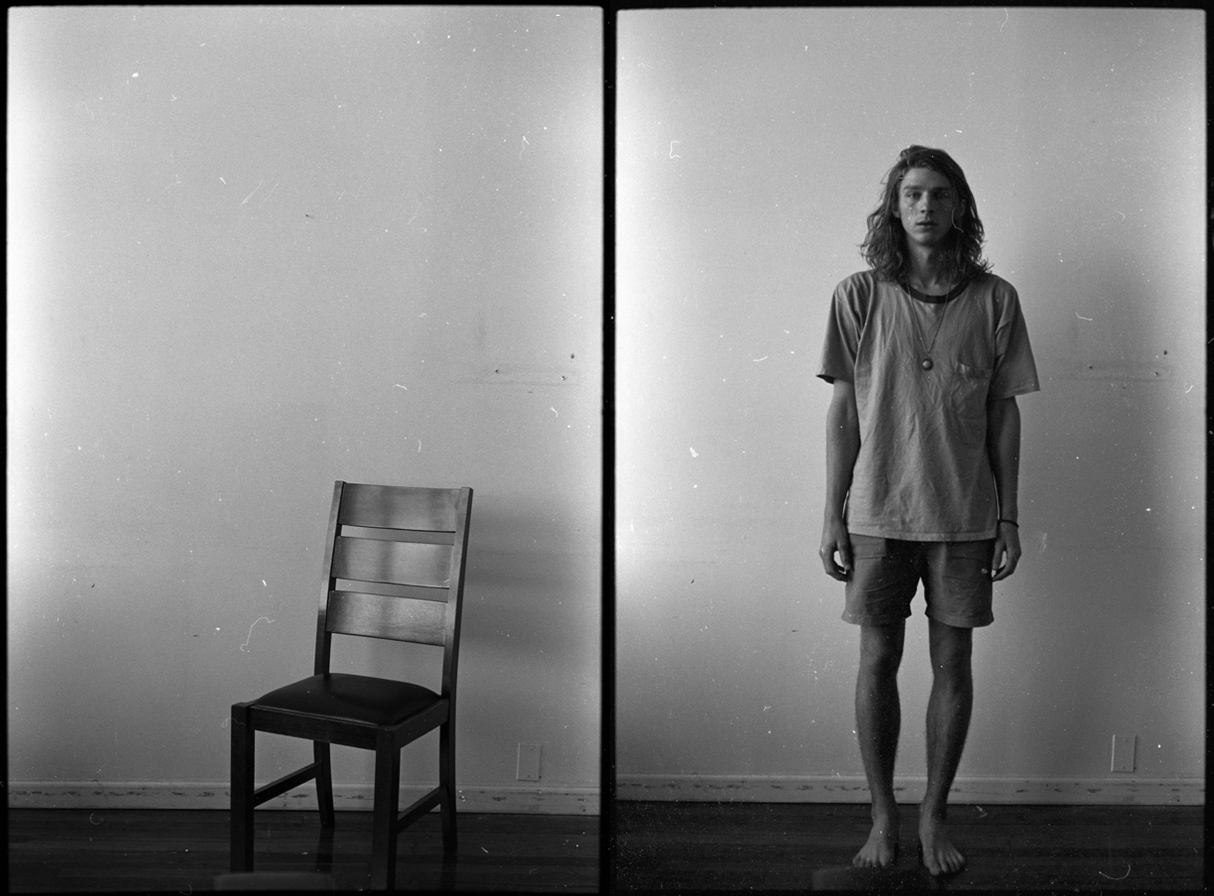
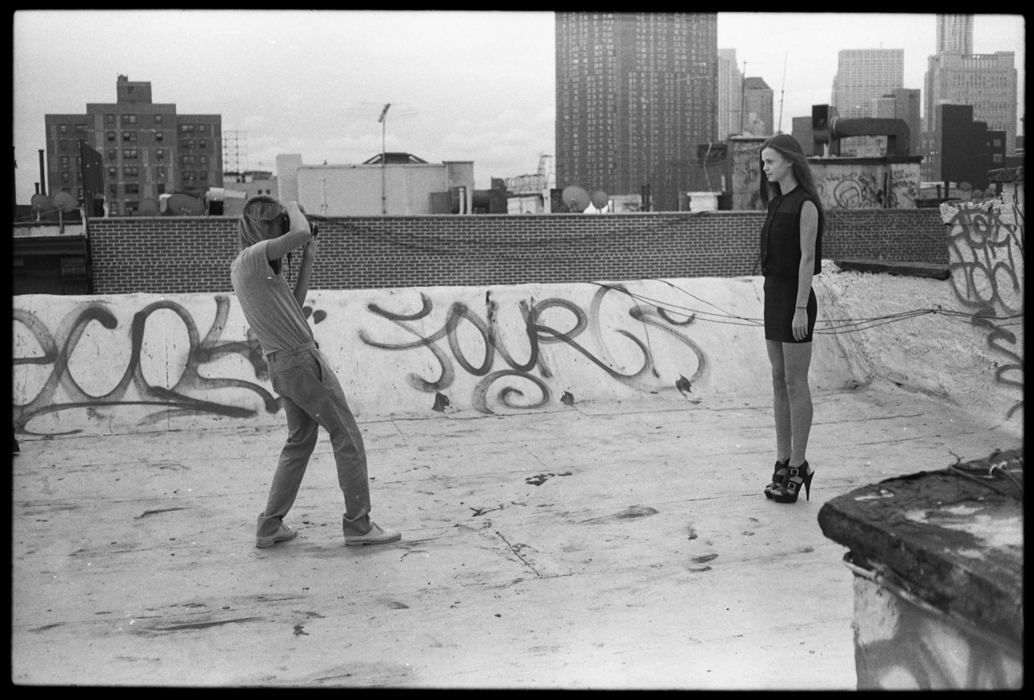
Sam Margevicius is a Swiss army knife of talents – he is a dedicated photographer, videographer, skateboarder, and sometime model. As he approached me one cold, windy January morning while I waited outside his apartment, his apologetic smile and handshake clued me into his down-to-earth world view. This perspective is also present in his approach to photography, which we discussed further in his home and studio over some tea.
You grew up in Palo Alto, CA?
Yeah, I’m from Palo Alto. I think it’s kind of significant that I’m from there. I try to find meaning in everything, just because why not? Palo Alto is the epitome of modern culture and modern technology. It’s where Facebook was developed and began. The high school that I went to was the first high school that had a Facebook account. There’s so much shit going on there; it’s kind of weird because it’s a lot of pressure. For after a time after I left, there was a lot of suicides in my town because there’s so much pressure to succeed coming out of there.
Wow. So what made you come to New York?
My journalism program in high school was really cool, and [every year] we took a trip to New York. I was working on the newspaper two years, and [when] we took the class trip, we went to Vanity Fair and Sports Illustrated and the Times and got to check out all that was going on in New York. That was really cool, and that was when I was just like, “I have to live here!”
Tell me about where you went to college.
I went to Lewis & Clark College in Portland, Oregon. I started out in communications and took this very theoretical class that I wasn’t very into. I’d been in Portland for a year. I fucking hated it. I thought, “I already have friends that I like, why do I need to find new friends?!” I wanted to drop out; I wanted to transfer. An option opened up to me to just go study abroad early: to get away from the school and come back to it. I studied abroad and that was really enlightening in so many ways.
Where did you study abroad?
I went to Argentina. When I was a kid, my parents had taken me to Ecuador to live in for fourth grade and learn Spanish, almost as a social experiment. My parents were like, “We’re watching Palo Alto get really ritzy. It wasn’t like that when we moved here, and we don’t want you to get spoiled.” They took me to this very third world [environment]. It was totally traumatizing, and I hated it in every way. But I had no control – I was just a kid, and as much as I kicked and screamed, there was nothing I could do. So I went there and basically hated it the whole time. When I came [to Argentina], I tried to block those memories. [In Portland], I was having this crisis of “What am I supposed to study? What am I supposed to do?” Then I was like “well, I’m gonna go back to South America on my own terms and confront my doubts” in a way. I went to Argentina, which is certainly more upper class [than Ecuador]. It’s kind of like New York.
After [being in Argentina], I decided I’m not going back to college. I went on this pilgrimage in Spain. This was when I decided, “Okay I need to study art.” When I dropped out of college was when I was like, “This isn’t really working.” I’m not as self-motivated as I thought. I wasn’t doing very much [except] working a lot of jobs that don’t pay very much money and require a lot of time from you, so then I went back to Lewis and Clark.
What did you study this time around?
I studied photography, and I studied all the various art mediums as well as art history. It became pretty obvious to me pretty quick that New York is the place that has kind of the most intense history of art in the US.
Was this fact the main reason you ended up in New York?
While I was in college, I read Just Kids by Patti Smith, and [while I read that], I was just like “this is why I have to go to New York.” I am still in the very beginning phases of art where I feel like I am still honing my craft and trying to allude to and speak in the same language as past artists. In New York, I can do that, but in my free time, I can be pursuing other things like assisting photographers who know much more than me. And there’s money – there’s sustainability in art here. Art is really an industry here. It’s not in Portland at all.
What other inspirations do you have now that you’re here? Have you found new inspirations than when you were in Argentina or in college?
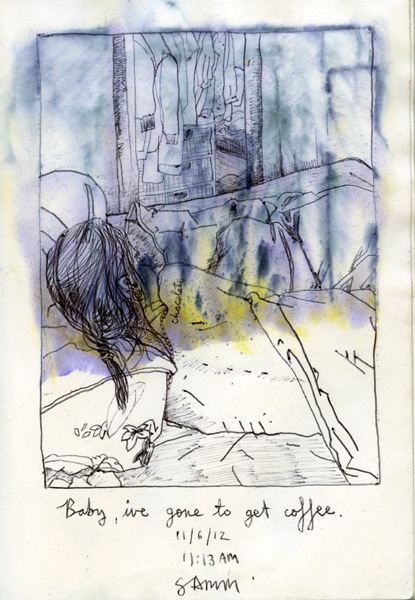
The subway is a huge inspiration for me. I just went back to the most simple form of art: drawing. If I was in a place and had the need to occupy boredom and not just turn on the internet. I’d be on the subway, on the bus, looking at people. They’re literally sitting there and spacing out you know? I don’t know – they could be thinking about really heavy shit. I’m sitting on the subway and looking around because there’s all these interesting people to look at. I pick up my journal and start drawing people on the subway. So in these in-between moments where I was bored and trying to feel productive and satisfied with myself, I’d draw. It just became a daily habit where I was just drawing a lot and decided to really get better. Then I felt like maybe it’s time to go back to photography. This is my craft, this is why I chose to move to New York: to [pursue] photography.
What kind of photography did you focus on then?
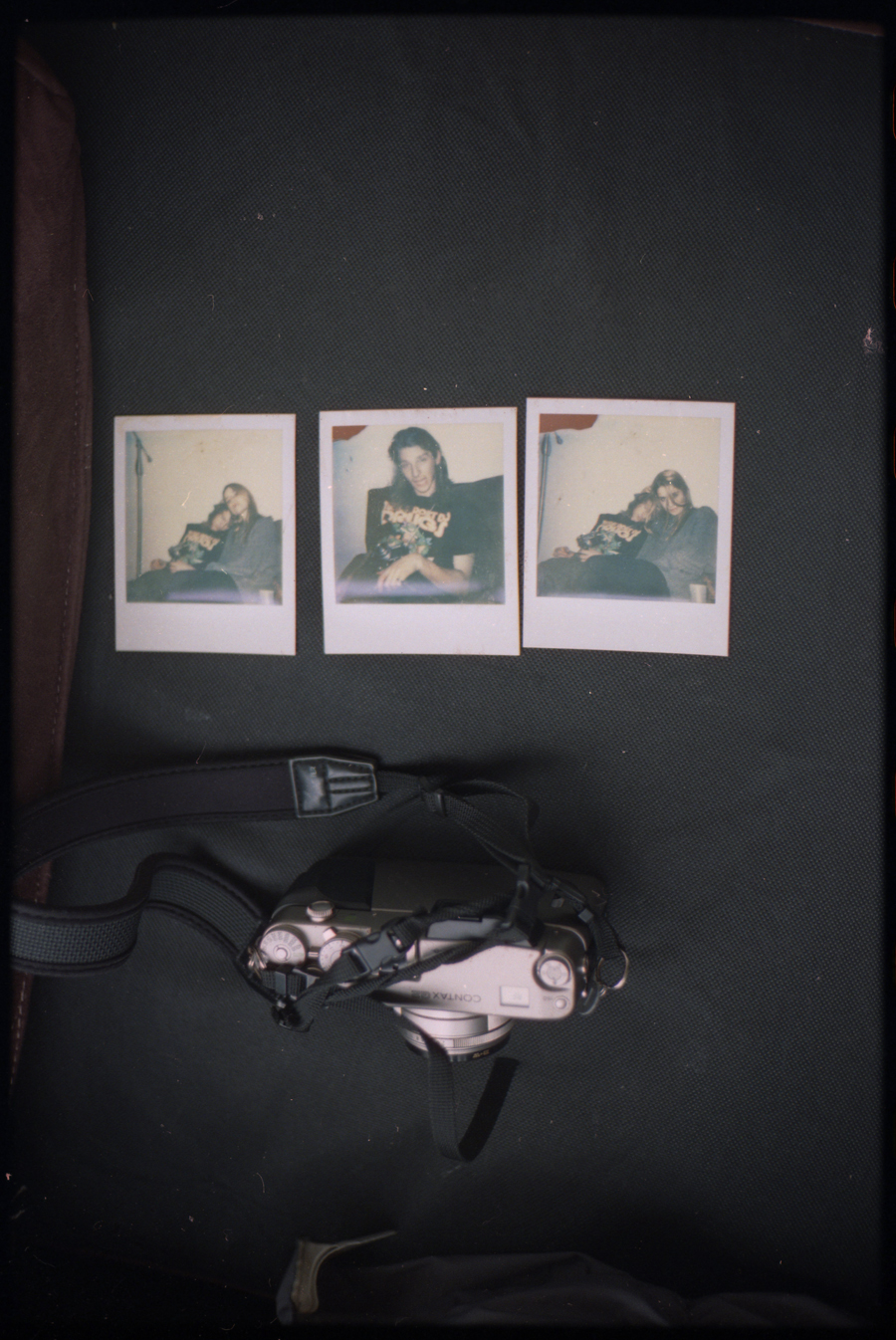
Film. What’s so interesting to me about film is that it requires that you know what you’re doing, that you know what you’re looking for, and that you’re being purposeful. I have one shot. I don’t want to waste film, as opposed to digital, which is based on shooting as much as possible, going back, editing, and choosing something that you didn’t know that you had, which is interesting too, but very, very different, so that’s what I really like about film. I had this idea of digital as commercial, and I wanted to escape that. I couldn’t escape that until I got rid of my digital camera. Then I was able to feel like my brain is the tool, and my brain is what is important. I became the idea creator as opposed to the tool user.
So then do you consider digital photography to not be art?
That’s what I thought for a while, and that is certainly not true. I think that [with] art, it doesn’t matter what medium you use. Art is purely the idea, and you should be able to express that idea in any medium. Film references history more [than digital]. A photograph is history itself. If you see a photograph, that is not the present. It’s something that’s dead; it’s a moment that’s gone. Digital is in conversation with the future and technology, which is an interesting kind of art as well, but definitely not my kind of art. So I shoot film because that there’s an association of film with art; there’s an association of film with history; my association with film is this kind of like if you’re really rigid, you’re really structured, you know exactly what you’re doing, you shot it at this exposure, you developed it at this… you got your process dialed down! There are still little random accidents that happen on film. Those accidents become so amazing, they’re like miracles. I can’t help just being so pleased when I see them.
Knowing your thoughts on digital photography, I’m curious what your thoughts on Instagram are.
I don’t think of Instagram as art. I take a picture, and I don’t remember it. [It’s] just a reminder like, “Hey, I exist! Check out where I am right now.” Rejecting technology is part of my art, because of this idea I have that I can’t really do anything new. I can’t speak for the same classic language that’s always been art, which is knowing the craft. Instagram is fun – it’s just not the same thing. The RZA from the Wu-Tang Clan, he talks about technology and says, “Use technology to your advantage or else be crushed by it.” Any technology can be misused. I think that’s the same thing with me sitting on the train looking around at people and being like, “Who’s wasting their time and whose not wasting their time?” As a photographer, it’s boring to see people on their iPhone.
What’s the weirdest thing you’ve seen on the train then?
I had made the decision to try and be completely sober except for tobacco for 90 days. I’d been sober for a very short amount of time, and a guy on the subway (it was packed), this homeless man was lying across the whole bench, just taking up a bunch of space that people could have been sitting on. That was just like, “Okay, whatever. Poor guy,” and everyone crowds in. As I’m talking to my friends, I look back [to the man], and his pants are completely soaked. There’s a stream of liquid flowing down the seat, and I took a photo, you know, because it’s so sad. But also to take a photo of something like that, it’s kind of awful – it’s voyeuristic. I took a photo of him because it was about me at the time. It was like, “Dude, this is why you’re sober now because alcohol causes a lot of huge problems in peoples lives.”
So was the photo a reminder to yourself?
Yeah.
What are you working on currently?
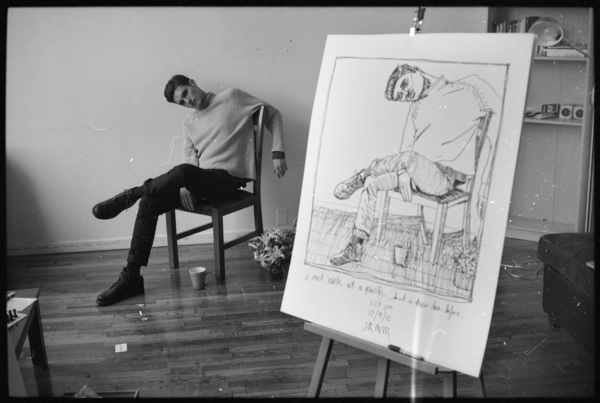
I’m working with a couple of friends with getting together a group gallery show. When I started drawing and moved to this place and had something of a studio I started having people over all the time to draw them. I started drawing these large scale drawings. It became this big Polaroid, or something that we understand as a Polaroid, which is a document of time with writing below. I would write the date, the time, and a sentence of something that would describe them, something that [they] said. I did a series of 13 or 14 of those. But then, as much as I can draw, I’m an artist in many mediums. I am a photographer first and foremost. So I took pictures of the drawing, my seat where I had been sitting drawing them, and them. I’m talking about representation. I’m talking about the drawing – the image versus the real thing. I want to do the show, and I want to present a few of those photographs.
Story by Alex Martinez
Photos by Sam Margevicius