

Love and work: the two tenants of your 20s. To Lucie Lozinski of Ski Team, these values are inseparable. “There’s a magic in love that I still believe in and in work, which I don’t think people really talk about” Lozinski told me when speaking about her debut album Burnout/Boys, releasing January 23rd. Teaming up with producer Philip Weinrobe, Ski Team’s upcoming release Burnout/Boys is a testament that love and work are not disparate, but act in tandem.
Hey Lucie, how are you feeling out of the release of your new album?
Lucie: I am so pumped. The album is out January 23rd and I will be so, so pumped then. I remember after the first session, I lived with my boyfriend and told him, if we ever finish this album, I’m gonna have the biggest party. I don’t know when or if this will ever be done ,but if this happens, I’m going to get a tiered cake and have a disco ball and I’ll be so excited. That’s how I feel. It’s like wow, this is happening.
You’ve been making music your whole life, but this is your first full album. Does the album capture a specific period of your life or does it encompass a broader timeline?
Lucie: I guess it’s pretty specific. Some of the songs I had been carrying around for a while. I wrote them in my mid 20s when I was figuring out what career I wanted to have. I wasn’t focusing on music, but instead how to be a grown-up. Other songs I wrote right before the session, like days before. I guess the span is young adulthood, the period of understanding that you’re always in your 20s forever, you can do whatever you want.
How would you describe your older set of singles in relation to your album? Are they a precursor?
Lucie: I feel like they have almost nothing to do with the album. They’re all love songs and they all came from the same brain, but they feel different from the album in that they are all experiments. Writing those, I was like, I’ll try working with this person or I’ll try working with no one and just make it in my room. I was figuring out what kinds of sounds I’m capable of making in a production sense. With the album, I felt like I was writing a book. All the songs are from the same universe with overlapping players and team. It feels much more like the music I always wanted to make.
Did moving back to New York during COVID affect the album at all?
Lucie: Yeah, it totally did. I moved back to New York from California with the intention of making a lot of music. In California, I wasn’t finding what I wanted musically and then as soon as I got to New York, it’s February 2020. It was rough being in a rectangle for almost three years and being so far away from the life I had built in California. COVID delayed the music, but it created this urgency to make an album. I was desperate for colleagues and friends in music, which I didn’t build during COVID because I was at home alone on the internet. COVID definitely made me hungry and grateful to get to be in a room with other people making music. When we recorded, we didn’t layer tracks, and had no overdubs except for harmonies. We would just play together and that’s what you’re hearing. Getting to make stuff with a group of six people in a basement is so special. Post- pandemic, it was the best feeling in the world.
What was working with Phil like?
Lucie: It was awesome. But, it was really different from other production styles and processes that I had seen before. Phil is pretty opinionated. For instance, when you record normally you’re playing in the studio, and then you come into the control room and listen back to what you did and design the track with the producer. We didn’t have any of that with Phil. None of us heard any of the music that we were making during the day and at night he didn’t send a bounce of the song. I think that’s cool because you can go into the studio the next day and not make changes. You just have to move on. I didn’t get to hear the music for months after we recorded. I’ve come to love that as a process because when I got to finally hear the tracks it was a time capsule and I could appreciate the mistakes. I learned so many things like that from him in his approaches to music.
When I listened to your album, a major theme was dating in your 20s. That being said, do you consider yourself a romantic?
Lucie: Yeah. I feel blunt and realistic about most things, including love, but I think there’s a magic in love that I still believe in and in work, which I don’t think people really talk about. That’s what the album is about, these two things. Once, when I worked as an intern, I talked to the staff and asked for advice and their responses were so depressing. Almost every person was like life goes by so fast, you know I started here what feels like yesterday and now it’s 15 years later, you have big dreams for your life but they’re not going to happen, so if you have any dreams do them now. I believe that work can be so beautiful, you can work on stuff you love and life is what you choose to do with your time. Finding other people who believe in what you believe in is like falling in love, it’s magic.
When I was listening to your album, one of my favorite songs was “Thirst Trap for Diego,” can you tell me a little bit more about the writing process for that song?
Lucie: This song took me a long time to write, like an unusual amount of time, at least a year. It ended up being about a period of time and I had to get out of that period in order to finish the song. The song was piecemeal writing. I thought the chord progression was cool and didn’t want to give up on it. I wrote the line “is your dad home does he know how you talk to me?” really early on and loved it, but I was like how do I make this into a song, and who is it about, and does it matter? I didn’t want to have the words thirst trap in it at first, I think it’s a trendy phrase. Then, in the studio, this player named Alex Toth, told me I needed to finish the chorus with something like “yeah take that Diego” or “not a thirst trap for Diego.” We ended up with “not just a thirst trap.” This is one of the only songs where I wonder what my parents will think.
New BF reminds me of Veruca Salt and the grungy 90s sound differs from the sound of the rest of the album. Why did you bring in this tone for this particular song?
Lucie: That’s probably a question for Phil. I had some production ideas for this song and Phil had other ones. We ended up doing two versions of this song and they’re layered on top of each other, which is pretty cool. For this song, Phil got everybody on the floor in a circle and told everyone to grab an acoustic guitar, including the drummer. The drummer stuffed a metal flask into the strings of the guitar and tapped it. Midway through this, I gathered some confidence and told Phil that I didn’t like the sounds I was hearing and would like to do a plugged in version too. Phil was like okay, heard, let’s do it this way first, and then your way next. After we recorded, Phil was like now watch what I’m gonna do, and he layered the two recordings onto each other. When I heard it all put together, you can hear all the crunchy grit and you can also hear the pleasant instruments. It adds depth. You don’t clock it, but when you’re just listening to it there’s a fuzzy element because there’s a lot going on in there. It was cool to break down the song, making it funny and gross and punky and then putting it all back together.
When you were working with Phil, did you bring him a demo of a song and then he was like “I have all these ideas” or was it collaborative at the outset?
Lucie: I sent him some demos. That’s how we met, I wanted to work with him, and he didn’t know who I was. He listened to the demos I sent and we worked together two years after we started emailing. Going in, I assumed we’d get into the room and that we would get coffee and talk about production, I thought it’d be very collaborative. It was not like that at all. We’d come into the room at 10 a.m, a bunch of strangers, and I played the song on acoustic guitar for everyone and was not allowed to play the demos I sent Phil. Everyone in the room heard the rawest form of the song, the way I hear it. There was very little prep, we just got into a room, made music, and tried to keep it loose and improvisational
What’s one thing you’re looking forward to about the release of the album?
Lucie: I’m really excited to physically hold the music. I’m already nerding out. I got the test pressing of the vinyl and I was like that’s so crazy. I put it on for the first time recently, and I’m now in a different room alone experiencing what was in that room together years ago. That’s obviously how music recording works, but having the physical artifact is blowing my mind. Artifacts are important to me and it’s so special that I get to make one for the first time. I want people to see it, put it on a shelf, cherish it, and spend time opening all the pages.
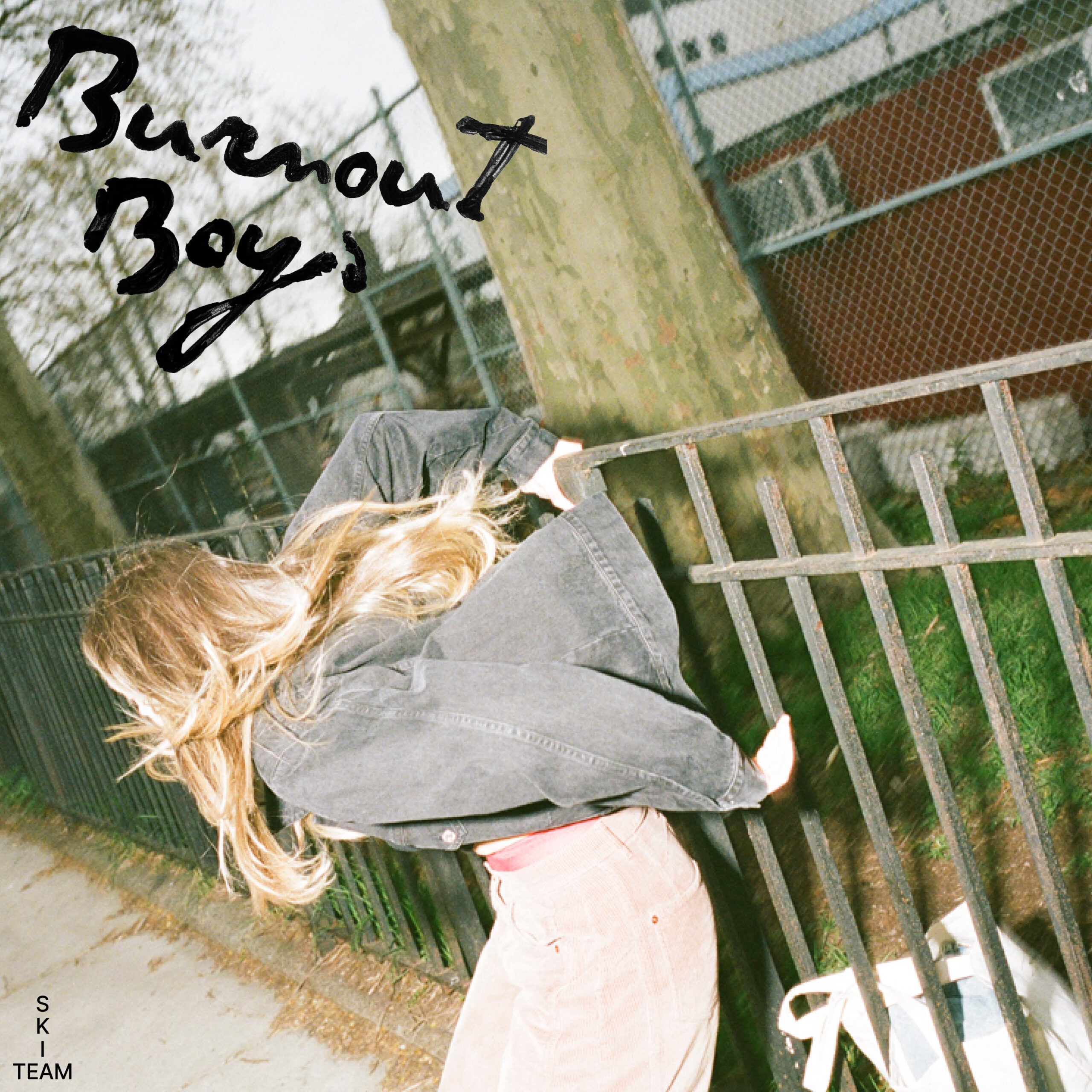
Burnout/Boys is out January 23rd. Presave the record here.
Listen to singles “Music for my Family” and “Thirst Trap for Diego”