
2019 still feels so vivid in my memory. It was the year I interviewed Fontaines D.C. before they played their first show in America. They would go on to see the world; be it on tour, in festivals, or live television performances. No other band recently has managed to navigate their blistering rise with such balance and fervor. Critical recognition would find their sophomore effort, A Hero’s Death, nominated for a “Best Rock Album” Grammy in 2021. With the release of their third album, Skinty Fia, Fontaines D.C. summarize their time in the limelight into a project that underlines why they aren’t leaving it any time soon.
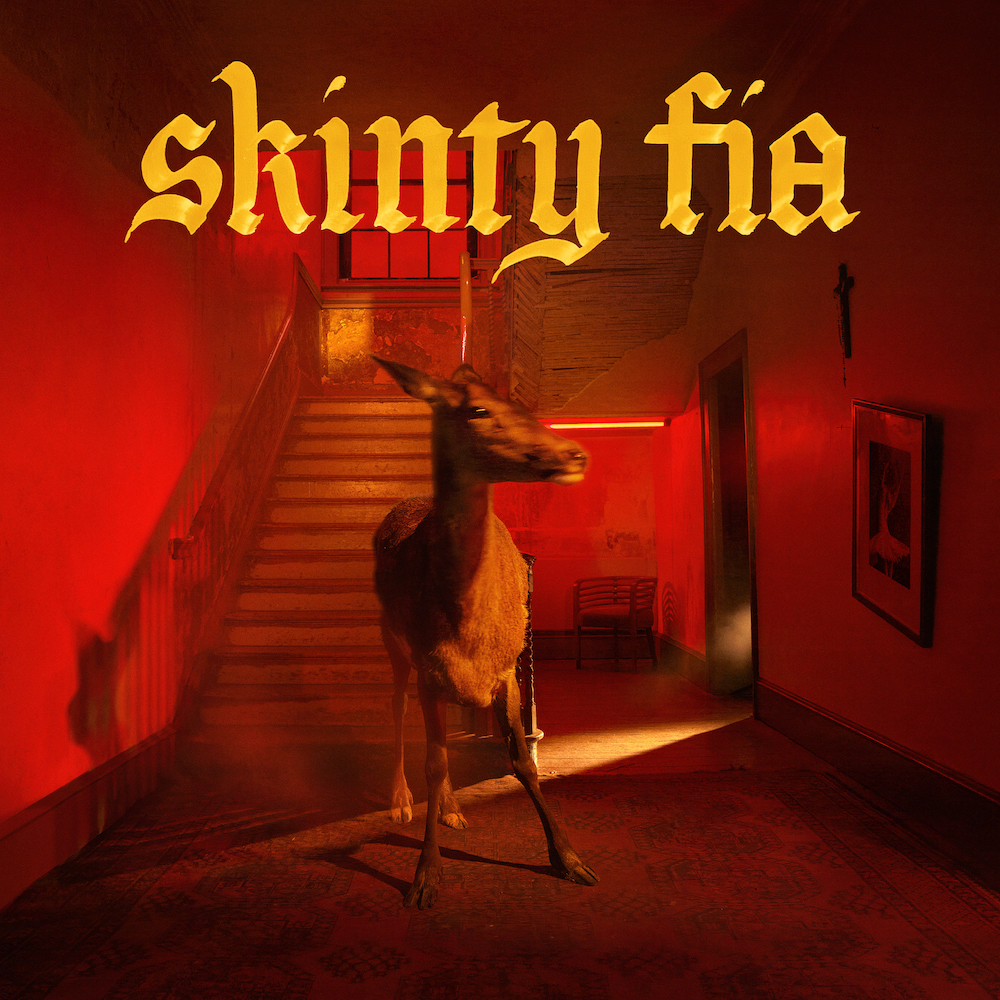
Ireland has always been central to the band’s identity and with Skinty Fia – Irish curse word for “damnation of the deer”, referencing the extinct Irish elk – they give us their current world view as Irish people no longer living in Ireland, but instead in England: the “better land” they rolled eyes at in Dogrel. This project combines their second album’s melodic approach with the urgent, snarling attitude of the first as they continue to tell stories with the unique romanticism associated with their music.
I once played Fontaines D.C.’s music in my work office and a coworker remarked: “Yo, is this the new Bono?”. Although it was in lighthearted jest, the joke rang true to lead singer Grian Chatten’s undeniable Irish accent. This album specifically speaks to the feeling of being othered because of this accent – in the company of patronizing, holier than thou, English folk. This state of displacement jettisons Skinty Fia’s narrative within its first track, “In ár gCroíthe go deo ”, about an Irish woman’s family wanting the phrase on her gravestone, but the Church of England forbidding it without its English translation, “in our hearts forever”.
Inherent in the struggle of losing their Irish cultural identity is a struggle of losing their sense of self. “Big Shot” shows us that the band’s members, Tom, Grian, Curley, Deego, and Carlos, haven’t numbed themselves to fame, but instead are fully aware of their success and the sadness of that success overshadowing whatever lives they had beforehand. It’s a melancholy that isn’t utterly crushing, but is incredibly heartbreaking, and threads itself throughout the album. For them, Irishness mutates and gradually degrades in another country, especially one so politically and historically tied with Ireland. There’s a palpable mourning for home in these songs.
The first released Skinty Fia single, “Jackie Down the Line”, perpetuates a similar theme accompanied by a drudging bassline, as Grian sings
“I don’t think we rhyme
I will wear you down in time
I will hurt ye, I’ll desert ye
I’m one Jackeen of a line”
“Jackeen” here is a derogatory term used in other parts of Ireland for someone from Dublin, referencing the Union Jack and asserting close ties with England – like a cultural traitor.
This album is Fontaine D.C.’s most musically experimental release. We can always expect them to deliver on poetic references (see: Bloomsday) and lyrical complexity, but what makes Skinty Fia’s songwriting notable are the sonic elements that elevate the band beyond the post-punk label. On first listen from beginning to end, I heard bits of searing, Oasis-like guitar notes (“Roman Holiday”, my personal favorite), the Cure’s radiant gloom (“How Cold Love Is”), and unexpectedly groovy beats and electronic noise in the vain of Madchester (On the title track, Grian sings in a rap-like meter); all strung together by the band’s unwavering Irishness with the intent of always owning up to their own sound. I found it interesting for Fontaines to be critical of England while also nodding towards some of its most well known bands. Perhaps this is a reflection of the cultural identity conundrum they’re grappling with, but I think by twisting English musical influences with their own Irish flavor, the band can feel confident in giving the Queen her come-uppance. Fontaines D.C. blooms as a proud thorn in England’s side.
Skinty Fia exemplifies the band’s maturity as they step back and reflect on their place in an ever changing world, turning their struggles into art through honesty. Stand out song “The Couple Across the Way” is the only tune backed by accordion alone. While this may initially come off as a tongue in cheek approach, this sound quickly perturbs the listener. It gives voice to an old, argumentative couple Grian witnessed across from his apartment (à la Rear Window), who would yell at each other daily. He wondered what drove their cyclical anger and if there was any love still there, comparing the young love of him and his fiancé’s engagement to the withered nature of his neighbors’ relationship.
“The world has changed beyond our doorstep
Peoplе talk and dress so strange
I don’t know a neighbour’s namе
And all of life is rearranged
Nice to know that you’re still caring
Well enough to raise your voice
But if we must bring up the past then
Please don’t speak to me of choice”
Both song and album ponder on loss: the loss of love, of identity, of home, and how those losses overlap with each other into a loss of choice. What becomes of us after loss? What aspects of our humanity are inescapable and fated? It’s scary to experience these thoughts and feel doomed, but this Dublin five-piece pursue freedom – a way out of fate – through their music, in defiance of it all.