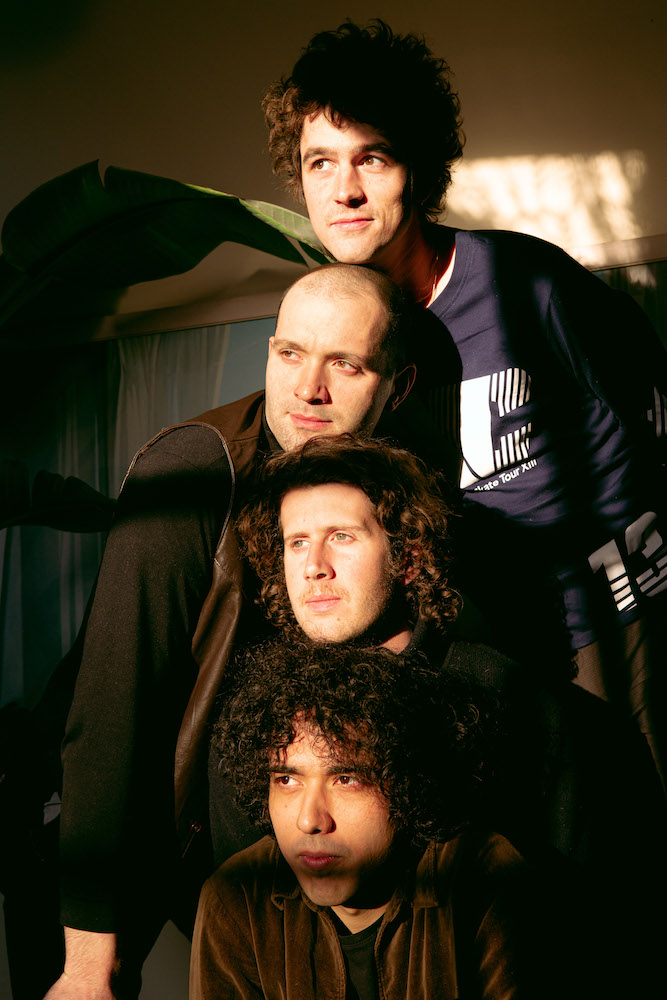
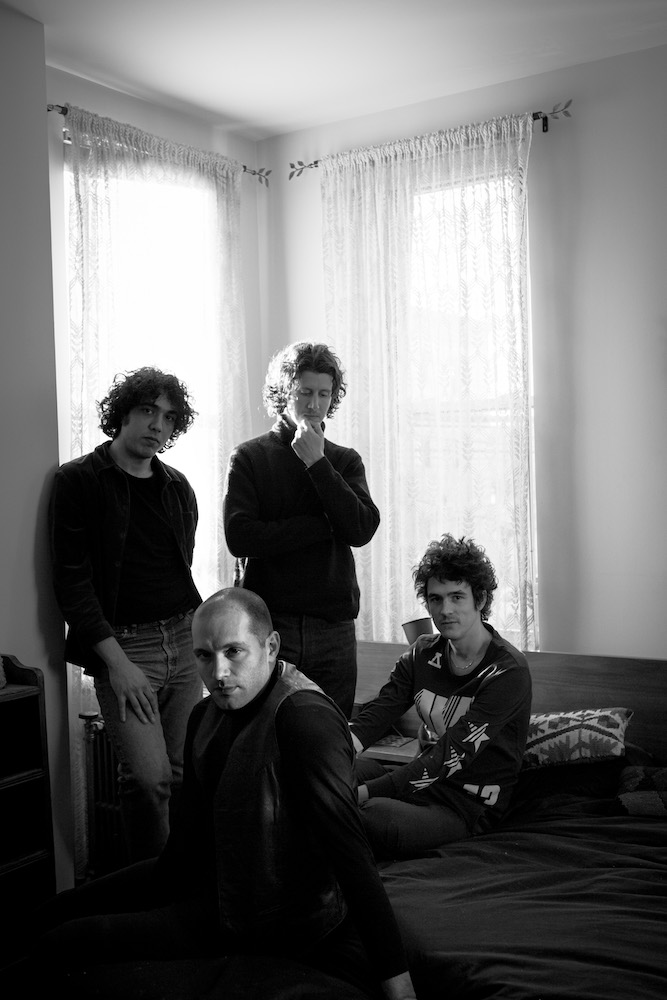
Photos by Lucy Blumenfield. Find more of her work here.
The Muckers are Brooklyn-based rock band with a distinctly New York sound, despite their global roots. Their debut album, Endeavor, was released on Greenway Records and is a blast of energy that holds almost as much power as a live show.
Between searching for light pockets and stacking heads in a beautiful Brooklyn apartment, I sat down to talk to The Muckers about life (and headspace) in quarantine, how they started out in the New York music scene, and how their collaborative process has evolved over time.
The Muckers are comprised of frontman Emir Mohseni, bassist Anthony Azarmgin, guitarist Chris Cawley, and drummer John Zimmerman. Playing at festivals like Treefort and performing at local venues like the Mercury Lounge, and Baby’s All Right, the band had the whole world in front of them going into March 2020. But despite ample press coverage and plenty of live shows, they were still relatively new, with Mohseni only having moved to America from Iran in 2017. They hadn’t even toured the West Coast yet. And just as they were beginning to perfect the new songs off of the upcoming album and introduce them to live audiences, the pandemic occurred.
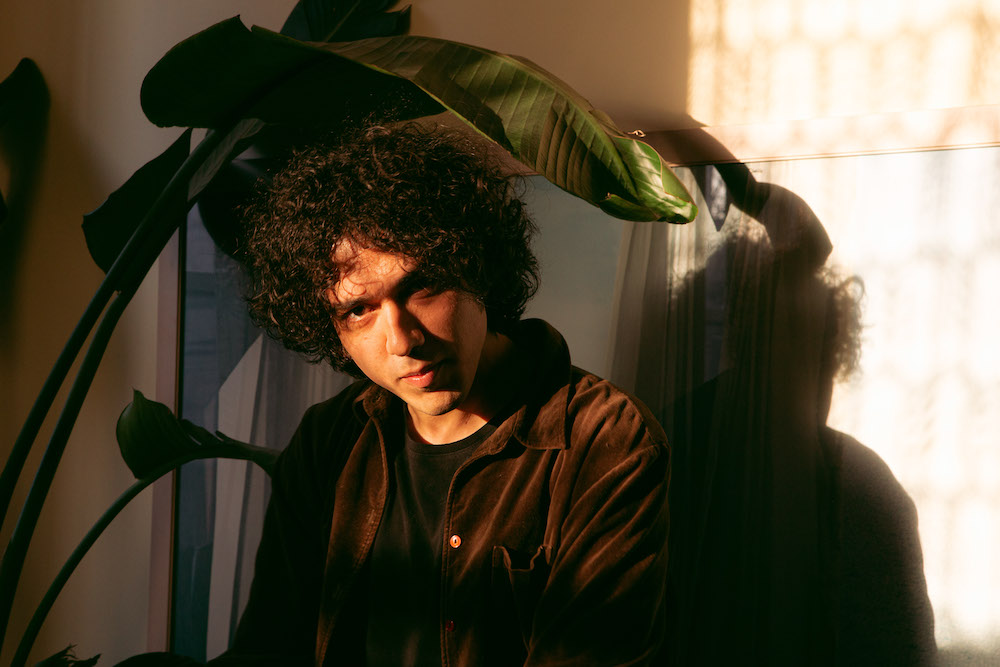

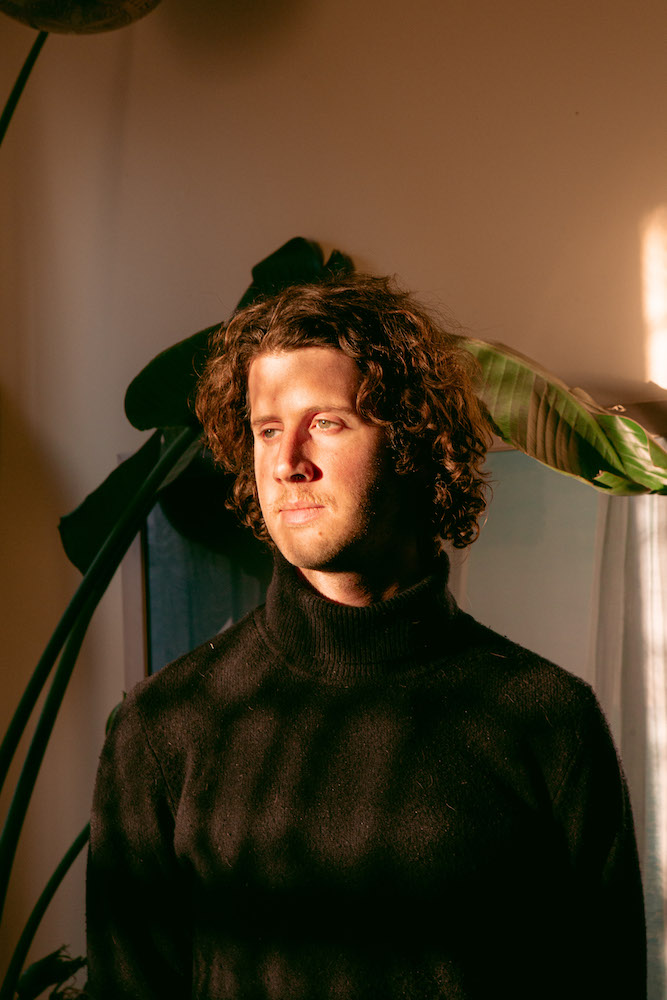
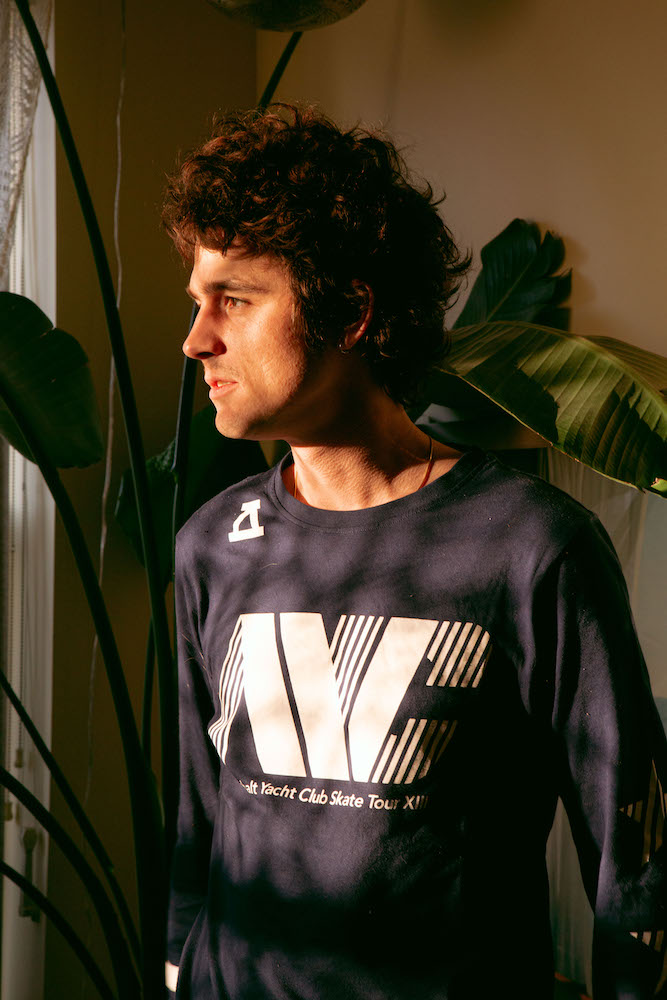
After almost 9 months without rehearsing, the band finally came together again. But something was different, the foundation of a tumultuous and fluid puberty had set.
When you finally reunited, was there a different vibe playing together?
Emir: Definitely
Tony: It was easier to read through each other.
Chris: We had fun.
Emir: It was really fun. It was three hours. We didn’t feel anything.
Chris: It all comes back. You have that moment of panic—Do I remember how to play these?
Emir: There was a lot of fuck ups.
Chris: The second practice is a whole new thing because you remember all the old songs and you start playing together with what you’ve brought from the last year.
The band’s music has a distinctly live feel to it, even within the confines of a recording. Listening to both their album and EP was one of the closest experiences to concerts that I’ve felt in over a year. The songs feel expansive and full of the rush that defines live music. The sonic dialogue between the instruments takes the place of band member interaction we would expect to see during a performance. But for The Muckers, nothing in quarantine will ever match the energy of say, one of their favorite shows: opening for Pond at Warsaw. And while jamming out can come close (and, for John, riding a Vespa), nothing beats the rush of the stage.
But perhaps that’s exactly why this year was so fundamental for The Muckers.
Emir: It was one of the best years of my life. It was weird. It was before the album release, so we were working on that. And the second album at the same time, just sharing ideas and writing. It was really nice. And a lot of frisbee.
Chris: Financially, emotionally, spiritually. Just in so many ways this has been one of the most positive years. I think we came to do really cool things as a band, sending each other files from around the country, making songs that way that ended up on the album.
In addition to writing and playing together, the band found time to relax and reflect. Chris started building furniture, John is working as a video editor, Tony is building a studio in his house, and Emir has been cooking, specifically…
Emir: Gormeh sabzi. Boom. That’s the one. The one that I was always like, “How am I gonna make this, I need to make this.” Because when I moved here, there was no Ghormeh sabzi for me. So when I moved here, I learned that the key stuff that you need in the kitchen is a pressure cooker and Wendy [manager and roommate] has a pressure cooker. So, I learned, I tried them, and it came out really good.
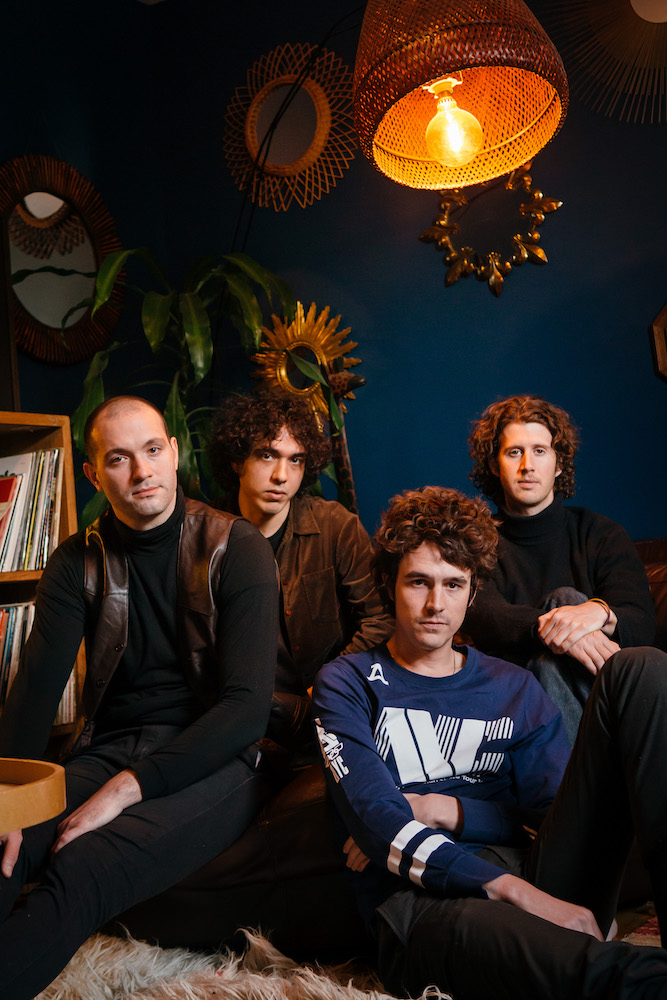
Part of Endeavor was recorded in 2017 along with the EP, in a fast and dry session over the course of only a few hours (with overdubs added later). The second half of the album was recorded towards the beginning of the pandemic. To keep it as COVID safe as possible, only Emir and John went into the studio. Since then, the band has been busy writing material for their second album.
Has there been any new revelations or an evolution in style as you begin writing this new album?
Emir: It’s going to be [the] same vibes, but at the same time, really different vibes and the moods might be a little darker sometimes. I think it’s more comfortable. Like, before it was only me trying to come up with something. But now it’s a band and we just talk and each bring something to the table. And we practice together. So it’s going to be [a] different vibe for sure.
So I guess the first album felt more disjointed in comparison with this album, at least in terms of collaboration.
Emir: For sure.
Tony: It’s going to be more like a band now. I mean, not that it never did feel like a band, but because we’re all going to come in together rather than like, learning the songs [on our own] and then adding our own licks to it.
Facilitating collaboration has become important for the band, especially because of their bond.
Emir: We’re lucky because it’s really a friendship and not just like four people playing together who just go home and not talk to each other. We’re just hanging out a lot, in touch. Same vibes.
Chris: So nice, yeah.
Tony: We don’t live together, so that’s a big plus.
Emir: We’re not that young, like teenagers that just go crazy. We’re…older. I don’t know, some stuff happens where bands get too close and it becomes a problem, in my experience. But we’re past that.
Yet in order to establish themselves and find their community, the band had to do some heavy lifting. Mohseni knew what he wanted from the beginning, but he had to make sure everyone else knew.
Emir: If you want to do it, that’s the main thing. You just have to meet people. I think if you want to start something, and if you really know what you want, you go to the right places, and you’ll find what you want. So I did that a lot. The first year I wasn’t working. We were hanging out a lot, me and Tony at our friend’s bar in Bed Stuy, because I [was] living there for a little bit. So it was really nice, that first year. I was just going to shows nonstop, seeing people and talking to people. Now I’m thinking about some of those like, I’m not gonna fucking do that. You go to that person after the show like, “Hey, I have this, like, song. You want to hear it?”
Chris: Things in motion stay in motion. You can’t stop. You know, you send people your music and you feel really good about giving it to one person and then you don’t give it to anyone else anymore, and then you don’t hear from anyone. You have to just not stop. Self-promotion is really—
Tony: It’s an art. It’s an art. Honestly, I don’t think it’s given to you that just because you do music, you should know this. I think it’s honestly in your personality. And like, you have to really want it. It’s [Emir’s] skill. Honestly.
Emir: Sometimes it’s fun when it works. It’s like, “Whoa, that was real.” But you have to really not be shy and just go for it.
Tony: If you really want it—
Chris: You can’t disappear.
Tony: I mean, it’s very serious for us, because we want to do this to make a living. Some bands don’t see it that way. It’s all different what your goal is.
Emir: It’s fun, but it’s frustrating as well. Because it’s socializing, especially in New York, sometimes it gets too much. I’m not going to go back to that.
Because you have to kind of live it and breathe it.
John: Too many 4 am nights.
Chris: It’s a part of the initiation. It’s the same with anything in New York. You kind of have to almost have those 4 am nights for a year or two in the beginning. Because I don’t do that at all anymore. I haven’t done that in probably the longest. But some of my best friends, even before these guys, I met in those 4 am nights. You meet your connections and the music, so you kind of—not that you have to suffer in this rite of initiation—it’s really fun. But then it’s like, okay, maybe I’ve met the people I need to meet. I can go down this road, but it looks really bad when you’re 50. And you’re still having 4 am nights.
Emir: Yeah, we went crazy. I mean, that was my first year here and it was really necessary. I was like “Okay. New York City. Give me.”
This year seemed like the breath that was coming. With time to take a break from shows, bars, and awkward moments of self-promotion, the band was able to reflect on the work they had already put in. Being away encouraged them to be together, to coalesce into the band they had formed from unpredictable New York nights and fast-paced jam sessions and that shines in full force on Endeavor and beyond.