
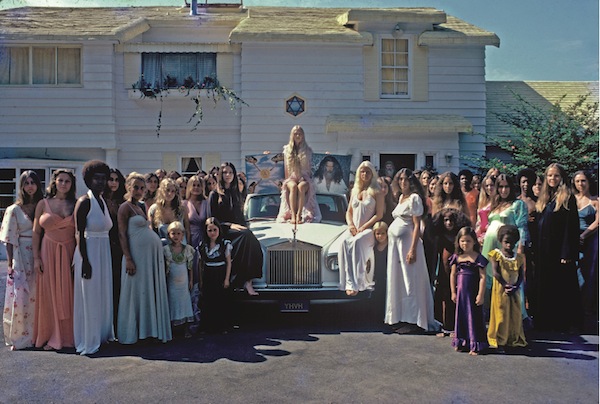
Source Family women pose for a promotional photo for the Ya Ho Wa 13 record release, Los Angeles, 1973
Photo courtesy Isis Aquarian archives
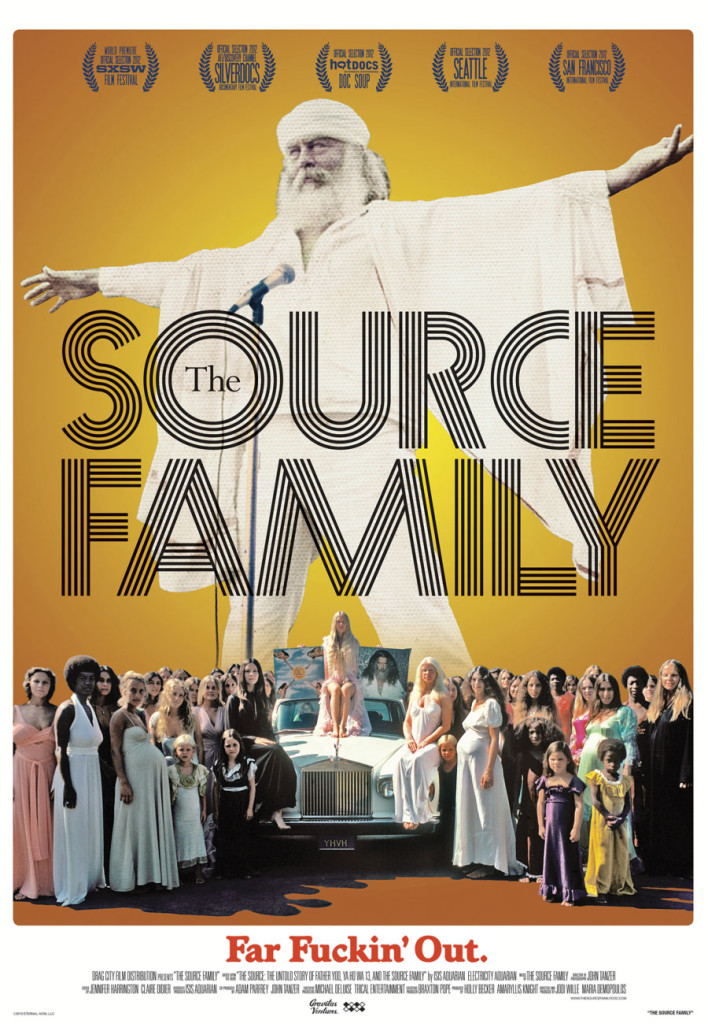
“If you wanted to create an archetype of the ultimate early 70s, Southern California spiritual cult, you could do no better than the Source Family” – or so we’re told in the opening minutes of the eponymous documentary. Directed by Maria Demopoulos and Jodi Wille, the film is a freewheeling testament to crunchiness, to human foibles and divinity, and to transience in general.
Depending on who you ask, the Source Family was either a brainwashed cult, a bunch of acid-addled burnouts, or a group of people who, for a brief moment in history, seemed to have it right. To the film’s credit, the family is presented as all and none of these things, and we get a healthy mix of divergent perspectives as well as an undercurrent of unironic appreciation for the characters.
The documentary follows the classic narrative arc of wayward beginnings for spiritual patriarch Jim Baker (who was a skilled judo fighter, a WWII vet, a bank robber, and karate-chop killer of two men); a relative golden era following the creation of his legendary cashcow of a vegetarian restaurant on Sunset Strip (and, by extension, his spiritual upstart in all of its pure beginnings); and a decline (or breach of faith on the part of some of the members) that began when he made the decision to have multiple wives, delved into ever-freakier sex magic, and ultimately moved the cult to Hawaii, where they faced a record amount of persecution. Spoiler alert: the spell is broken (and the cult disbands) after he jumps to his bizarre, gleefully suicidal death in a hang-gliding incident, but whether his utopian experiment ultimately failed or succeeded is probably a matter that’s up for debate.
“I thought we’d be together forever. I thought I’d never cut my beard, cut my hair–I thought I’d be a vegetarian for the rest of my life. And within two years, the family went their separate ways,” says one of the Aquarian brood.
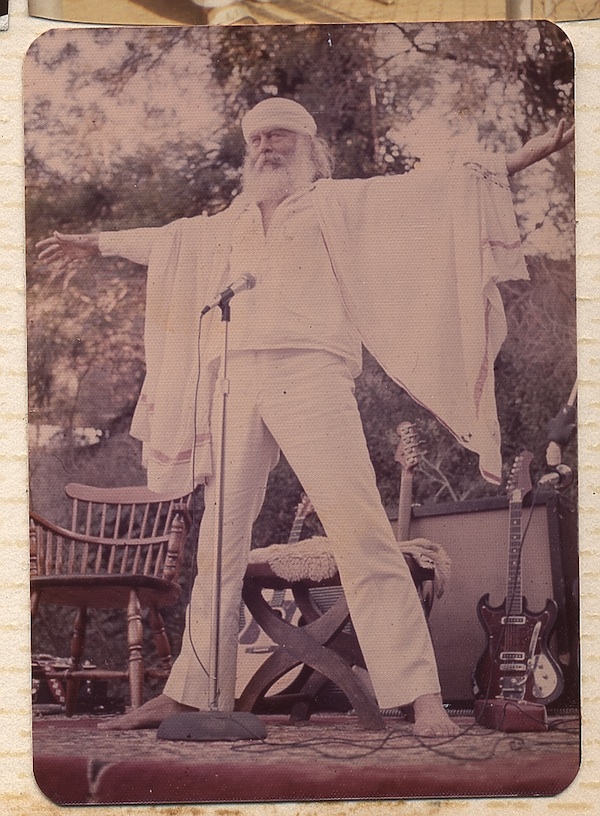
To be sure, most of the former cultists as we see them today look just like any other well-coiffed member of society, but the legacy lives on in a number of surprising ways. The family members still get together for occasional reunions––some are even raising their families beside one another in Hawaii––and the various fractions of their rock music effort are still playing jams. Yep, that’s correct–aside from being a bit of a spiritual zealot, Mr. Jim Baker espoused the religion of sex, drugs, and rock and roll, to the tune of nearly 65 albums recorded amongst the Source Family’s 100+ members.
The Source Family is as much a character study of Baker (also known as Father Yod, or YaHoWha) as it is a historical documentary, a tale of the radical idealism of those times and the sustainability of free love in a changing society. It raises some questions, like: to what extent is utopia ever possible on Earth? Or, does free love ever really come without a price? And, finally, does it ever make sense to allow someone’s God complex to run away with itself? (Answer: no).
But, to Jim’s credit, he’s the first to eventually admit that he’s just another man like anybody else. Perhaps he would have been a Jesus of sorts if he’d been around 2,000 years ago. There’s certainly no shortage of miracles in the literature. People describe seeing lightning come out of his ears––of touching his shoulder and “feeling their kundalini rise,” seeing a blinding white spiritual light drown out the surrounding scenery on Sunset Boulevard. Supposedly, he breathed life into a stillborn baby––and there’s video footage to prove it. I can’t personally speak to how hard anyone was tripping when any of this happened.
If you find Jim Baker simultaneously likable and creepy, you’re probably not too far off base. The Zeus-like image and flowing white beard is maybe a bit much, but he’s goofy enough to temper that image a little. One devotee describes encountering him for the first time in the attic of his restaurant, seated guru-like at a makeshift shrine. The newcomer did what any disciple would do in the presence of a guru, which is to say, kiss his toes. Jim laughed and said, “Far out, man.” Then again, there’s that whole 14 wives and, yes, some of them were underage, ordeal. Though the women describe the sex as more consciousness-raising than anything remotely having to do with lust, you can’t help but raise an eyebrow at the dude.
Perhaps the ultimate litmus test is to evaluate the legacy he left behind: a moment in time that represented humanity attempting to live out its highest ideals – one that was the singularly most significant event in the lives of his white-robed followers. Moments like these may have been the last shreds of wide-eyed sincerity to survive before post-modern irony took its place and turned it into an SNL punchline.
To that end, WWJD (What Would Jim Do)? He encouraged his followers to change freely and to let go of things when they outgrew their purpose. If that meant dismissing him as a leader, so be it. In the words of a fellow Aquarian, “any relationship with a teacher should be temporary, and at the end of it all, we are our own teacher, and we’re responsible for our own evolution.”
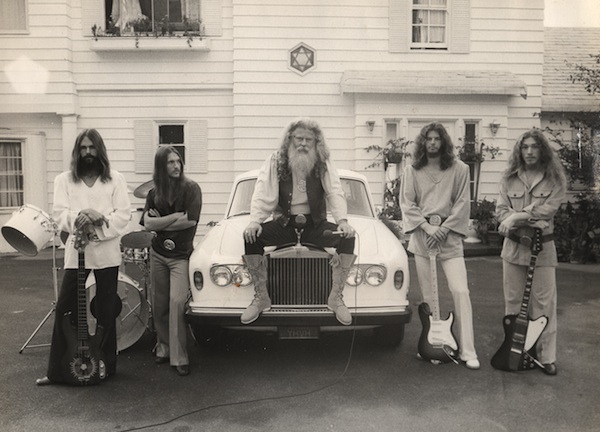
/ Photo courtesy Isis Aquarian archives
Who Should Watch It: Washed up hippies, anyone who was there, and anyone who appreciates a good tale of optimism and disillusionment.
Who Shouldn’t Watch It: Those with an intolerance for hippie bullshit and untrimmed pubic hair.
Review by Steph Koyfman