
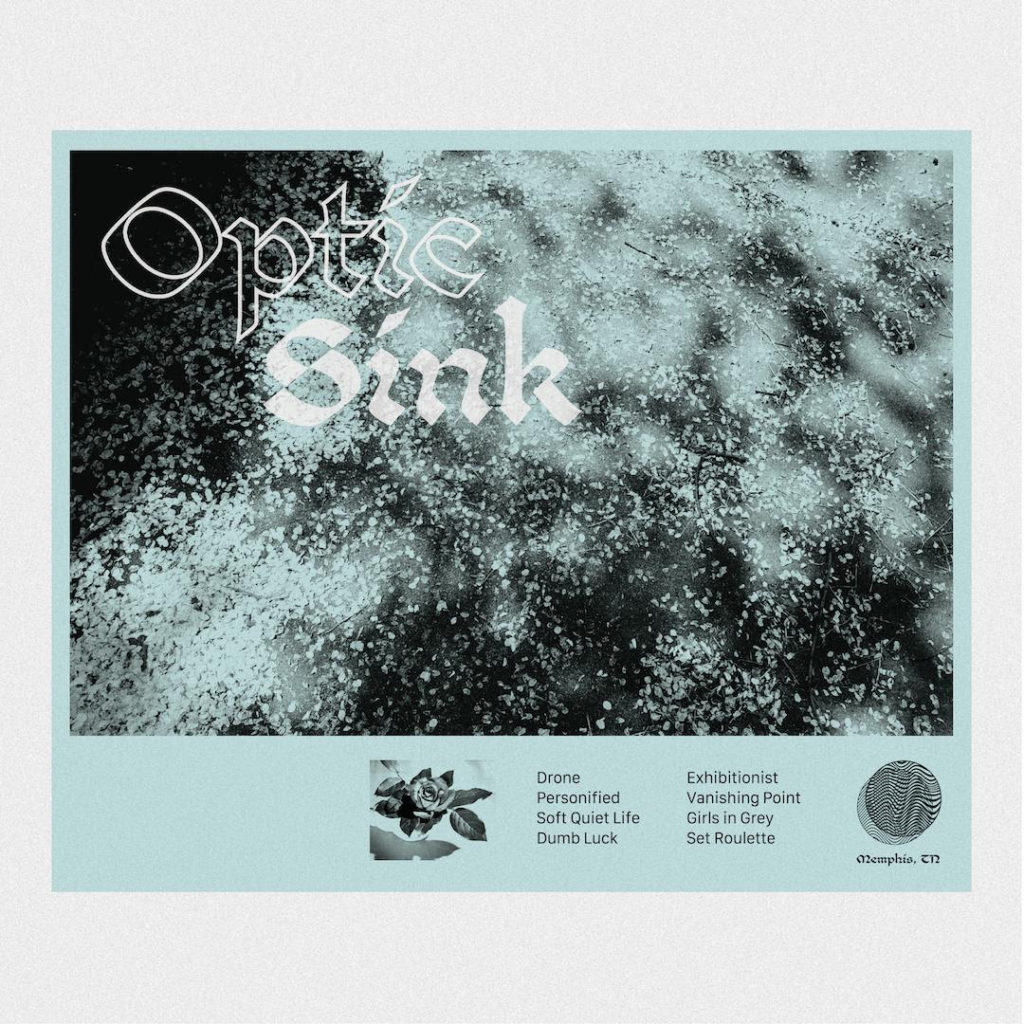
The post-punk revival is moving forward, regardless of what’s happening in our world, and its resilience is striking the musical landscape with an eclectic array of compositions, enough to keep the masses entertained while they endure quarantine. That said, when I heard that Natalie Hoffman (of NOTS) was pursuing a project with Ben Baeurmeister (of Magic Kids, Toxie, and A55 Conducta), I was immediately intrigued to see what they’d been crafting.
Following the announcement of their project earlier this year, the duo made their introduction with the release of their self-titled record’s first single, “Personified” (accompanied by an official music video). The track begins with a strong electronic glare, as if they recorded the sound of an ancient computer monitor powering down or a decades-old video game console in action. In her work with NOTS, Hoffman evokes an effortlessly mesmerizing energy, created through the use of entrancing synths, brash guitar riffs, and booming bass, and that same enticing aura clearly resonates throughout her work with Bauermeister, based on this single alone.
On October 2, Optic Sink’s entire debut record was put out for public consumption (via Goner Records) with the opening track, “Drone,” introducing the duo’s spine-tingling haze. “Drone” is a haunting track, combining explosive energy with goosebump-inducing waves of static sound. With it, an air of suspense is immediately felt, leaving you on the edge of your seat as you transition into the rest of the record.
Holistically, Optic Sink sounds as if it might’ve come from a distant future, a sonic landscape that we have yet to experience and understand, namely due to its unique instrumental background. Tracks such as “Exhibitionist” and “Dumb Luck” put Hoffman’s haunting drawl on full display, while introducing listeners to Optic Sink’s synth-ridden, noisy tendencies. Soon after, “Soft Quiet Life” almost reminds me of Molchat Doma’s breakout hit that went viral on TikTok earlier this year, until the duo overlays those simple, toe-tapping beats with what sounds like a slightly muffled car engine, followed shortly by a blaring horn. They join those sounds with quick-fire keys, while Hoffman begins her tale, expressing her desires for a future with a white picket fence. “I want that expensive strife,” she claims.
Later, “Vanishing Point” draws images of a high-speed car chase with fast-paced sonic inclusions. “Gathering dust, gathering speed/speed and rust,” Hoffman monotones, transporting you to sit beside her in the passenger seat, as her vehicle goes into warp-speed. Songs such as this only confirm the notion that this record might perfectly score its own pixelated world with distorted melodies and erratic riffing.
“Girls in Grey,” the following track, is perhaps one of the most interesting on the record, and for good reason. It’s straight-forward and repetitive, sultry and sinister, and soundtracked with blaring synth. With all of these elements combined, the track’s impressive basslines and hard-hitting melody are like a pendulum, swinging back and forth with unmovable ferocity. Lyrically, Hoffman describes these so-called “girls in grey” and the fact that they’re sly, conniving, and tricky. As she notes how they know how to get what they want and aren’t “no fools,” she asserts that she’s not like them and that she isn’t willing to conform with the line, “I won’t walk their line, their rules.”
This song creates a clever metaphor: think about that one episode of Fairly Odd Parents (bear with me!) where everything in Townsville has lost its color, and everyone has morphed into bland, grey blobs. These “girls in grey” are very much like those cartoon blobs in the sense that, in their cohesion and tendency to act as a unit, they have don’t have the ability to stand out. That said, perhaps Hoffman is the exception, a spot of color within a world of muted shades of grey.
Hoffman’s claim to individuality, or at least separation from the rest of the pack, channels what seems to be Optic Sink’s general ethos. At least based on this record alone, she and Bauermeister aren’t too keen on convention, choosing funky hooks, new wave calling cards, and interesting sound concoctions to go about conducting their vision. With their motivations to go against the grain in mind, they seem to be accomplishing their mission well.
From both a sonic and thematic standpoint, Optic Sink’s debut record is unlike anything I’ve heard as of recent. At the same time that it exhibits a mess of digitized instrumental chaos, it calls on the call-and-response vocal stylings of groups such as Automatic, Bodega, Drahla, and Dry Cleaning. Its lyricism is simple and oftentimes repetitive, but cutting all the same—and Hoffman’s delivery is harsh and hypnotic, as if she’s whispering subliminal messages in your ear and hoping her words might stick.
This is a record you’ll want to pay special attention to, as it might just soundtrack your next favorite futuristic thriller. Regardless, it’s sure to get your blood pumping.